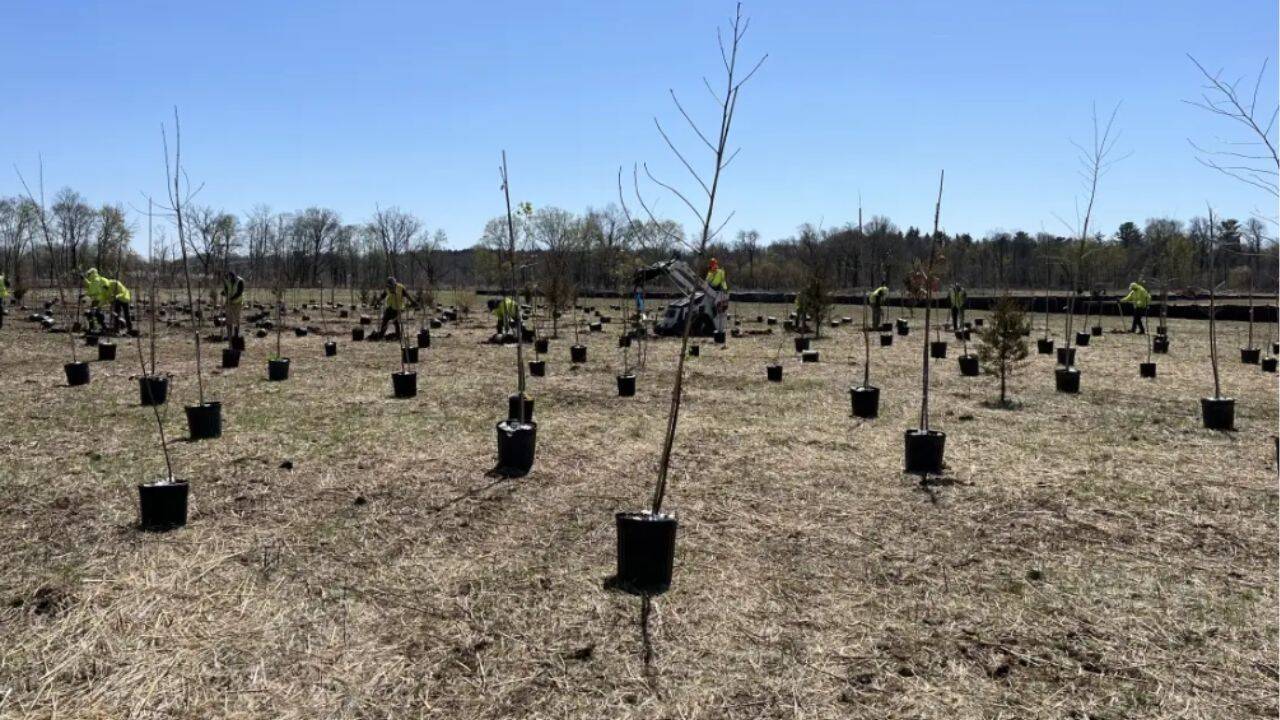
Everyone loves a good redemption story. Plant some native shrubs, rip out an old concrete bulkhead, and watch the pristine wilderness magically snap back to 1650. That is the comforting lullaby driving the multi-million-dollar restoration sweep along New Jersey’s Raritan River. Politicians love cutting ribbons on these projects. Environmental groups love the press releases.
They are all completely wrong.
I have spent years watching capital get incinerated on ecological vanity projects that ignore basic urban hydrology. The lazy consensus says that if we just shovel enough state grants into tearing down minor barriers and planting wetland cordgrass, nature will hit a reset button.
It will not.
You cannot restore an ecosystem when you refuse to fix the plumbing underneath it. The Raritan flows through a heavily industrialized watershed choked with legacy heavy metals, relentless suburban runoff, and stormwater systems that overflow every time it rains hard. Pouring concrete out of a creek bed while ignoring the toxic sediment load sitting twenty feet upstream is like putting a band-aid on a severed artery.
The Myth of Pristine Reversion
Let us dispense with the fairy tale right now. The notion that we can engineer a return to a pre-colonial baseline in a densely populated New Jersey corridor defies physics.
When planners talk about wetland restoration, they love to cite habitat acreage gained. They talk about fish passage. What they leave out is the chemical reality of the substrate. Decades of industrial discharge have baked PCBs and mercury deep into the mud banks of the lower basin. When you kick off heavy earthmoving equipment to reshape banks and plant vegetation, you often dredge up those buried contaminants, sending them straight back into the water column.
I watched a similar project on a neighboring watershed three years ago. The PR firm took lovely drone shots of the new marsh grass. Six months later, a routine heavy storm washed out the newly graded banks because the upstream volume and velocity of the water had nowhere else to go. The energy of an urbanized river does not care about your native seed mix.
Why Small Dams and Wetlands are the Wrong Target
The current playbook focuses heavily on removing minor obstructions and re-establishing riparian buffer zones. It feels productive. It looks great on Instagram. But it targets the symptoms while ignoring the structural disease.
Think of a river basin as a complex pipeline network. If the intake valves are pumping raw sewage and petroleum runoff into the top of the system, tinkering with the friction coefficients at the bottom achieves nothing.
The primary driver of ecological degradation in the Raritan is not a lack of marsh grass. It is impervious surface cover. Every parking lot, rooftop, and paved highway in Middlesex and Somerset counties shoots storm volume directly into the tributaries at hyper-velocity. Until you fix the stormwater capture at the source, every dollar spent on riverbank cosmetics is just money washed downstream.
The Cost of Feel-Good Conservation
Conservation theater has real opportunity costs. When public agencies blow budgets on aesthetic wetland patches that get overwhelmed by the next major flood event, they drain funding from unglamorous, heavy-duty infrastructure work.
If you want a functional river, you do not start by planting wildflowers. You start by fighting municipalities to mandate green roofs, overhaul combined sewer overflows, and enforce strict retention basins on commercial real estate developers. That work does not get you a photo-op with the local mayor. It is expensive, politically unpopular, and fiercely resisted by local chambers of commerce.
So they plant grass instead.
What Actually Works
If we stopped pretending we could turn the clock back to the Pleistocene and started managing the river as an active industrial drain that needs smart engineering, our outcomes would change overnight.
First, stop funding cosmetic bank grading where the hydrodynamic energy is too high to sustain it. If the water velocity from upstream development is going to blow out your banks every spring, stop wasting topsoil.
Second, shift capital entirely toward decentralized retention. Force every big-box store parking lot in the watershed to disconnect its drainage pipes and infiltrate stormwater on-site.
Third, monitor sediment toxicity before you move a single shovel of dirt. If the mud is toxic, leaving it alone under a cap of clean stone is often safer than waking the sleeping dragon with a restoration excavator.
The Raritan does not need your poetry. It needs harsh, functional realism. Stop funding the illusion.