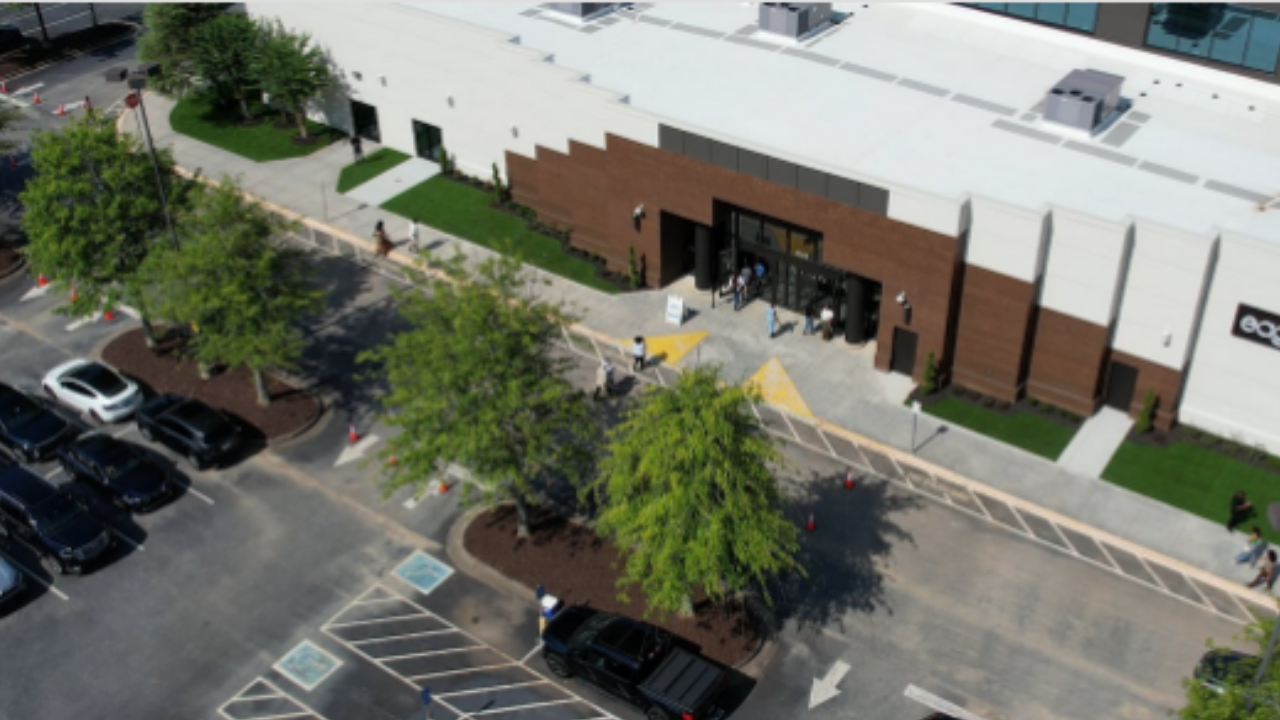
Everyone loves a comeback story. Local news outlets salivate over abandoned big-box properties turning into community hubs, medical centers, or mixed-use palaces. The narrative writes itself. A decaying monument to suburban retail failure gets a twenty-eight million dollar transfusion, and suddenly the neighborhood is saved.
Except it is not saved. It is subsidized.
I have watched municipal leaders and real estate syndicates blow millions on corpse resuscitation for a decade. They point to a ribbon-cutting ceremony, flash some glossy architectural renderings, and call it urban renewal. They are lying to themselves, and worse, they are burning taxpayer capital to do it.
The Fallacy of the Adaptive Reuse Trap
Let us look at the standard playbook for these dead commercial carcasses. A Kohl’s or a Kmart goes dark. The parking lot becomes a lunar landscape of cracked asphalt and stray shopping carts. The city panics about lost property tax revenue. Enter a developer armed with tax credits, zoning variances, and a half-baked plan to turn ninety thousand square feet of concrete into something supposedly noble.
The lazy consensus says any occupation is better than vacancy. Fill the shell. Bring in a clinic, a charter school, or an indoor pickleball facility.
That logic belongs in the trash.
Pouring twenty-eight million dollars into a single-story steel box built in nineteen-eighty-something is an exercise in financial masochism. You are fighting the architecture every step of the way. These buildings were engineered for one specific purpose: low-ceiling, high-density inventory storage surrounded by a moat of parking. They lack natural light. Their HVAC systems are monolithic dinosaurs. Retrofitting them to modern energy standards costs more than tearing them down and starting fresh.
When you hear a developer brag about adaptive reuse, check their balance sheet. Usually, they are only making the math work by skimming public subsidies.
The Zoning Delusion
People love to ask why local governments do not just rezone these dead retail zones for housing immediately. The answer is a toxic mix of neighborhood NIMBYism and municipal laziness.
The public assumes that converting an empty department store into apartments solves the housing crisis. It does not. Not when you are working with a footprint designed for retail traffic flow. You end up with dark, windowless interior units that require massive lightwells carved straight through the roof—driving construction costs through the stratosphere.
If you want housing, build housing. Do not try to perform architectural surgery on a corpse just to appease historic preservationists who care more about a parking ratio than actual human utility.
Furthermore, municipalities cling to the fantasy that retail will bounce back to its old glory if they just wait long enough or incentivize the right tenant. It will not. Consumer habits shifted permanently. The square footage glut is structural, not cyclical. Pretending otherwise is financial malpractice.
The True Cost of Nostalgia
Let us be honest about what happens after the grand opening of these vanity projects. The initial buzz fades. The tenant struggles to cover triple-net leases on an oversized footprint. The city realizes that the projected economic multiplier effect was pure fiction cooked up by a paid consultant.
I have seen funds lock up capital for eight years on projects that yield a razor-thin return, all because the principals fell in love with the square footage rather than the cash flow. They treat real estate like an art project. Real estate is an engine. If the engine is inefficient, you scrap it.
The honest approach requires a level of aggression most modern developers lack. Sometimes the best move for a defunct retail box is the wrecking ball. Demolition is fast. Clean soil is flexible. A vacant dirt lot has negative optionality compared to a poorly configured, heavily encumbered concrete barn eating twenty grand a month in maintenance.
Stop funding nostalgia. Stop celebrating the resuscitation of retail zombies simply because it makes for a nice photo-op on the evening news. Let the concrete die so something better can actually grow.