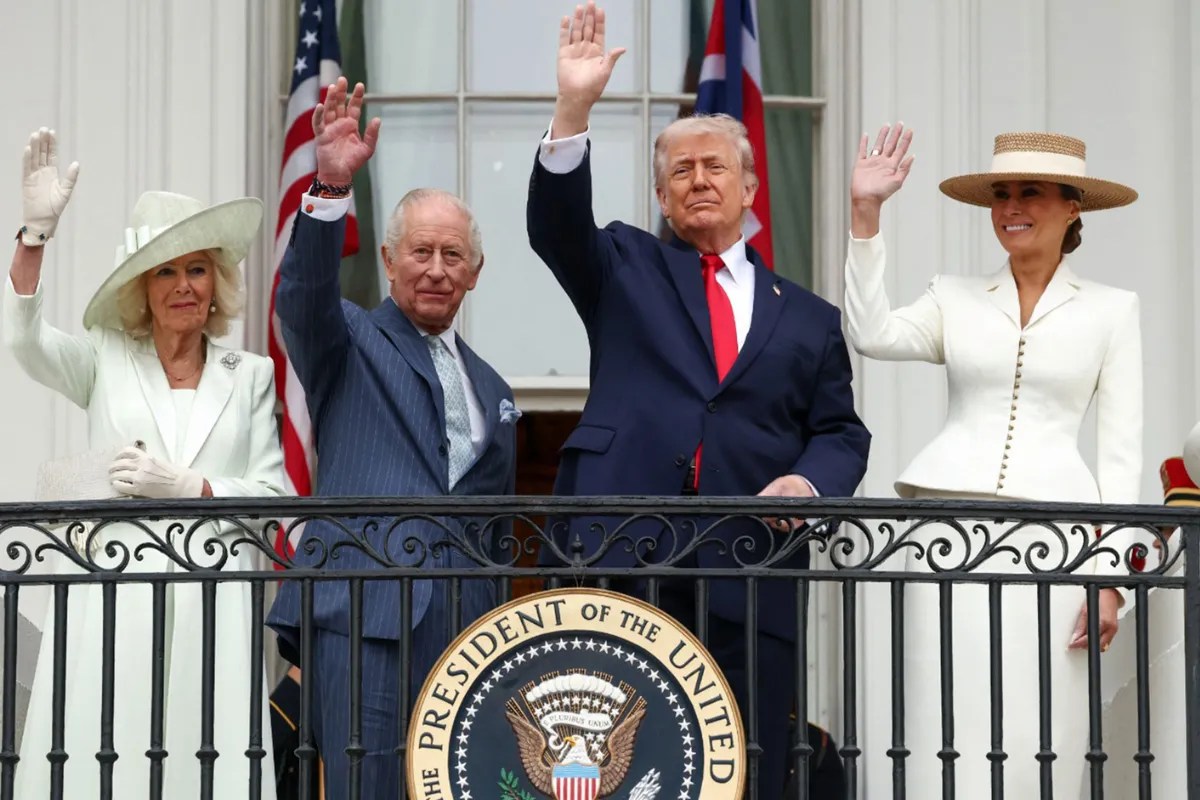
During a 2019 state visit to Buckingham Palace, Donald Trump broke from the rigid script of international diplomacy to share a personal revelation with King Charles III. He told the then-Prince of Wales that his mother, Mary Anne MacLeod Trump, had been a lifelong admirer of the British Royal Family. This was not merely polite small talk. It was a rare glimpse into the formative domestic environment of the 45th President and a window into how his mother’s Scottish roots and specific cultural "crush" on the monarchy shaped his own worldview. Mary Trump was obsessed with the pageantry and the persona of the British Sovereign, particularly Queen Elizabeth II. This reverence was so profound that it became a cornerstone of Trump’s own identity, influencing his perception of power, status, and the "brand" of leadership he would eventually project to the world.
The Scottish Immigrant and the Crown
To understand why a woman from the Outer Hebrides would maintain a lifelong fascination with the Windsors, one must look at the socio-economic reality of early 20th-century Scotland. Mary Anne MacLeod was born in 1912 on the Isle of Lewis. It was a place of rugged beauty but extreme hardship. For a girl from a fishing village, the London-based monarchy represented the ultimate pinnacle of success, stability, and class.
When she immigrated to New York in 1930, she didn’t leave that cultural baggage behind. In fact, she leaned into it. In the Trump household in Queens, the television was often tuned to royal ceremonies. Her fascination wasn’t with a specific "heartthrob" in the Hollywood sense. Her "crush" was the institution itself—specifically the dignity and untouchable aura of the Queen. Donald Trump has frequently recounted how his mother would remain transfixed by the coronation of Queen Elizabeth II in 1953. This wasn't just celebrity worship. It was the aspiration of an immigrant who viewed the British throne as the gold standard of legitimacy.
Diplomacy Through the Lens of Motherhood
When Trump stood before King Charles and the Queen, he wasn't just acting as a head of state. He was a son fulfilling a proxy dream for a woman who viewed the British Royals as the highest form of humanity. This psychological backdrop explains much of Trump’s behavior during his UK visits. While he was known for disrupting traditional diplomatic norms with other world leaders, he displayed a notable, almost uncharacteristic, deference to the Queen.
Critics often pointed to his minor breaches of protocol—like walking in front of the Queen during a guard inspection—but his verbal rhetoric was consistently adoring. He called the Queen a "great, great woman" and repeatedly invoked his mother’s memory during royal banquets. This wasn't accidental. It was a calculated use of personal history to build a bridge with an institution that is notoriously difficult to penetrate. By framing his mother as a devoted fan, he positioned himself not as a foreign interloper, but as a long-lost scion of the same cultural lineage.
The Power of Pageantry in the Trump Brand
The influence of Mary Trump’s royal obsession extended far beyond a single state dinner. If you look at the aesthetic of Trump’s various properties—the gold leaf, the crests, the heavy drapery—it is a direct, if somewhat garish, interpretation of royal opulence. He didn't build sleek, modern glass boxes in his early career; he built "palaces."
This is the "how" behind his rise. He understood that a significant portion of the American public, much like his mother, craved the visual cues of traditional power. By emulating the grandiosity his mother admired, he created a persona that felt "royal" to his base. He wasn't just a businessman; he was a sovereign of his own gilded empire. This connection between his mother’s Scottish-bred reverence for the Crown and his own branding strategy is the most overlooked factor in his political rise. It provided him with a blueprint for how to command a room using spectacle rather than just policy.
The King Charles Connection
The conversation with King Charles in 2019 was particularly poignant because it bridged two very different worlds. Charles, a man born into the weight of a thousand-year-old institution, and Trump, a man who built his own "monarchy" from real estate and reality television.
Trump reportedly told Charles that his mother would have been "very proud" to see him there. This emotional appeal is a classic investigative "tell." It shows where a person’s true north lies. For Trump, the approval of the British establishment served as a posthumous validation for his mother’s aspirations. It was the ultimate "arrival" for a family that started in a humble cottage in Tong.
Counter-Arguments and the Reality of Protocol
Not everyone views this shared "secret" as a heartwarming anecdote. Skeptics within the diplomatic corps argue that Trump’s frequent mentions of his mother’s royal crush were a way to deflect from the fact that his administration’s policies often ran counter to British interests. By focusing on the personal and the sentimental, he was able to bypass difficult conversations about trade and NATO.
Furthermore, the "crush" Mary Trump felt was directed at an era of the monarchy that was stoic and silent. King Charles, by contrast, has been a vocal advocate for environmental issues—a topic where he and Trump famously disagreed during their 90-minute meeting in 2019. Despite the personal warmth generated by the stories of Mary Trump, the ideological gap remained vast. The pageantry served as a useful mask for deep-seated geopolitical friction.
The Enduring Scottish Legacy
The village of Tong on the Isle of Lewis still remembers Mary MacLeod. They remember her as the girl who went to America and sent back money for the local church. But they also recognize the traits she passed to her son: a certain stubbornness, a love for the dramatic, and a belief in the importance of lineage.
When Trump bought the Turnberry golf resort in Scotland, he wasn't just making a business investment. He was reclaiming the territory of his mother’s dreams. Every time he flies his personal helicopter over the Scottish coast, he is acting out the fantasies of a woman who once watched a grainy black-and-white coronation on a small TV in Queens. The "secret" he shared with King Charles wasn't just about a crush. It was an admission that, despite his wealth and power, he is still driven by the immigrant daughter’s desire to be accepted by the world’s most exclusive club.
The British Royal Family represents a level of permanent status that no amount of money can buy. For a man who obsessed over his placement on the Forbes 400 list, the 2019 state visit was the only time he couldn't buy his way to the top of the hierarchy. He had to be invited. And he used his mother’s ghost to ensure that invitation felt like a homecoming rather than a transaction.
The next time a world leader sits down with the British monarch, look past the formal statements. The real diplomacy happens in the shared histories and the private admissions of who we were before we held the world in our hands. Trump’s revelation wasn't a gaffe or a random thought. It was the key to his entire psychological architecture. He didn't want to just lead a country; he wanted to rule in a way that would make his mother, the girl from the Isle of Lewis, believe he had finally become a king.
Observe the way power mimics what it once admired. The Trump empire is the shadow of a Scottish woman's dream of London.