Russia just slammed the brakes on its diesel exports, and the global energy market is feeling the whiplash. If you think this doesn't matter because Western nations already banned Russian oil, you're missing the bigger picture. In our hyper-connected economy, a supply shock anywhere is a price hike everywhere.
The Kremlin's decision to halt seaborne diesel exports through July 31 isn't some aggressive geopolitical chess move to squeeze the West. It's an act of desperation. Relentless Ukrainian drone strikes have pummeled Russia's domestic refining sector, triggering a massive fuel crisis right at home.
The fallout was immediate. European diesel margins spiked to a record $60.17 per barrel. In the US, ultra-low sulfur diesel futures surged over 14% in a single day. Even though crude oil prices have hovered around a modest $70 to $78 a barrel, refined diesel is trading closer to $135. You aren't paying for crude at the pump; you're paying for the refined product. And right now, that product is vanishingly scarce.
The Reality Behind the Shortage
Ukraine's strategy has shifted from targeting crude oil pipelines to systematically disabling the machinery that turns crude into usable fuel. Between January and June, Ukrainian forces struck 16 major Russian oil refineries and fuel terminals. Analysts estimate these strikes knocked out between 30% and 45% of Russia's total refining capacity.
The crowning blow came when the massive Omsk refinery—Russia's largest facility—was forced to halt production following an attack.
Moscow usually produces twice as much diesel as it consumes. That massive surplus typically flows abroad, bringing in vital cash. Now, that surplus is gone. The situation is so dire that Deputy Prime Minister Alexander Novak openly admitted Russia will begin importing petroleum products from countries like India and China to stabilize its own market. Think about that. One of the world's biggest energy superpowers is now standing in line to buy fuel.
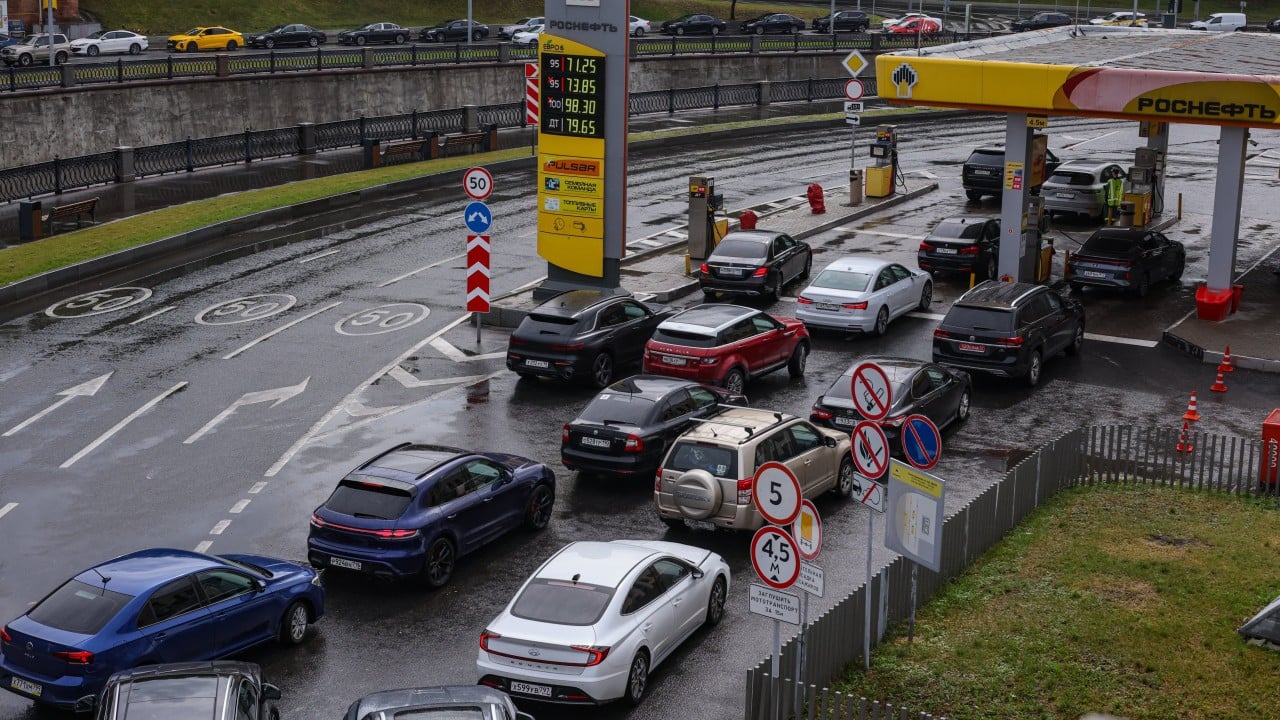
Inside Russia, the symptoms of this crisis look like a throwback to the 1970s. Drivers are facing hours-long lines at filling stations. Several regions have introduced strict fuel rationing, allowing cars with odd or even number plates to refuel only on alternating days.
The Collision Course with Global Conflict
The timing of this export ban couldn't be worse. The global energy market was already on life support due to escalating conflict between the US and Iran.
With shipping through the Strait of Hormuz slowing to a crawl, Middle Eastern fuel exports were already severely choked. This forces international buyers to lean heavily on US refiners. But U.S. Energy Information Administration data shows that American diesel inventories are already 6% below their five-year average.
Russian Diesel Export Meltdown (Barrels Per Day)
Pre-War Baseline: ~840,000 bpd
June 2026:        ~400,000 bpd
Early July 2026:  ~214,000 bpd
Current Status:   0 bpd (Official Ban)
As the chart of recent cargo data from Kpler shows, Russia's supply didn't just vanish overnight. It has been a slow-motion car crash. By the time the formal ban hit, exports had already dwindled to a fraction of their normal volume.
Why This Hits You at the Grocery Store
When diesel prices spike, it acts as a hidden tax on literally everything you buy. Diesel powers the heavy machinery that plants and harvests crops. It runs the semi-trucks that deliver goods to retail stores, and it fuels the cargo ships moving products across oceans.
The timing of this ban hits right as the Northern Hemisphere enters its critical harvest season and the Southern Hemisphere begins planting. Farmers in the US Midwest and Brazil are now forced to compete for the exact same dwindling pools of fuel.
Because the US and Europe can no longer buy from Moscow, Russia had been rerouting its fuel to buyers in Brazil, Turkey, Morocco, and Egypt. Now that Russia has turned off the tap, those nations are forced to aggressively outbid European buyers for American and Middle Eastern cargoes. Every barrel of US diesel redirected to Latin America is a barrel that can't go to Europe. It's a game of musical chairs, and the music just stopped.
How to Protect Your Supply Chain Now
The Kremlin claims this ban is temporary and will lift after July 31. Don't believe it. Western sanctions mean Russia lacks the complex components required to quickly repair its high-tech refining columns. If Ukrainian drone strikes persist, this ban will drag on deep into autumn.
If you run a business dependent on transport, logistics, or manufacturing, sitting on your hands isn't an option.
- Lock in fuel surcharges immediately. If you're a logistics provider, update your freight contracts to reflect volatile diesel spreads. Don't absorb the margin hit.
- Diversify procurement routes. If you rely on spot-market shipping, look into securing dedicated capacity or short-term contract rates before harvest-season demand peaks.
- Hedge your fuel exposure. For large-scale operations, work with energy brokers to utilize futures or options to cap your maximum fuel costs for the next two quarters.