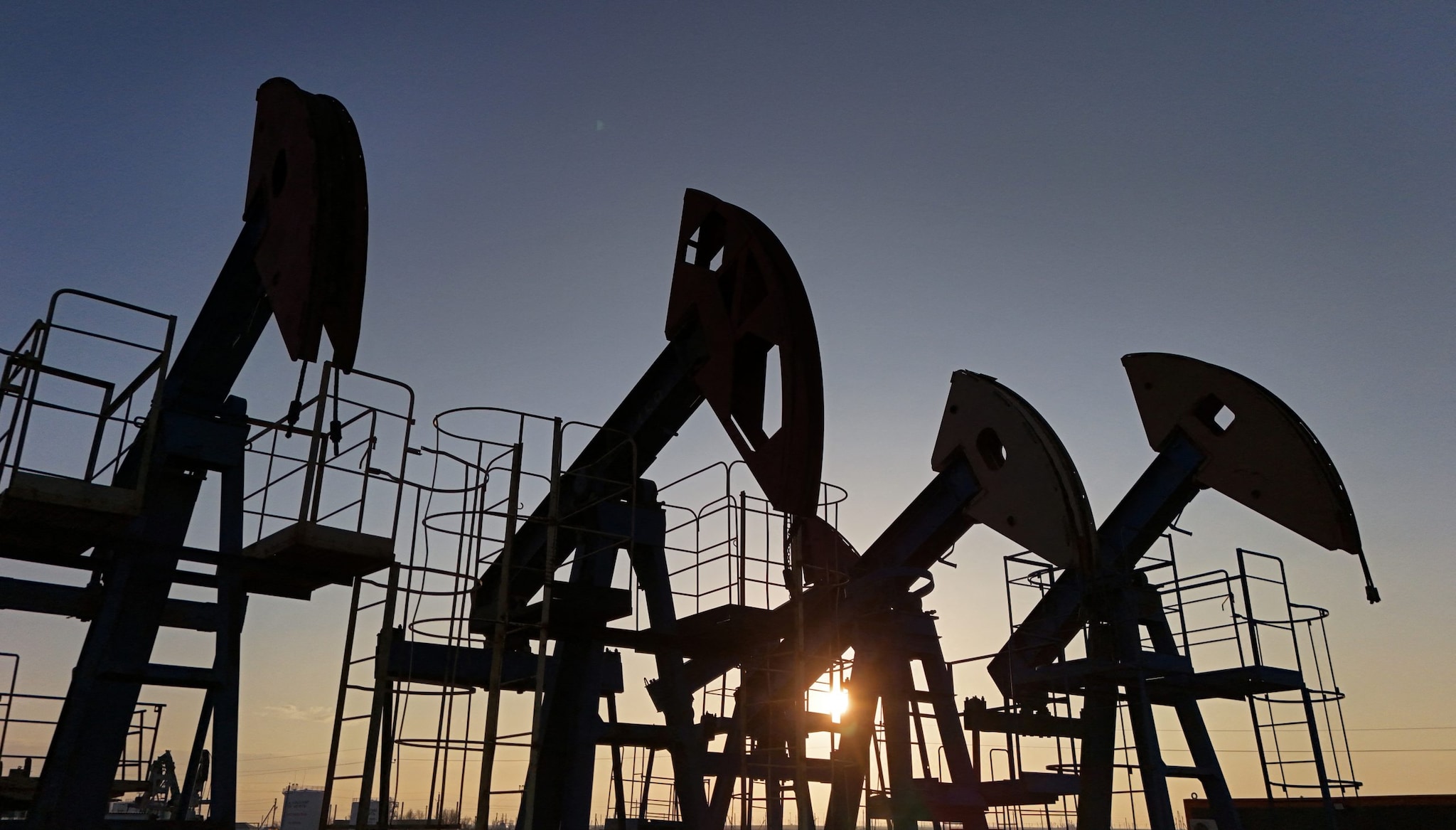
The headlines are dripping with standard, breathless optimism. "Russia risks a massive fuel crunch." "Ukrainian drone strikes cripple Moscow’s energy spine." Commentators point to the latest May data showing that refining processing volumes have plummeted to 4.69 million barrels per day—the lowest since 2009. They look at the newly minted June export ban on jet fuel and the extended gasoline embargo, concluding that the Kremlin is on the verge of an industrial cardiac arrest.
It is a beautiful narrative. It is also completely wrong. Building on this topic, you can also read: The Great Wall Around the Global Ledger.
The lazy consensus in Western energy analysis treats a refinery strike like a knockout blow to a delicate, Western-style retail ecosystem. They look at independent gas stations in Ryazan or Crimea capping fuel sales and see systemic failure. What they miss entirely is the brutal, adaptive math of a wartime command economy backed by state-enforced vertical integration. Russia is not running out of fuel; it is aggressively rerouting its structural surpluses to insulate its military apparatus while forcing the West to foot the bill through distorted global markets.
The Mirage of the Damaged Distillation Column
To understand why the "crunch" narrative fails, look at the anatomy of the recent drone strikes. Media outlets obsess over dramatic footage of burning storage tanks at Saratov or Syzran. But seasoned oil traders know that setting a tank ablaze is a logistical nuisance, not a structural execution. Experts at CNBC have provided expertise on this matter.
Even when long-range strikes manage to clip high-tech components like the Avtocrude atmospheric-vacuum distillation units at Ryazan or Kirishi, the underlying assumption is that these facilities are irreplaceable due to Western sanctions. That is a boardroom theory that crumbles on the factory floor.
I have watched corporate executives lose millions by assuming an autocratic regime will respect supply chain logic. They do not. Russia is simply cannibalizing older, less efficient thermal cracking units, bypassing optimal environmental standards, and utilizing alternative components sourced through deep grey markets in East Asia.
More importantly, a drop in refining capacity does not mean a drop in crude availability. When a country that pumps over 9 million barrels of crude per day loses 24% of its domestic refining capacity, the oil does not vanish into the ether. It stays in the ground, gets diverted into heavy storage, or enters the global maritime shadow fleet as raw unrefined crude.
The Forced Consolidation Trap
The panic currently rippling through the St. Petersburg International Mercantile Exchange is real, but its meaning has been completely inverted. Independent gas stations, which control roughly 40% of the Russian domestic retail market, are complaining that they cannot buy AI-92 or AI-95 gasoline. Vertically integrated giants like Rosneft and Lukoil have severely choked off exchange volumes.
The consensus view: "There is no fuel left."
The institutional reality: "The state is starving the open market to guarantee its own supply."
[Global Crude Market] <--- (Diverted Raw Surplus)
       ^
       |
[Russian Crude Output] ===> [State-Owned Refineries] ===> [Military & State Networks]
                                     ||
                                     \/  (Choked Supply)
                         [Independent Gas Stations]
By squeezing the independent operators, the Kremlin forces a massive consolidation of the domestic fuel landscape. The major state-backed players redirect every single surviving drop of refined product directly into their own proprietary retail networks and military logistics hubs. The civilian population at independent pumps bears the brunt of the rationing, but the tanks pushing through the Donbas or the transport aircraft refueling for logistical runs never experience a single second of dry lines.
The Western analysis treats the civilian consumer as the primary metric of stability. For a mobilization economy, the civilian consumer is merely a shock absorber.
The Global Subsidy Paradox
The deepest irony of the May strike campaign is how it inadvertently serves Russian fiscal interests. Thanks to the broader global energy tensions stemming from the closure of the Strait of Hormuz, global energy prices have surged.
When Ukraine successfully knocks out a chunk of Russian refining, it reduces the global supply of refined products like diesel and jet fuel. What happens next? Wholesale prices skyrocket globally. Even as Russia’s internal diesel production dropped by roughly 20% over April and May, its actual export revenues from the remaining unrefined crude and dark-market product flows have held remarkably firm.
In a bizarre twist of economic geography, the UK recently had to ease its own import restrictions on certain fuel streams to protect its domestic consumers from spiraling costs, while the US issued waivers for specific maritime oil shipments. The market cannot live without the molecular volume Russia provides. By tightening the physical supply, the strikes increase the value of every remaining barrel Russia manages to slip past the sanctions barrier through transshipment hubs in the Mediterranean and Asia.
The Flawed Premise of the "People Also Ask"
If you look at the core questions driving public curiosity on this issue, the fundamental premises are systematically broken.
- Is Russia running out of gasoline? No. It is experiencing a localized logistical distribution crisis caused by the internal hoarding of state oil companies.
- Will drone strikes stop the Russian war machine? Absolutely not. Military fuel consumption accounts for a fraction of total national output; the state will gladly let domestic commuter networks grind to a halt before a single military division faces a fuel shortage.
- Are sanctions preventing refinery repairs? Only the highly optimized, Western-designed components face genuine delays. For basic operations, industrial improvisation and heavy engineering workarounds are keeping the core units online at lower efficiency rates.
The actionable reality for international energy analysts and asset managers is simple: stop trading on the expectation of a Russian domestic collapse. The real play is positioning for a structural, long-term premium on global refined products. The export bans on gasoline and jet fuel are structural shifts designed to protect internal state interests, ensuring that the volatility remains an external problem for Western economies to manage. Expect fewer refined exports, higher global margins, and a Russian state that continues to trade raw volume for elevated geopolitical leverage.