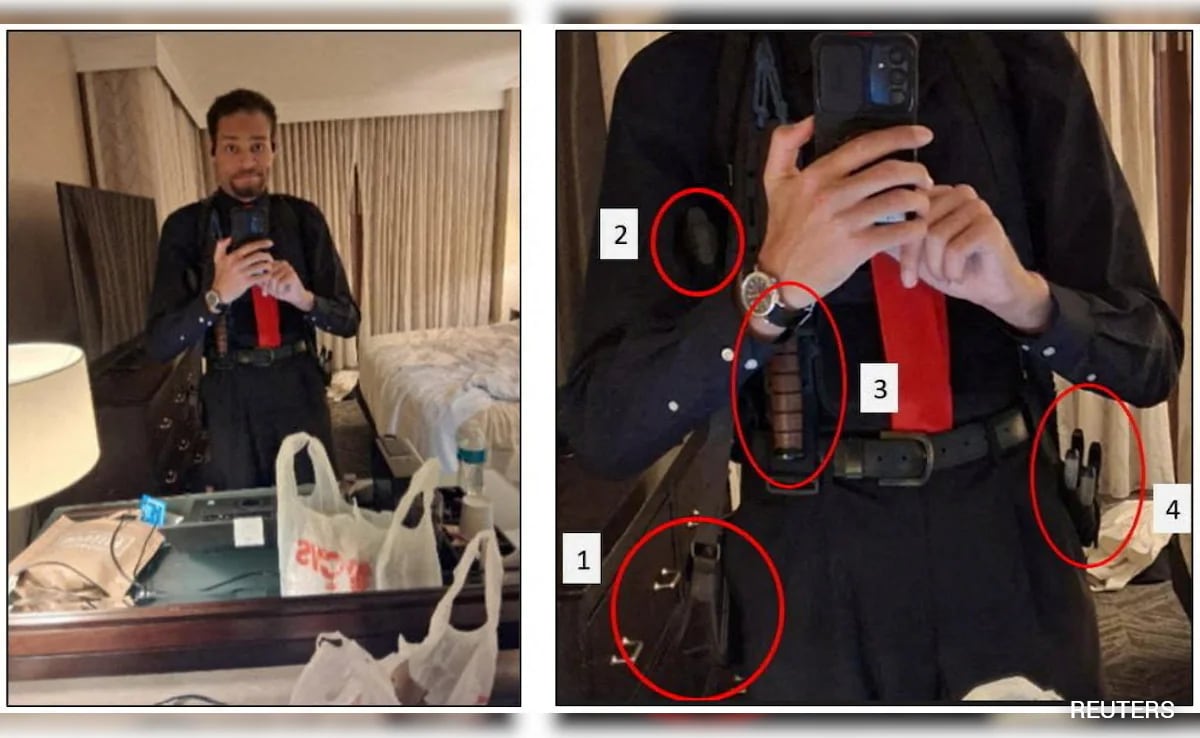
The federal justice system finally closed the book on Ryan Wesley Routh this February, sentencing the 59-year-old to life plus seven years in a maximum-security cell. While the headlines focus on the finality of the gavel, the reality of the Routh case is far more unsettling than a simple "guilty" verdict. Routh did not just stumble onto a golf course in West Palm Beach with an SKS rifle; he walked through a series of systemic trapdoors that should have stopped him decades ago. His story is a chilling indictment of a legal and mental health apparatus that watched a "ticking time bomb" wind down for forty years and did nothing until the fuse reached the doorstep of a former president.
A Century of Warnings Ignored
To understand why Routh was able to spend twelve hours in a sniper’s hide at the Trump International Golf Club, you have to look at the hundred-plus criminal counts he accumulated before 2024. This was not a man who snapped. He was a man who lived in a state of perpetual legal immunity.
Between 1984 and 2016, Routh was convicted of more than 100 offenses. His rap sheet reads like a catalog of escalating instability: felony firearm possession, resisting an officer, hit-and-runs, and a 2002 standoff where he barricaded himself in a building with a fully automatic weapon. In a functioning judicial system, a man caught with a machine gun during a police standoff goes to prison. In Routh’s North Carolina, he received probation.
This pattern of "catch and release" created a vacuum of consequences. Routh learned that the law was a suggestion, not a barrier. When he eventually turned his sights on the Russo-Ukrainian War—traveling to Kyiv to attempt, unsuccessfully, to recruit Afghan soldiers—his erratic behavior was flagged by fellow volunteers. Chelsea Walsh, a nurse who encountered Routh in Ukraine, formally reported him to the FBI and Customs and Border Protection in 2023. She called him a "threat to others." The system, once again, remained silent.
The Self-Represented Spectacle
When Routh finally faced the music in a Florida courtroom, he opted for a move that typically signals a descent into legal suicide: representing himself. The trial was a grim piece of theater. Routh, who lacked any formal legal training, delivered a defense that was less about evidence and more about a fractured worldview. He challenged the very intent of his actions, arguing that because he never pulled the trigger, he shouldn't be charged with attempted assassination.
The prosecution dismantled this easily. They didn't just have the rifle found in the bushes; they had a handwritten letter Routh had left with a witness months prior. In it, he offered a bounty to anyone who could "finish the job" if he failed. This was the "smoking gun" of intent that made his courtroom theatrics irrelevant.
By the time Judge Aileen Cannon presided over his sentencing on February 4, 2026, the facade of the "caring activist" had completely crumbled. Routh’s request to be moved to a state that allows assisted suicide was met with the cold silence it deserved. The court wasn't interested in his exit strategy; it was interested in permanent incapacitation.
The Breakdown of Secret Service Perimeter Logic
While Routh is now in a cage, the questions surrounding the Secret Service remain unanswered. Special Agent Robert Fercano is rightfully credited with spotting the barrel of Routh’s rifle poking through the fence line, but the fact that a man with Routh’s history could get within 400 yards of a presidential candidate is a staggering security failure.
The Florida attempt happened just two months after the shooting in Butler, Pennsylvania. It revealed a persistent flaw in how perimeters are managed at private clubs. Routh didn't need high-tech gadgets to bypass the Secret Service; he needed patience and a hole in the bushes. He camped out for nearly half a day, undetected, while the most protected man in the world moved toward him.
The Cost of Leniency
The Routh case serves as a brutal lesson in the cost of judicial leniency. Every time a judge gave Routh probation for a violent or firearm-related felony over the last three decades, they were effectively subsidizing the events of September 15, 2024.
We often talk about "radicalization" as something that happens in secret online forums. In Routh’s case, it happened in plain sight, facilitated by a history of unpunished crimes and a mental health profile that was documented but never addressed. He was a man who believed his personal sense of justice outweighed the democratic process, a delusion fueled by a lifetime of the state failing to tell him "no."
Routh is currently imprisoned at United States Penitentiary, Victorville. He will never walk free again. But the systemic gaps that allowed a roofer with 100 convictions to nearly change the course of American history remain wide open. Until the legal system prioritizes the detention of habitual, violent offenders over the administrative convenience of probation, the next Ryan Routh is already in the making.