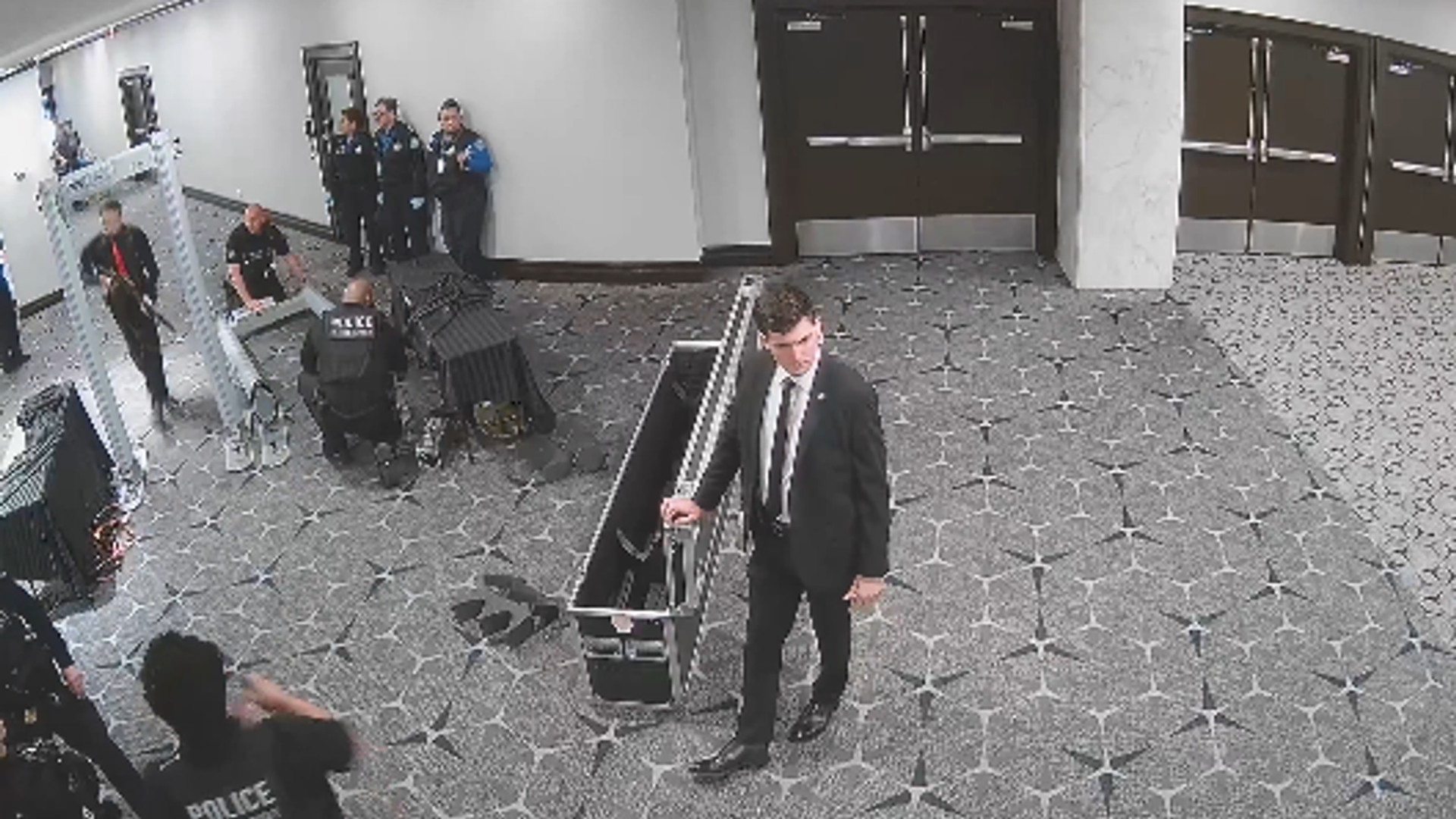
The footage doesn't lie, but it certainly complicates the narrative. We’ve all seen the headlines about the man accused of trying to kill Trump, but newly surfaced details of Ryan Wesley Routh storming a checkpoint offer a chilling look at a "ticking time bomb" that many saw coming. If you think this was just a random act of a lone madman, you're missing the bigger, more disturbing picture of how a person with a hundred prior convictions stayed on the streets long enough to point a rifle at a former president.
The Checkpoint Incident and the Red Flags We Ignored
Before he was crouched in the shrubbery at Trump International Golf Club with an SKS-style rifle, Ryan Wesley Routh had a history that reads like a failure of the American legal system. The specific "checkpoint" behavior isn't new for him. Back in 2002, Routh was pulled over for a simple revoked license. Instead of taking the ticket, he put his hand on a machine gun, fled to his roofing business, and entered a three-hour standoff with police.
Fast forward to the recent revelations. Video evidence from his past and reports from those who encountered him in Ukraine depict a man who didn't respect boundaries—physical or legal. Chelsea Walsh, a travel nurse who met him abroad, literally told a Homeland Security agent that Routh was a threat. She wasn't being dramatic. She saw the erratic behavior and the obsession with political "justice" that eventually led him to Palm Beach.
A Long Trail of "Last Chances"
Routh wasn't some shadowy figure living off the grid. He was a convicted felon many times over. Check out these stats from his rap sheet:
- Over 100 criminal counts in North Carolina.
- Convictions for possessing a "weapon of mass destruction" (a fully automatic machine gun).
- Multiple arrests for hit-and-runs and possessing stolen goods.
Despite this, he rarely saw the inside of a prison cell before 2024. He was the king of probation. This leniency is exactly what allowed him to travel to Florida, scout a golf course for weeks, and set up a sniper’s nest with ceramic body armor and a GoPro.
How the Secret Service Actually Caught Him
We often hear about security "failures," but the Florida incident was actually a rare win for the boots-on-the-ground detail. Special Agent Robert Fercano was patrolling one hole ahead of Trump—standard procedure for a "bubble" sweep. He didn't see a face; he saw the glint of a rifle barrel poking through the chain-link fence.
Fercano didn't wait. He fired four rounds. Routh didn't fire back; he dropped the gun and ran. This is a crucial detail. Routh wasn't looking for a shootout. He was looking for a clean shot from 400 yards away, a distance he’d been prepping for by stalking the perimeter for nearly 12 hours. Cell tower data later proved he’d been "casing" the joint and Mar-a-Lago since August.
The Capture on I-95
The arrest wasn't a high-speed chase. It was a methodical takedown. A witness saw Routh hop into a black Nissan Xterra and—critically—took a photo of the plate. When the Martin County Sheriff’s Office pulled him over on I-95, Routh didn't resist. Sheriff William Snyder remarked that Routh was "eerily calm," acting like he was just headed to a picnic.
Representing Himself and the Courtroom Chaos
If you thought the crime was bizarre, the trial was a circus. In July 2025, Routh fired his public defenders. He decided to represent himself before U.S. District Judge Aileen Cannon. It went about as well as you’d expect. He tried to argue political "duty," but the evidence was overwhelming, including a "Dear World" letter he’d left with a friend months earlier.
The letter was a confession written in advance. "This was an assassination attempt on Donald Trump but I am so sorry I failed you," it read. He even offered $150,000 to anyone who could "finish the job."
When the guilty verdict came down in September 2025, Routh didn't just stand there. In a final, desperate act of theater, he grabbed a pen and tried to stab himself in the neck right in front of the jury. He failed at that, too.
The Reality of Political Violence in 2026
Routh is now serving life plus 84 months. But his story shouldn't just be tucked away as a closed case. It highlights a massive gap in how we track "volatile" individuals who operate in plain sight. He was a man who used social media to recruit soldiers for Ukraine while being a prohibited person under U.S. law. He was a man who "stormed" checkpoints and ignored law enforcement for decades without real consequence.
If you’re following this case, don't just look at the golf course. Look at the years of dismissed charges and ignored warnings that led there. The checkpoint video is just a symptom of a much deeper, systemic rot.
To stay informed on how security protocols are changing following the Routh sentencing, keep an eye on the Department of Justice's official updates and the ongoing Secret Service "protective gap" reports. Don't take the initial news reports at face value—always dig into the court transcripts and the unsealed evidence.