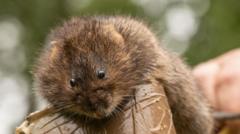
Harpenden Town Council just pulled off something major. Last week, a team of conservationists and volunteers rolled up their sleeves at the Batford Springs Local Nature Reserve and released 200 water voles into the Upper River Lea.
It sounds like a nice, feel-good local story. But you have to look at the timeline to grasp why this matters. These little rodents hadn't been seen in this particular habitat for 40 years. Four decades.
They didn't just vanish by accident. Britain’s water voles are the fastest declining mammal in the country. They’ve been wiped out from roughly 90% of their historic range. When a species drops off a cliff that fast, you aren't just looking at the loss of a cute animal. You’re looking at a broken ecosystem. The return of these 200 voles isn't just about a successful breeding program. It’s an aggressive attempt to force a damaged river system to fix itself.
The Ecological Toll of Losing a Keystone Engineer
Most people look at a water vole and see a fat river rat. That's a massive underestimation. These small mammals are ecosystem engineers. They reshape the environment around them in ways that plants, insects, and birds rely on to survive.
When water voles build their burrows along a riverbank, they aren't just making a home. They actively churn the soil. This structural disturbance dries out the ground and kickstarts microbial activity, which directly regulates nitrogen levels in the soil.
Their eating habits change everything too. A single water vole can consume over 200 different species of plants. By aggressively grazing on dominant reeds and grasses, they stop single plant species from choking out everything else. This creates space for a diverse mix of native wildflowers and aquatic plants.
- More plant diversity brings back bees, butterflies, and hoverflies.
- More insects mean more food for bats, birds, and amphibians.
- Abandoned burrows provide instant, safe housing for smaller mammals like shrews to raise their young.
When you kick water voles out of a river for 40 years, the banks degrade. The vegetation becomes a monoculture. The soil compaction alters the nutrient cycle. Bringing them back isn't a luxury project; it's basic infrastructure repair for the Upper River Lea.
Why Britain's Water Voles Vanished in the First Place
You can't talk about the collapse of the water vole without talking about the American mink. It's the classic conservation disaster story. Brought over to the UK for fur farming in the mid-20th century, these non-native predators escaped and bred like wildfire.
For a native water vole, a female or juvenile American mink is a nightmare scenario. They are slim enough to squeeze directly into a vole’s underground burrow. A water vole can’t run, and it can’t hide underwater because mink are exceptional swimmers. Entire colonies can be wiped out of a river catchment in a single season.
Pair that brutal predation with relentless habitat destruction. Decades of intensive farming, river canalization, dredging, and concrete urban developments stripped away the dense, tangled riverbanks these rodents need for cover. Without thick vegetation to hide in, they stood absolutely zero chance.
The Strategy Behind the Batford Springs Reintroduction
You can't just throw 200 captive-bred voles into a river and hope for the best. If you do, you’re just providing an expensive lunch for local predators. Harpenden Town Council spent three years planning this release, and the mechanics of how they did it show what real, boots-on-the-ground habitat restoration requires.
Securing the Perimeter
The team installed a 125-meter protective fence around the core habitat. The idea isn't to cage the voles in forever, but to give them a secure, undisturbed zone where they can establish their first round of burrows without immediate pressure.
Designing the Perfect Wetland
They dug out an entirely new pond within the reserve. It wasn't just a hole in the ground filled with water. They designed it to mimic a pristine wetland, featuring gently sloping banks and varied depths. They packed the perimeter with native reeds and sedges to provide an immediate food source and instant predator cover.
The Two-Year Mink Audit
Before a single vole traveled from the specialist breeders, the Herts and Middlesex Wildlife Trust spent two full years monitoring the area using mink rafts. These floating devices track footprints and catch invasive mink before they can do damage. The verdict? Zero mink recorded for 24 months. That data point alone was the green light the project needed.
What It Takes to Scale This Across the Country
The success at Batford Springs is great, but isolated pockets of wildlife don't survive long-term. If a population can't migrate and mix with other colonies, inbreeding takes over, and localized extinction happens anyway. The real challenge is linking these habitats together.
Harpenden Town Council handles this by expanding the reserve itself, acquiring new land to grow the site by a full third. But the real game-winning move is working directly with neighboring farmers and estate owners along the Upper Lea.
If you want to see water voles thrive in your own local waterways, you can't just leave it to councils. You need to push for targeted habitat management. Landowners need to stop over-clearing riverbanks. Leftover gorse and dense brambles aren't messy; they are life-saving cover for threatened wildlife.
Keep an eye out next time you walk near a sluggish stream or pond. Look for grass stems cut cleanly at a sharp 45-degree angle near the water's edge, or listen for the distinctive, heavy "plop" of a vole diving off a bank. If your local river is silent, it's time to start asking your local wildlife trusts and community groups why they haven't put out mink monitoring rafts yet. Habitat restoration doesn't happen by waiting around; it happens when communities deliberately build the infrastructure to invite native species back.