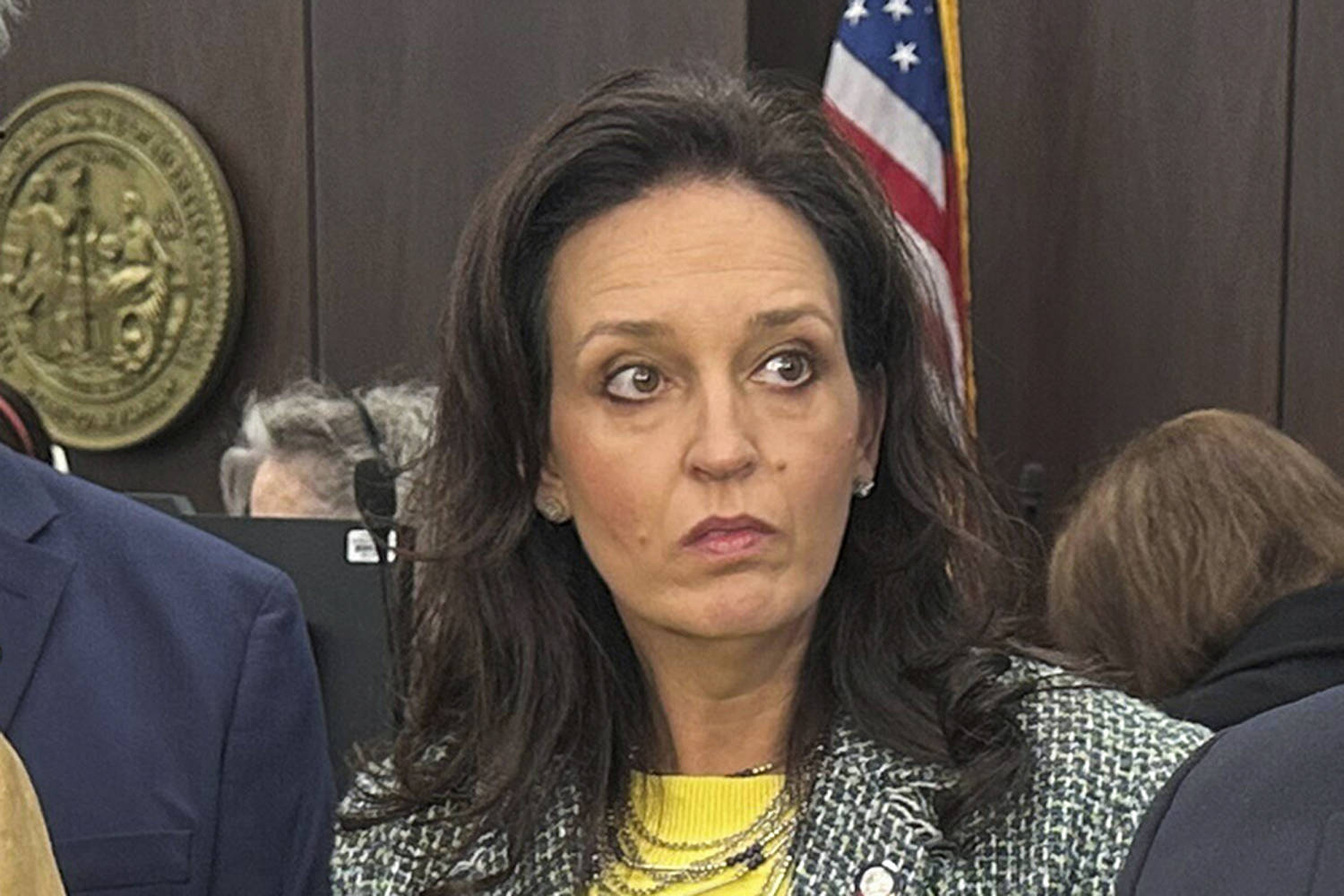
State Representative Jennifer Balkcom was selected by the 11th Congressional District Republican Executive Committee to replace outgoing Representative Chuck Edwards on the November ballot. This emergency pivot occurred at the Buncombe County Republican Party headquarters in Asheville, following an abrupt exit by Edwards that left local party machinery scrambling to maintain control of a critical mountain stronghold. Edwards abandoned his reelection campaign days after a damning House Ethics Committee report detailed a pattern of harassment toward female staffers.
The fallout from the ethics investigation stripped the GOP of its incumbent advantage just months before the general election. Party leadership needed a candidate capable of steadying a fractured base. Balkcom, a two-term state legislator and mortgage loan officer from Henderson County, secured the nomination on the first ballot during a closed-door meeting that capped days of intensive backroom maneuvering.
The Anatomy of a Rapid Succession
When Edwards announced his withdrawal, political calculators across western North Carolina immediately began smoking. State Senator Tim Moffitt initially emerged as the favored insider to inherit the mantle, while other local figures floated various bids. Balkcom herself initially stated she would sit out the replacement process and back Moffitt.
Yet political inertia rarely survives a genuine power vacuum. Within forty-eight hours, Moffitt bowed out, leaving a wide-open field of contenders that included conservative activist Chad Nesbitt, local figures like Ken McKim, and multiple regional leaders. Balkcom reversed her stance late Sunday, announcing her candidacy after what she described as prayer and consultation with her family.
The endorsement pipeline opened swiftly. State House Speaker Destin Hall threw his weight behind Balkcom, lending institutional momentum that heavily influenced the district executive committee members. By Monday evening, the committee of roughly sixty-three county chairs, vice chairs, and at-large officers coalesced behind her, delivering an overwhelming first-ballot victory.
Navigating the Shadow of Scandal
The sudden transition forces the GOP to pivot immediately from defense to offense. Edwards did not merely drop out; his exit followed a formal House Ethics Committee finding that uncovered substantial evidence of workplace misconduct. For a party that prides itself on discipline and family values, the episode delivered an unwelcome jolt.
Democratic nominee Jamie Ager, a Buncombe County farmer, seized on the chaos to criticize the secretive nature of the committee replacement process. Ager blasted the procedure as a backroom arrangement orchestrated far away from ordinary primary voters. North Carolina election law explicitly dictates that party executive committees handle ballot vacancies when a nominee withdraws this late in the cycle, but the optics of party insiders selecting a candidate behind closed doors offer fuel for Democratic messaging.
Balkcom inherits more than a stained ballot spot. She inherits a geographic region still grappling with the staggering, long-term economic and infrastructural fallout of Hurricane Helene. Much of western North Carolina continues to dig out from the disaster, making federal disaster relief, bureaucratic accountability at agencies like FEMA, and regional rebuilding efforts the absolute center of gravity for the district.
The General Election Horizon
Balkcom now faces a compressed timeline of under three months to introduce herself to voters outside her current state legislative district, unify a fractured local apparatus, and fend off a well-funded Democratic challenge. Her messaging focuses heavily on her background as an eighth-generation mountain resident, her legislative voting record in Raleigh, and an explicit tie-in to the broader national conservative platform.
Her strategy relies on framing the contest as a referendum on national partisan direction rather than local committee mechanics. By warning against progressive economic policies and border security vulnerabilities, she aims to anchor her campaign securely within the reliable red lean of the 11th District, which has consistently favored Republican congressional candidates for over a decade. Whether mountain voters separate the legislative track record of the new nominee from the baggage of her predecessor remains the definitive question of the autumn cycle.