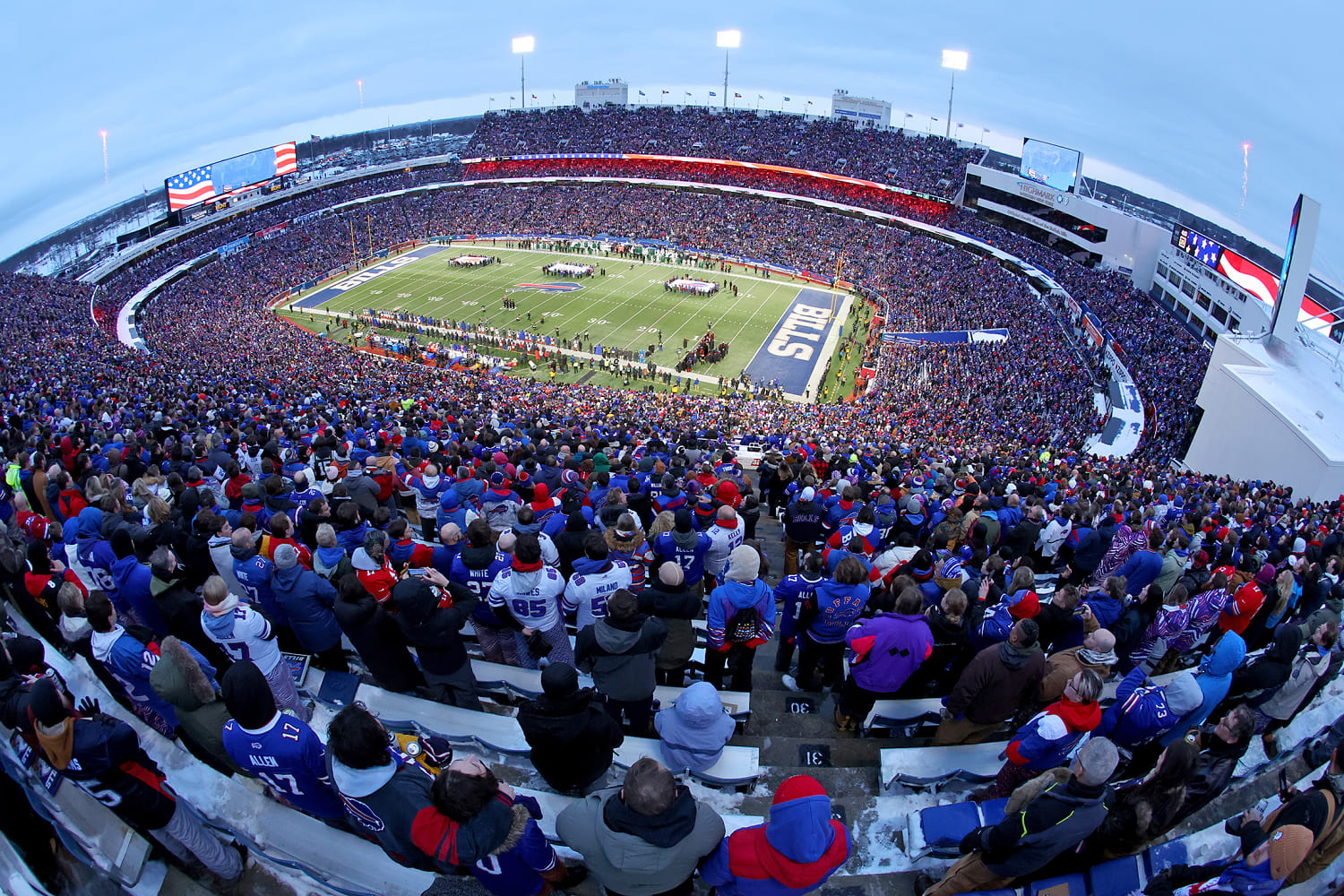
The wrecking balls haven't started their rhythmic destruction of Highmark Stadium yet, but the fans have already begun the autopsy. In Orchard Park, the ritual of "souvenir hunting" has transcended simple nostalgia, morphing into a chaotic, semi-authorized dismantling of a franchise’s physical history. As the Buffalo Bills prepare to move into their new $1.7 billion home across the street, the original structure—a concrete bowl that has weathered lake-effect blizzards and decades of heartbreak—is being picked clean by fans who refuse to let the demolition crews have the final word.
This isn't about buying a keychain at a gift shop. This is about the visceral, sometimes illegal, acquisition of stadium property. Fans are walking out with seat backs, chunks of turf, restroom signage, and even industrial-sized bolts. The organization finds itself in a precarious position, caught between enforcing property laws and acknowledging the deep, spiritual connection a blue-collar fanbase has with a building that served as their Sunday cathedral for five decades.
The Economics of Nostalgia and the Black Market for Plastic
Stadium demolitions usually follow a strict corporate script. A third-party liquidation firm is hired to auction off high-value items—lockers, scoreboard components, and premium seating—to the highest bidders, with proceeds often offsetting construction costs or going to charity. However, the passion of the Buffalo faithful has outpaced the bureaucracy of liquidation.
While the Bills and Erie County officials have warned that removing property is technically theft, the sheer volume of "missing" items suggests a silent consensus. For many fans, paying a premium for a certified seat through an official auction feels like a betrayal of the stadium's gritty identity. They would rather have the piece of plastic they actually sat on during the "Wide Right" era or the 13-second heartbreak in Kansas City.
The secondary market is already reflecting this surge in supply. Unofficial memorabilia from the stadium is appearing on digital marketplaces within hours of games ending. We are seeing a shift where the value isn't in the "official" nature of the item, but in the story of how it was liberated from the stands. This presents a unique business challenge for the franchise. If they crack down too hard, they alienate the very people expected to buy personal seat licenses in the new stadium. If they ignore it, they lose millions in potential auction revenue and face significant safety liabilities as fans bring tools into the stands.
Why We Cling to Concrete
To an outsider, a cracked plastic seat or a handful of synthetic grass is trash. To a Western New Yorker, it is a relic. To understand the "why" behind the scavenging, one must look at the psychological weight of the Ralph Wilson/Highmark era. This stadium wasn't just a place where sports happened; it was a communal anchor in a region that has often felt overlooked by the national media and the league's elite.
Sociologists call this "place attachment," but in Buffalo, it’s more like an inheritance. Fans are grabbing pieces of the stadium because they are terrified of the sterilization that comes with modern NFL venues. The new stadium promises climate-controlled lounges and high-end culinary options, but it cannot manufacture the fifty years of spilled beer and frozen tears embedded in the old concrete. By taking a sign or a seat, fans are trying to transplant the soul of the old yard into their basements and garages. They are physically bringing the "Old Buffalo" into an uncertain future.
The Liability of the Leftovers
From a structural and legal standpoint, the scavenging creates a nightmare for the contractors tasked with the eventual teardown. Highmark Stadium is an aging beast. Decades of patchwork repairs mean that certain areas of the facility contain materials that require professional handling. When fans rip out signage or wiring, they aren't just taking a memento; they are potentially exposing themselves and others to industrial hazards.
Furthermore, the "Great Harvest" of Orchard Park highlights a massive gap in how the NFL manages its historical transitions. While teams like the Yankees or the Braves have turned stadium closures into highly orchestrated, multi-million dollar merchandising events, the Bills’ transition feels more like a frontier town being abandoned. The lack of a clear, affordable path for the average fan to own a piece of the building has created the very "looting" culture the authorities now decry.
The Counter Argument against Modern Souvenir Culture
There is a segment of the fanbase that views this scavenging with disdain. They argue that the obsession with physical objects cheapens the actual memory. If everyone has a piece of the turf, does any piece actually matter? There is also the reality of the New Buffalo. The move to the new stadium represents the team’s long-term viability in a small market. Every stolen seat represents a minor friction in a multi-billion dollar project meant to secure the team's presence for another thirty years.
The tension lies between the "Mafia" identity—rebellious, rowdy, and rooted in the physical experience—and the "Corporate" identity required to compete in the modern NFL. The fans taking the signs are the ones who stayed through the seventeen-year playoff drought. They feel they have already paid for those seats ten times over through tickets, taxes, and emotional labor.
The Logistics of the Exit
The actual demolition process will be a surgical operation, not a sudden explosion. Because of the proximity to the new construction site, the old stadium must be dismantled with precision. This makes the "missing" components even more problematic for engineers who rely on accurate blueprints of what remains.
As the final season at Highmark winds down, the intensity of the scavenging will only increase. Security presence has been bolstered, but you cannot guard every bolt in a sixty-thousand-seat bowl. We are witnessing the final, messy breakup between a city and its most famous landmark.
The fans aren't waiting for a formal goodbye. They are taking the building home with them, one row at a time. The result will be a new stadium that is technically perfect, and thousands of Western New York basements that contain the jagged, authentic remains of a legendary era. The era of the "Ralph" won't end with a controlled demolition; it will end when the last fan walks out of the tunnel with a bathroom sign tucked under their arm.
The Preservation of Grit
The Bills organization faces a choice. They can continue to issue hollow threats of prosecution, or they can lean into the chaos. Some teams have found success by setting up "demo days" where fans can pay a nominal fee to safely remove certain items under supervision. This mitigates the safety risk and provides the fans with the closure they clearly crave.
Buffalo, however, has always done things the hard way. The spontaneous, unauthorized dismantling of Highmark Stadium is perhaps the most "Buffalo" end possible for the venue. It is unpolished, it is slightly dangerous, and it is driven by an intense, localized passion that no corporate marketing department could ever replicate.
The new stadium will have better sightlines. It will have faster Wi-Fi. It will have restrooms that don't feel like a trip back to 1973. But it won't have the history. Not yet. That history is currently being loaded into the back of pickup trucks in the Orchard Park parking lots, destined for man-caves and backyard shrines where it will be polished and protected long after the original site has been paved over.
The demolition has already happened in the minds of the fans. They have moved on from the building and moved into the phase of curation. The stadium is no longer a functioning sports venue; it is a quarry. And the people of Buffalo are the miners, digging for whatever gold they can find in the gray concrete of their youth. The final whistle didn't blow at the end of a game; it blew when the first fan realized the stadium belonged to them more than it belonged to the county or the league.
The rubble won't just be hauled away to a landfill. It will be scattered across the suburbs, a thousand tiny monuments to a half-century of cold Sundays. This is how a legend dies in Orchard Park: not with a bang, but with a wrench and a heavy lift.