The green glow of a telemetry monitor does bad things to human eyes after twelve hours. In the quiet theater of a modern defense analytical bureau, there are no explosions. There is only data. A jagged line spikes on a graph, a thermal signature blossoms on a satellite feed over the Middle East, and suddenly, a room full of people holding lukewarm coffee realizes that everything they thought they knew about modern warfare is wrong.
For twenty years, the prevailing wisdom in military tech circles has been obsessed with the shiny, the new, and the staggeringly expensive. We were told that the future belonged entirely to stealth drones, AI-driven targeting, and hypersonic gliders that skip along the upper atmosphere like stones across a pond. The old stuff? Scrap metal. Relics of a bygone century, meant for museums or scrapyards.
Then the sky over the desert tore open.
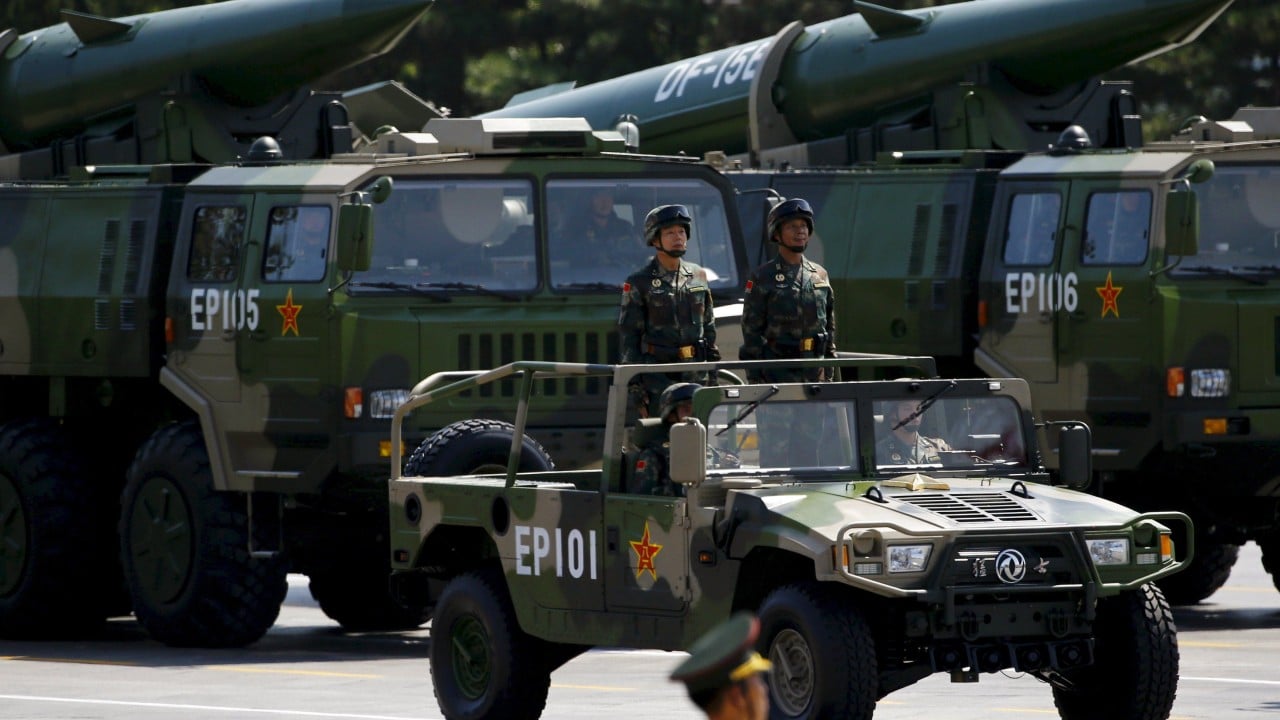
When the smoke cleared from the recent exchanges in the region, analysts looking at the wreckage did not just find the remnants of ultra-modern tech. They found the fingerprints of design choices made in the late 1980s and early 1990s. Specifically, they found the lingering ghost of China’s Dongfeng 15B.
The DF-15B is not a media darling. It does not get featured in slick promotional videos with cinematic music. It is an aging, short-range ballistic missile, a stalwart of the People’s Liberation Army Rocket Force that has spent decades sitting in concrete silos and mobile launcher tubes. Yet, its performance—and the performance of its technological descendants—just sent a shockwave through the pentagons and defense ministries of the Western world.
It turns out that brute force, when paired with just enough clever engineering, does not age out. It just waits.
The Weight of Simple Iron
To understand why this matters, step away from the spreadsheets and think about a basic physical reality. Imagine throwing a baseball at a window. Now imagine throwing a brick. You can invent a highly sophisticated catcher's mitt to catch the baseball, but if someone hurls a brick fast enough, the sheer kinetic energy changes the math completely.
The DF-15B is that brick.
Developed during the tail end of the Cold War and refined at the turn of the millennium, the missile was designed for a specific, brutal job: to strike targets rapidly before an adversary could react. It travels at speeds that make intercepting it less about skill and more about the raw limits of human physics.
During the recent escalations, defense networks that cost billions of dollars to implement found themselves strained to the absolute breaking point. The narrative we have been fed for a generation is that modern missile defense is an unbreachable shield. We watch promotional animations of interceptors clean-killing incoming threats with mathematical precision.
The reality on the ground looked entirely different. When dozens of ballistic missiles rain down simultaneously, the sky becomes crowded, chaotic, and terrifyingly fast. The older tech did not need to be invisible to radar. It just needed to be fast, heavy, and numerous.
When Old Math Beats New Software
Consider a hypothetical air defense operator named Marcus. He sits in a climate-controlled command vehicle, surrounded by screens that display a pristine, digitized version of the airspace. His system is designed to track hundreds of targets. It uses algorithms that predict flight paths down to the millimeter.
But algorithms are built on assumptions. They assume the incoming threat will behave logically, or that it follows the predictable ballistic arcs of yesteryear.
The DF-15B introduced a wrinkle that still confuses modern systems: a maneuvering re-entry vehicle. As the missile plummets back toward earth at Mach 6, it does not just fall. It shifts. Small aerodynamic fins adjust its trajectory in the final seconds of flight.
To Marcus's radar screen, this looks like a glitch. The track jumps. The interceptor missile, traveling at equally blinding speeds, tries to correct its course, but physics wins. A correction at Mach 5 requires an immense turning radius. The interceptor misses by a matter of meters. In the world of high-explosive warheads, a miss by a meter is still a catastrophe for whatever is sitting on the ground below.
This is the hidden crisis facing contemporary military strategy. The world spent the last two decades preparing for a digital war of hacks, disruptions, and precision drone strikes. Meanwhile, the actual math of hard power remained stubbornly tied to kinetic mass and velocity.
The Economics of the Sky
There is a cold financial asymmetry that nobody in high-level defense briefings likes to talk about publicly. It is the math of bankruptcy.
An interceptor missile—the kind fired by Western Patriot batteries or advanced naval vessels—is a miracle of modern science. It is packed with gold-plated sensors, miniature thrusters, and proprietary software. It costs anywhere from three million to eight million dollars per shot. And because security requires certainty, operators almost always fire two interceptors at every incoming target.
A legacy ballistic missile like the DF-15B, built in volume using established industrial processes, costs a fraction of that amount.
When those missiles poured into the airspace during the conflict, they did not just test the physical limits of the defense systems; they drained the bank accounts and the ammunition stockpiles. A nation can possess the most advanced shield in human history, but if the enemy has fifty more bricks than you have shields, the fifty-first brick gets through.
The recent deployment proved that these aging systems are not obsolete assets waiting for decomposition. They are highly efficient economic hammers designed to shatter the fragile financial sustainability of modern defense architecture.
The Human Cost of False Security
The danger of believing your own promotional material is that it creates a profound sense of complacency. For years, cities and military bases protected by top-tier defense systems felt untouchable. The recent conflict shattered that illusion in a single evening of screaming sirens and thunderous impacts.
Seeing footage of old-school ballistic platforms successfully bypassing or overwhelming contemporary defenses forces us to confront an uncomfortable truth. We are not as safe as the tech companies promise us we are. The reliance on complex, fragile ecosystems of satellites, data links, and AI targeting creates a single point of failure that a heavy piece of flying metal can simply smash through.
The technicians who designed the DF-15B decades ago understood something that we forgot: war is ultimately governed by friction, gravity, and mass. By focusing on upgrading the guidance packages of these older rockets rather than building entirely new platforms from scratch, they created a weapon system that bridges the gap between industrial-era mass production and digital-era precision.
The Echo in the Silence
The monitors in the analytical bureau eventually go quiet. The satellite tracks fade from red back to blue. The immediate crisis passes, but the data remains logged in the servers, a permanent record of an uncomfortable revelation.
The lesson of the desert is not that we should abandon technological progress. It is that we must stop confusing age with irrelevance. The DF-15B and its technological kin proved that the designs of the past century are still fully capable of dictating the terms of the present one.
As defense planners look at the charred craters and the depleted stockpiles of multi-million-dollar interceptors, the realization sets in. The big guns never really left the field. We just chose to stop looking at them.