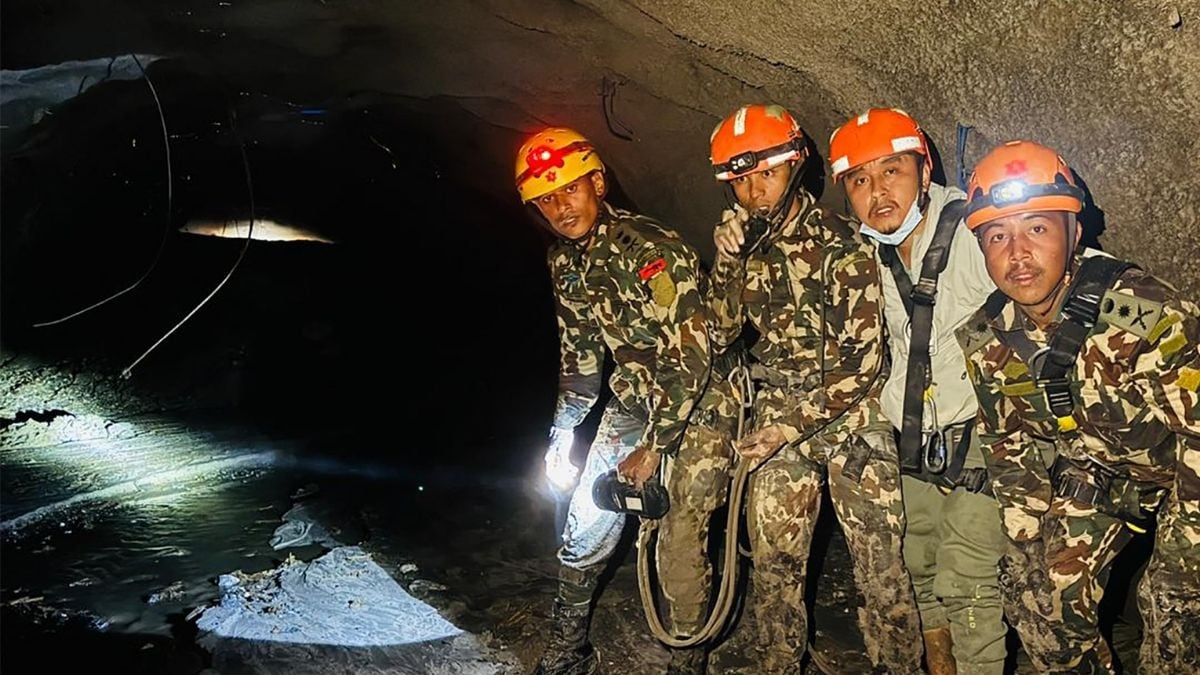
When the Nepali Army wrapped up its sweep of the flood-hit Rasuwagadhi Hydropower Project tunnel, the result was stark: nobody was inside. Not a survivor, and not a body. Yet, 93 people tied to the 111-MW project remain completely unaccounted for.
That grim reality leaves families, engineers, and rescue coordinators facing a punishing question. If the workers aren't inside the cleared tunnel shafts, where on earth did they go?
The disaster struck when a catastrophic flash flood—triggered by a high-altitude glacial collapse near the Tibet border—thundered down the Bhotekoshi-Trishuli river corridor. The wall of water, ice, and massive boulders didn't just smash roads and bridges; it slammed directly into active hydroelectric sites where hundreds of construction workers and operational staff lived and worked.
At Rasuwagadhi, project data shows that the missing pool includes 51 direct employees, 42 workers, and project chief Santosh Adhikari. Contrary to early fears that a massive workforce was trapped deep underground during the deluge, project engineers clarified that only three employees were actually on duty inside the tunnel when the alarm sounded. Their exact fate remains unknown, as they may have been swept away or cut off before they could exit.
The other missing people weren't underground at all. Most were staying at the project’s residential quarters in Timure, a settlement that took the direct brunt of the torrent before standard morning shifts began. When a wall of mud and debris ten to twelve feet deep buries an entire valley camp, the boundary between being trapped inside a structure and being swept into a churning river blurs instantly.
The Wider Crisis Along the River Corridors
Rasuwagadhi is only one piece of a much larger catastrophe. Across 11 different hydropower projects in the Rasuwa and Nuwakot districts, hundreds of workers vanished as the river systems overflowed. Sites like Upper Trishuli 1 and Upper Trishuli 3B have reported massive clusters of missing personnel, pushing the total number of unaccounted-for energy workers into the hundreds.
Rescue operations have turned into an exhausting international effort. Specialist teams from India and China joined local Nepali soldiers, deploying thermal drones, heavy excavation machinery, and canine units to pick through miles of wreckage. But working inside these tunnels is agonizingly slow. Muck, gravel, and massive rockfalls have choked off entry points, and structural cave-ins make every meter a hazard for the rescuers themselves.
Dealing With the Grim Downstream Reality
As days pass with zero sign of life inside cleared shafts like Rasuwagadhi, search priorities are shifting. Authorities are increasingly confronting the reality that many missing individuals were swept far downstream. Unidentified bodies are now turning up miles away from the initial impact zones, recovered near lower districts as river levels slowly recede.
For the families waiting outside army barracks and coordination centers, the lack of definitive answers is absolute torture. Processing lists of survivors, cross-referencing contractor rosters, and waiting for DNA identifications from bodies recovered downstream constitutes the daily routine of grief in the valleys north of Kathmandu.
If you are tracking relief efforts or looking for official updates on missing personnel, rely exclusively on bulletins issued by the National Disaster Risk Reduction and Management Authority of Nepal or certified project operators. Avoid unverified social media casualty tallies, as rescue teams continue the difficult work of clearing access routes and stabilizing compromised terrain across the affected districts.