The coffee always tastes different right before something breaks.
You hold the paper cup, feeling the heat bleed through the cardboard, listening to the familiar, hypnotic hum of the station. Metal breathing against metal. The British landscape sliding past the window in blurred strokes of emerald and slate. It is a quiet kind of security, born of routine. Millions of people board these trains every single morning without a second glance at the physics keeping them anchored to the earth. We trust the steel. We trust the invisible engineering that has woven towns and cities together for nearly two centuries.
Until the world tilts on its axis.
Near Lewes, that routine shattered.
The Sound of Stability Breaking
Train tracks look permanent. They are bolted down with heavy timber, bedded in crushed granite, and engineered to endure generations of relentless weight. But steel is stubborn, and earth is restless.
(Note: The following scenario is a hypothetical reconstruction based on verified transport safety patterns and eyewitness accounts of sudden derailments.)
Picture a commuter—let us call him Arthur, though he could be anyone clutching a briefcase and checking a phone. Arthur is looking at an email about a quarterly report. The carriage gives a sudden, violent shudder. Not the gentle sway of a normal curve, but a sharp, biting wrench that knocks the coffee from his hand. The liquid splatters against the glass, hanging suspended for a microsecond before gravity takes over.
Then comes the noise.
It is not a polite squeal of brakes. It is a deafening shriek of tearing metal, the agonizing roar of tons of Victorian-era infrastructure colliding with modern velocity. The floor drops away from under Arthur's boots. The world flips sideways. Windows that framed the quiet Sussex countryside suddenly turn into ceilings framing gray sky and churning ballast.
In less than three seconds, the ordinary becomes catastrophic.
When the Arteries Harden
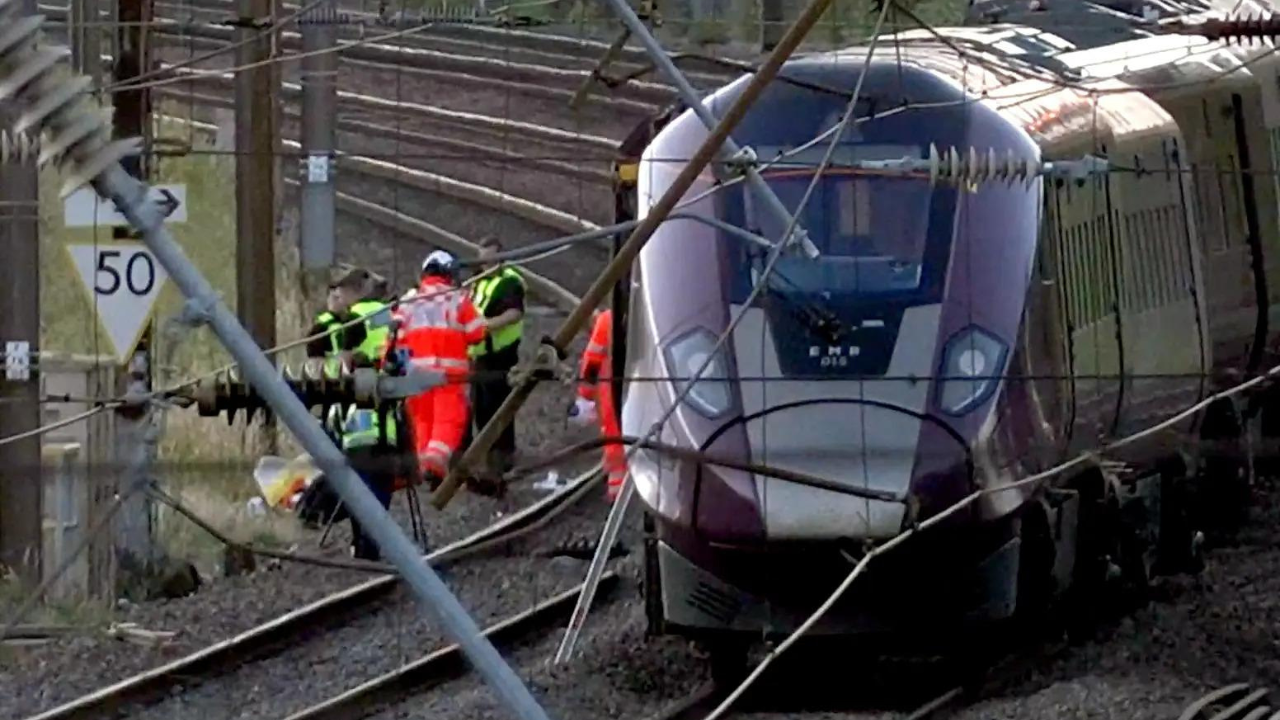
Rail transport is the lifeblood of an island nation. When a passenger train derails and rolls onto its side near Lewes, the immediate aftermath is a flurry of sirens, flashing amber lights, and emergency responders cutting through twisted aluminum. But the ripples spread far beyond the Sussex embankment.
Rail routes are arteries. Pinch one, and the entire circulatory system of the region begins to starve.
Commuters stranded on platforms miles away stare blankly at departure boards blinking red. Replacement buses are scrambled, creeping along narrow rural lanes that were never designed to shoulder the sudden weight of thousands of displaced travelers. Schedules dissolve. Meetings are missed. Parents stranded miles from daycare centers feel that familiar, cold knot of panic in their stomachs.
We forget how fragile our systems are until they stop working.
Transport safety experts often talk about margins of error in terms of millimeters and degrees. A slight shift in the subgrade caused by heavy seasonal rains, a microscopic fracture in a rail head, a subtle misalignment—these are the ghosts in the machine. They hide beneath the surface, completely invisible to the daily commuter reading their morning paper.
The Weight of Accountability
Why does this matter? Because safety is not a static destination; it is an ongoing, exhausting negotiation with chaos.
Every time a rail incident occurs, an invisible courtroom convenes. Engineers, investigators, and regulators pore over black boxes, track geometry data, and maintenance logs. They look for answers, but they also look for blame. Was it human error? Was it deferred maintenance? Was it an act of nature that simply overwhelmed the safety factors built into the line?
We demand absolute perfection from systems that operate in an imperfect world. We want high-speed convenience without the accompanying vulnerability. But every time we step onto a train, we are making a quiet pact with the unknown. We are placing our lives into the hands of invisible mechanics, signaling systems, and operators we will never meet.
When those tracks give way near Lewes, that pact is temporarily broken. The shockwaves remind us that progress is not a straight line. It is a constant, tense balancing act over an abyss.
The emergency crews finish their work. The twisted carriages are hoisted back onto flatbeds and hauled away into the night. Track workers move in with torches and ballast tampers, sweating under floodlights to stitch the broken rail back together before the morning rush. They drive new spikes into the ties. They laser-align the steel. They restore the illusion of permanence.
Tomorrow, the first train will roll over that exact spot. The driver will grip the throttle. The passengers will sip their coffee, watching the green Sussex hills slide past the glass, safely cradled in the belief that the world is holding steady beneath their feet.