The water did not look dangerous. It never does. To the casual beachgoer scattered along the sun-bleached shoreline, the Atlantic was a flat, glittering sheet of turquoise and gold, deceptively calm under a merciless July afternoon sky. Salt air hung heavy. Laughter drifted from the boardwalk.
Then came the scream.
It wasn't loud. It didn't need to be. Panic has a unique frequency that cuts through the roar of crashing surf and the chatter of a thousand crowded towels.
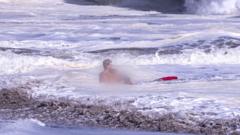
Out past the breaking waves, a pair of arms thrashed against the surface, disappearing and reappearing in a desperate, rhythmic pulse. A rip current had formed silently, a marine river running perpendicular to the shore, dragging two unsuspecting swimmers into a deep channel where the bottom simply fell away.
On the elevated lifeguard stand, a sixteen-year-old girl moved.
There was no hesitation. No second-guessing. Muscles trained through endless, monotonous hours of early morning drills and grueling endurance laps took over before conscious thought could catch up. She grabbed her rescue tube, vaulted down the ladder, and hit the sizzling sand.
Seconds matter when water fills the lungs. Every experienced lifeguard knows the grim mathematics of drowning. Unconsciousness can arrive in under three minutes. Brain damage follows close behind.
She sprinted across the burning expanse of beach, her bare feet kicking up fine white dust, and hurled herself into the surf.
The initial impact of the cold water is a shock to the system. It knocks the breath out of you. But she didn't slow down. She cut through the chaotic white water with powerful, calculated strokes, diving under the heavy incoming sets, reading the ocean's shifting moods with the precision of a seasoned veteran.
Back on the shore, a bystander pulled out a smartphone. The vertical video captured the small, determined figure swimming outward against a hostile sea, a stark reminder of how fragile human safety is against the raw power of nature.
When she reached the outer channel, the situation was worse than it looked from land. Two swimmers were locked in the fatal embrace of panic. When someone is drowning, survival instinct overrides reason. They will climb on top of their rescuer, pushing them under in a frantic bid for air.
She didn't fight them with brute strength. Training taught her redirection.
Approaching calmly, she spoke in a firm, steady voice, offering the bright yellow rescue tube as a floating anchor. When the primary victim tried to grab her, she executed a textbook defensive maneuver, spinning away and positioning the flotation device between them. Within seconds, both swimmers had secured their grip on the rubber tube.
The hardest part wasn't getting to them. It was getting back.
Fighting the rip current requires swimming parallel to the shore until the pull breaks, rather than exhausting yourself fighting directly against the current's invisible grip. Dragging two panicked people while battling the ocean's outward momentum is an exercise in pure willpower. Lactic acid floods the muscles. Lungs burn for oxygen.
Step by step, yard by yard, she brought them in.
When her knees finally scraped against the shallow sand, a cheer erupted from the crowd that had gathered on the shoreline. Towels were wrapped. Paramedics rushed forward with oxygen and blankets. The teenagers were shivering, coughing up saltwater, but alive.
The viral video would later rack up millions of views, praised for its dramatic footage and the astonishing composure of a youth thrust into a life-or-death crucible. But the real story isn't found in the pixelated frames of a cell phone recording.
It is found in the quiet discipline behind the heroism. It is forged in the grueling physical conditioning, the mental fortitude required to stay calm when everyone else is losing their minds, and the profound responsibility carried by teenagers watching over our safety every single day along thousands of miles of coastline.
The cameras stopped rolling. The crowd dispersed back to their coolers and umbrellas. The tide continued its rhythmic, indifferent pull against the shore. But out on the sand, the lifeguard climbed back up her ladder, scanned the horizon, and kept watching.