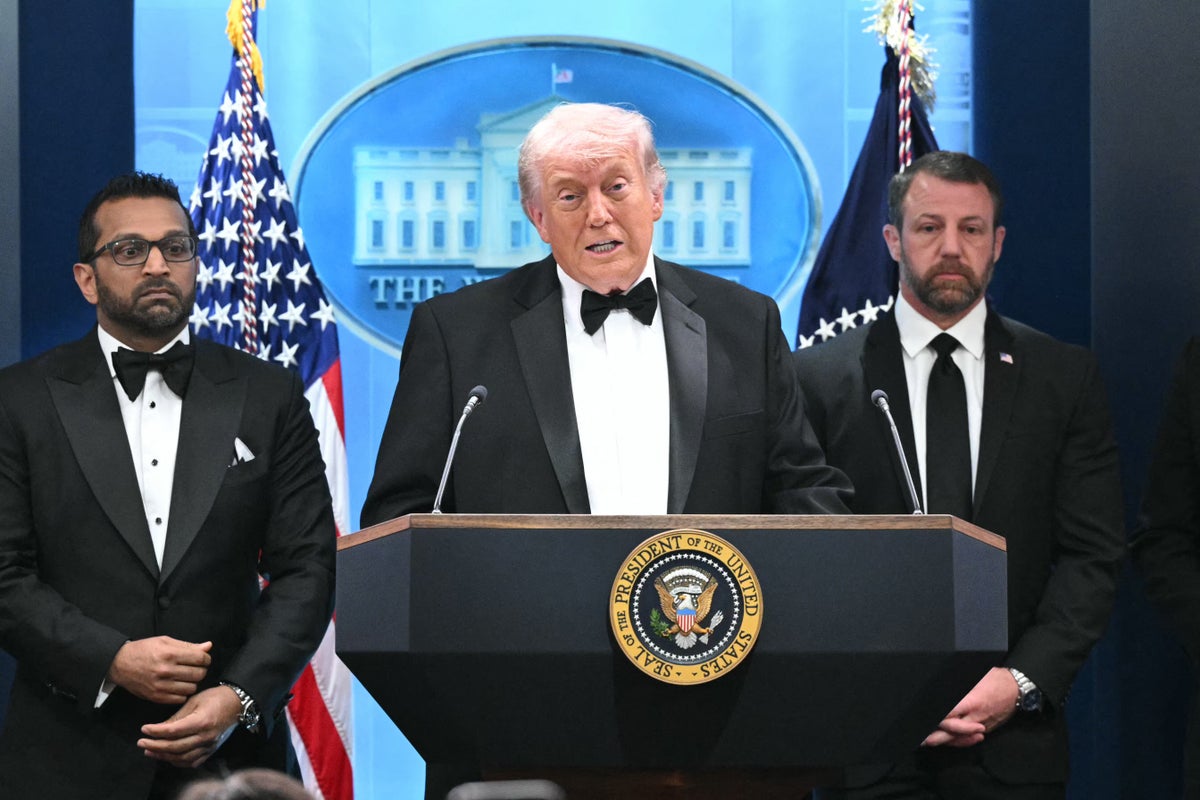
Donald Trump will not retreat. Despite a brush with death that would have forced any other modern politician into a secure bunker for a month-long cooling-off period, the Republican nominee has signaled to his inner circle and his security detail that the rally schedule remains the heartbeat of his campaign. This is not merely a display of bravado or a stubborn refusal to blink. It is a calculated recognition that for the Trump movement, physical presence is the only currency that matters. If the image of the candidate disappears from the stage, the movement loses its central nervous system.
The decision to maintain an aggressive public posture reveals a fundamental truth about the current political climate. The friction between Secret Service protocols and the demands of a populist campaign has reached a breaking point. While security experts scream for indoor venues and bulletproof glass, the Trump campaign knows that the optics of a sprawling outdoor rally are irreplaceable. To move entirely inside is to surrender the very "outsider" energy that defined his ascent in 2016.
The Infrastructure of Defiance
For most political operations, a security scare triggers an immediate pivot to controlled environments. We saw this in the post-9/11 era when town halls became invite-only affairs with heavy screening. Trump is breaking that mold because his brand is built on the perception of being untouchable. His aides aren't just ignoring the risks; they are incorporating the risks into the narrative of the "warrior candidate."
Behind the scenes, the logistical challenge is staggering. Reconstructing a rally schedule in the wake of an assassination attempt requires a massive infusion of resources. We are talking about hundreds of additional man-hours for advance teams, the deployment of tactical assets that are usually reserved for active war zones, and a level of coordination with local law enforcement that strains municipal budgets to the snapping point. Yet, the directive from the top remains clear: the show goes on.
The campaign’s internal polling suggests that the "rally effect" provides a measurable bump in local voter registration and volunteer sign-ups that digital ads simply cannot replicate. When Trump rolls into a swing-state fairground, he isn't just delivering a speech. He is anchoring a multi-day media event that dominates the local news cycle. To stop these events would be to hand over the microphone to a media apparatus he deeply distrusts.
The Security Paradox
There is a grim irony at the heart of this strategy. The very thing that makes the rallies effective—the massive, open-air scale—is what makes them a nightmare to protect. The Secret Service is currently under a microscope, facing some of the most intense scrutiny in the agency's history. Their "manual" suggests a shift toward sites with "predictable lines of sight," which is code for indoor arenas with high-tech screening at every entrance.
However, indoor arenas are expensive. They require months of lead time and come with rigid capacity limits. For a campaign that prides itself on "overflow crowds," an arena with a hard cap of 15,000 people feels like a defeat. Trump’s team views the outdoor spectacle as a visual testament to his popularity. They are betting that the increased security footprint—snipers, drone surveillance, and specialized ballistic glass—can mitigate the danger without sacrificing the aesthetic of the "MAGA" rally.
This isn't just about ego. It’s about the mechanics of momentum. In a polarized electorate, the goal isn't necessarily to flip undecided voters; it’s to ensure that your own side is energized enough to actually show up on Election Day. A candidate who stays home looks like a candidate who is afraid. In the hyper-masculine world of Trumpian politics, fear is the only unforgivable sin.
The Financial Toll of the Front Line
Running a campaign of this magnitude under a heightened threat level is a drain on the coffers. Every outdoor event now requires a "Security Surcharge" that isn't officially on the books but is felt in every line item. Private security firms are being contracted to supplement the Secret Service. Specialized equipment is being hauled across state lines. The burn rate of the campaign's cash is accelerating.
Donors are footing the bill, but there is a limit to how long this can be sustained. If the threat level remains high, the campaign may eventually be forced into a "hybrid" model. This would involve fewer massive rallies and more targeted, high-security events in controlled spaces. But for now, the instruction to the advance teams is to keep scouting the airports and the fields. They are looking for the next stage, the next backdrop, the next opportunity to prove that the movement cannot be intimidated into silence.
Counter-Arguments and the Risk of Burnout
Critics argue that this strategy is reckless, not just for the candidate but for the supporters who attend. A rally is a soft target. By continuing to hold these events, the campaign is betting that lightning won't strike twice. There is also the human element to consider. The staff and the security detail are exhausted. The psychological toll of operating under the constant shadow of a "scare" leads to mistakes.
In the world of professional protection, "complacency kills," but so does "fatigue." If the campaign continues at this breakneck pace, they are testing the limits of their human infrastructure. Aides who have been on the trail since 2022 are now functioning in a high-stress environment that resembles a deployment more than a political race.
The Strategic Necessity of the Crowd
To understand why Trump won't slow down, you have to understand the feedback loop. Trump feeds off the energy of the crowd. He uses these speeches as a testing ground for new rhetoric, watching for the immediate roar or the silence that tells him a line isn't working. It is a live-action focus group.
Without the rallies, the campaign becomes a sterile exercise in television appearances and social media posts. For a candidate who rose to power by shattering the "fourth wall" of politics, returning to a traditional media strategy would feel like an admission of failure. The rallies are the evidence of his power. They are the visual proof that he has a mandate that transcends the polls.
The "scare" has actually increased the demand for these events. Attendance is up. The atmosphere is more charged. Supporters don't just want to hear the platform; they want to witness the survival. This has transformed the rallies from political events into something closer to a victory lap that hasn't ended.
The Legal and Political Interplay
There is also the matter of the calendar. With various legal challenges and court dates still looming in the background, the rally schedule serves as a preemptive strike. By staying in the public eye, Trump frames every legal move against him as an attempt to "stop the rallies." It’s a powerful narrative. It turns a courthouse battle into a battle for the right to assemble.
If he were to retreat from the public square, the legal pressure might begin to dominate the headlines. By staying on the stage, he ensures that the conversation is always about the "movement" and never just about the "defendant." This is a sophisticated use of public relations to manage legal peril. It is a high-stakes gamble that requires him to be physically present, visible, and loud.
The Physicality of the Campaign
We often forget that politics at this level is a physical endurance sport. Trump is an older man who has just survived a traumatic event. The conventional wisdom says he should be resting. But the Trump brand is built on the idea of being "indefatigable." His aides are leaning into this, leaking stories of his late-night meetings and his eagerness to get back on the plane.
This isn't just PR; it’s a core component of his appeal to his base. They see his physical resilience as a proxy for the country’s resilience. If he can stand on a stage after what happened, they feel they can stand through their own economic or social challenges. The rally is the altar where this exchange of energy takes place.
The New Security Standard
We are entering a period where the "unsecured" political event may become a relic of the past. The Trump campaign is currently the laboratory for a new kind of fortress-style campaigning. We are seeing the implementation of mobile ballistic walls, advanced facial recognition at entry points, and a massive increase in plainclothes intelligence officers embedded in the crowds.
These measures change the vibe of a rally. It becomes less like a festival and more like a high-security summit. Yet, the supporters don't seem to mind. In fact, for many, the increased security adds to the importance of the event. It reinforces the idea that they are part of something "dangerous" and "consequential."
The Burden on Local Governments
One factor that is often overlooked is the immense strain this puts on the towns and cities that host these events. When a campaign refuses to slow down despite a heightened threat, the local police department is the one that has to cancel vacations and pay out thousands in overtime. Many small towns are still struggling to recoup costs from previous cycles.
The "defiance" of the campaign has a price tag that is often picked up by the taxpayer. While the campaign brings in a temporary surge of business for local hotels and diners, the net cost of the security operation often leaves a hole in the municipal budget. This is a friction point that will only intensify as the election draws closer and the security requirements become even more stringent.
The Media’s Role in the Spectacle
The media is a silent partner in this refusal to slow down. The cameras follow the rallies because the rallies provide the best footage. A "scare" makes the footage even more valuable. The campaign knows that every time they go live from a tarmac or a stadium, they are commanding the "A-block" of every news program in the country.
If Trump moved to a more cautious, low-profile strategy, his media value would drop. He would become just another candidate giving a speech in a room with blue curtains. By staying in the "danger zone," he keeps the cameras locked on him. It is a cynical but effective way to dominate the information environment.
The Movement as a Shield
Ultimately, Trump’s aides recognize that the movement itself is his greatest protection. Not just in a physical sense, but in a political one. As long as he can fill a field with 20,000 screaming fans, he is a force that cannot be ignored or sidelined. The rallies are the physical manifestation of his "armor."
To slow down would be to let the armor crack. To stay inside would be to admit that the world has become too dangerous for his brand of politics. For Donald Trump, the stage isn't just a place to talk; it’s the only place where he is truly in control. He will stay on that stage until the very last moment, regardless of the warnings from his security detail or the jitters of his staff.
The strategy is set. The planes are fueled. The stages are being built in fields across the rust belt and the sun belt. The choice has been made to prioritize the image of strength over the reality of safety, a decision that defines not just a campaign, but an era of American life where the spectacle is the only thing that remains real.
The next rally isn't just a campaign stop; it's a test of the American security state’s ability to protect a man who refuses to be protected.
Stay on the lookout for the next scheduled appearance in Pennsylvania, as it will serve as the ultimate litmus test for these new security measures in an open-air environment.