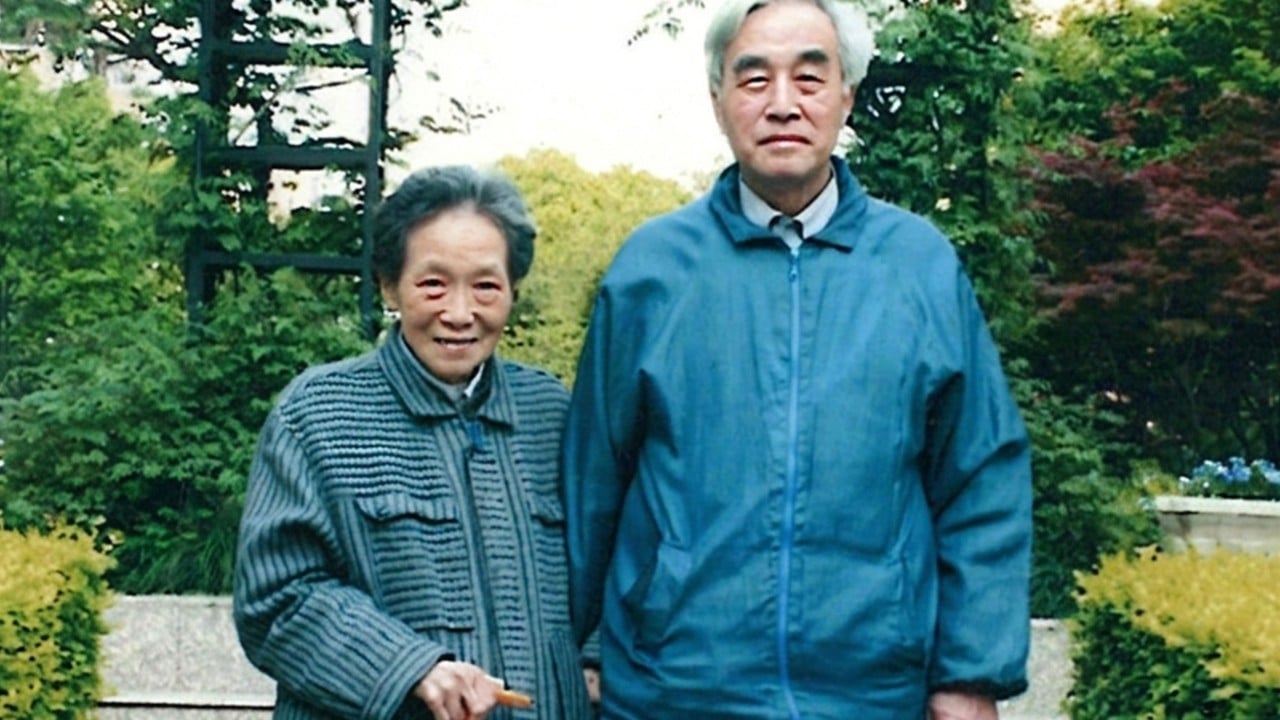
The steam rising from a bowl of pork and rice in a cramped neighborhood diner carries a specific weight. It smells of scorched soy sauce, cheap peanut oil, and the relentless hustle of a city that never stops to ask if you are tired. To the casual observer, the elderly man and woman tucked into the corner booth of the Hong Kong eatery were invisible. They were just another pair of graying heads bowing over a Formica table.
They ordered one meal. Always one.
The plate arrived piled high with rice, a few strips of pork, and a sparse scattering of greens. It cost roughly twenty-five local dollars, the equivalent of two American dollars and fifty cents. The old man took his chopsticks and meticulously divided the mountain of rice into two perfect halves. He slid the plate toward his wife. She ate her portion with slow, deliberate movements. When she was done, she pushed the remaining food back to him. They did not speak much. Silence was their language, perfected over decades of walking side-by-side through a world that was rapidly outgrowing them.
Neighbors who watched them from across the alleyway or passed them on the narrow stairwells of their concrete apartment block whispered about their poverty. People muttered about the tragedy of aging without a safety net. In a society that increasingly measures human worth by the brand of a handbag or the square footage of a high-rise apartment, this couple looked like a cautionary tale. They wore faded jackets with frayed cuffs. They walked instead of taking the minibus. They chose the bruised fruit at the end of the market day because it was marked down to pennies.
They had no children to look after them. In the traditional framework of their culture, a childless old age is often viewed with a quiet, lingering pity. It implies a house without echoes, a future without an anchor.
But the pity was entirely misplaced.
The Calculus of Sacrifice
Human beings are hardwired to gather. We collect houses, cars, digital praise, and numbers on a screen, convinced that these things form a fortress against our mortality. When we see someone actively refusing to participate in this accumulation, we assume they lack the means. We rarely consider that they might be operating on an entirely different economic system.
The old couple was not poor. They were spectacularly, quietly wealthy.
When the final accounts of their lives were examined after their passing, the quiet old man and his wife did not leave behind an empty bank account or a mountain of debt. They left behind an inheritance of seven hundred and thirty-five thousand dollars.
Let that number sit in the air for a moment. Nearly three-quarters of a million dollars amassed by two people who refused to spend more than three dollars on dinner.
To understand how a fortune like that grows in the dark, you have to look at the mechanics of modern life. Most of us live in a state of constant financial evaporation. A subscription here, a premium coffee there, a slightly newer phone because the old one feels fractionally slower. We call it standard of living. The old couple looked at those same expenditures and saw something else entirely. They saw a leakage of purpose.
Every saved coin was a deliberate choice. Their frugality was not a symptom of misery; it was a disciplined, decades-long campaign. They did not view money as a tool for personal comfort. They viewed it as raw material for a construction project that no one else could see.
The Invisible Stakes
Think about what it takes to split a two-dollar meal when you have hundreds of thousands of dollars sitting in a vault. It requires an almost superhuman resistance to the chorus of modern consumerism. It means sitting in a cold room during the damp winter months and deciding that a space heater is an unnecessary luxury. It means looking at a piece of fresh fish at the market and choosing the salted turnip instead.
Why do it? What is the internal engine that drives two people to deny themselves the basic comforts of their golden years?
The answer lay in where that money was destined to go. The entire fortune was willed to foundations dedicated to treating sick children from impoverished backgrounds. Children they would never meet. Children whose names they would never know. Children who were fighting for their next breath in hospital wards miles away from the couple’s quiet neighborhood.
Consider the reality of a pediatric ward in a public hospital. It is a place where the stakes are stripped of all pretense. There, the enemy is not a bad day at the office or a dip in the stock market. The enemy is a failing organ, a malignant cell, or a treatable infection that a family simply cannot afford to cure. For a parent sitting beside a metal crib, the difference between a future and a lifetime of grief often comes down to a number. A specific cost for a surgery. A price tag on a vial of medicine.
The old couple understood this implicitly. They had no children of their own, which meant, in their minds, every child belonged to them.
They transformed their lack of an immediate heir into a universal parenthood. Every time they split a meal, they were choosing to fund a future heartbeat. Every time they walked in the rain instead of paying for a taxi, they were purchasing a dose of medicine for a child whose parents had run out of options.
A Different Kind of Legacy
We are obsessed with building monuments to ourselves. Executives demand their names on university buildings. Influencers document every charitable act for the sake of digital validation. We want the world to know we were here, and we want them to know we were generous.
The old couple operated in the shadows. They did not seek a plaque on a wall. They did not demand that a hospital wing be named after them. They simply lived their small, quiet life to the very end, leaving the money to speak for them after they were gone.
Their story forces us to look in the mirror and evaluate the true cost of our convenience. We live in an era where sacrifice is an unpopular word. We want to help others, but only after our own desires have been fully satisfied. We give from our excess, never from our core. We donate the clothes we no longer wear or the money we won't miss.
This couple gave their entire existence. They traded their own physical comfort, their meals, their clothes, and their standard of living so that a stranger's child could have a birthday next year.
The next time you walk past a cheap diner and see an elderly couple sharing a single plate, look closer. Do not assume you are witnessing scarcity. You might just be looking at the architects of a miracle, quietly saving the world one shared meal at a time.