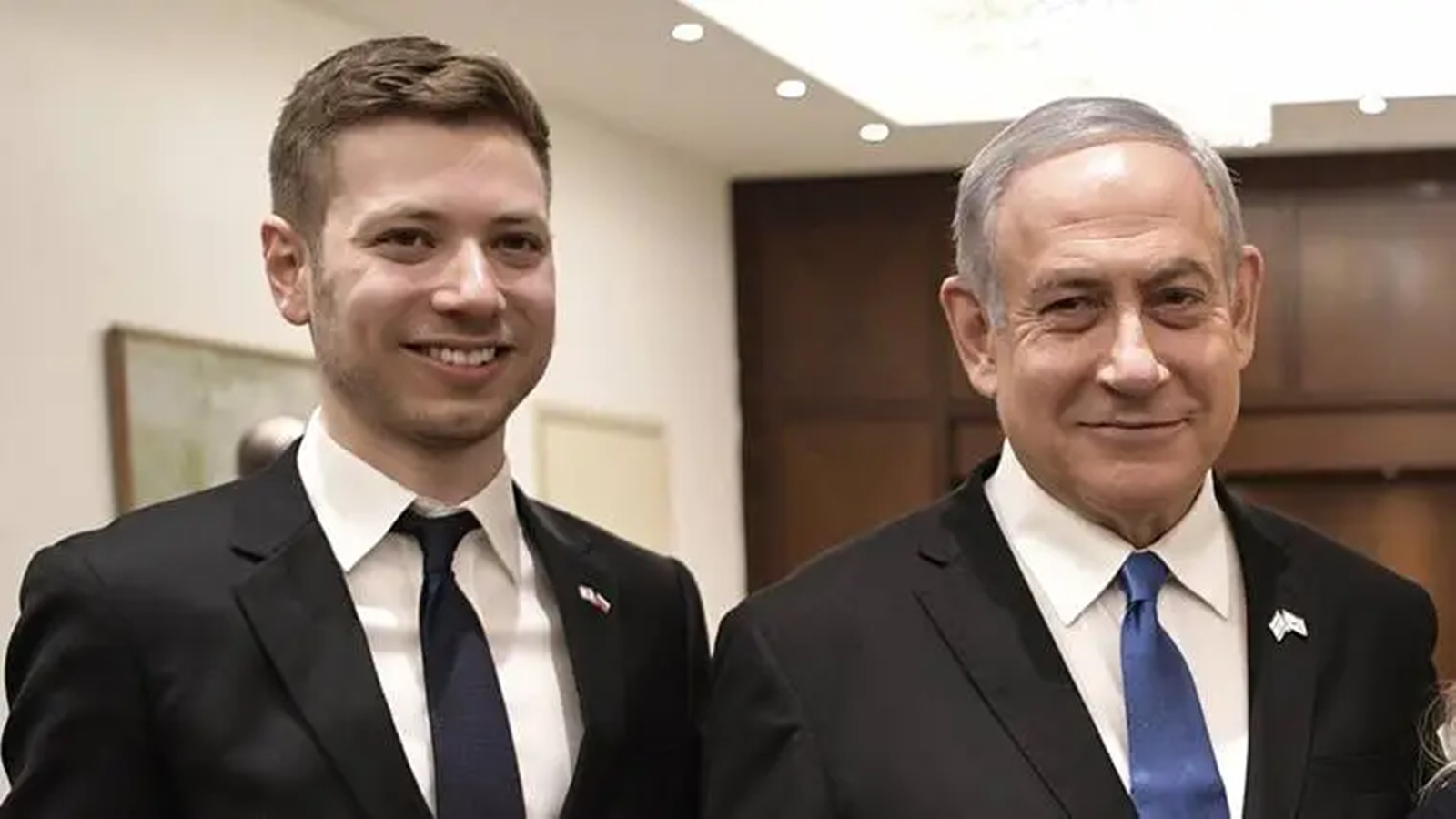
The coffee in the stainless-steel thermos was cold by the time the secure line rang, but Yair Netanyahu had other things to worry about. Outside the guarded perimeter of his temporary American refuge, ordinary life moved with the careless grace of a Tuesday afternoon. Cars hummed along the highway. Pedestrians laughed, their breath pluming in the crisp air. Inside, however, the temperature sat at absolute zero.
Quietly. Suddenly. Without warning. Recently making waves lately: Why Every Narrative About The Latest Iran Strikes Misses The Point Completely.
That was how the directive arrived. Not through a public bulletin or a diplomatic cable, but via the cold, unyielding calculus of intelligence agencies whose business is survival. Somewhere in the sprawling bureaucracy of Middle Eastern espionage and counter-terror operations, a tripwire had snapped. An Iranian assassination plot, meticulously plotted across oceans and monitored through encrypted chatter, had crossed the threshold from hypothetical menace to imminent danger.
To understand what happened next, you have to look past the political headlines and the endless media noise. You have to look at the human cost of a family name that carries the weight of a nation at war. Additional information on this are explored by The New York Times.
For months, the younger Netanyahu had lived a life of gilded exile in the United States, far from the sirens and missile shelters of Tel Aviv. Yet distance is an illusion in the modern age of asymmetric warfare. Shadows do not need passports. When state-sponsored operatives set their sights on a target, borders blur. The threat intelligence, pieced together by allied agencies and Israeli handlers, pointed to a localized vulnerability. The signals were unmistakable. Surveillance footprints, suspicious movements, and specific chatter intercepted from external actors converged on a single terrifying conclusion: the window to act was closing by the hour.
Emergency evacuations are rarely cinematic affairs filled with screeching tires and gunfire. Instead, they are exercises in profound, suffocating silence.
Imagine waking up with the absolute certainty that the room you are standing in is no longer safe. Imagine being told that every routine you have established over the past six months—the morning walk, the familiar café, the quiet sanctuary of a rented home—has been mapped, measured, and weaponized by people who wish to see you dead simply because of who your father is.
That was the reality when security details descended with hurried urgency. There was no time for packing. Sentimental items stayed behind on desks and counters. Digital devices were wiped or secured. The objective was singular and brutal: extract the principal before the net tightened.
The mechanics of such an operation require a choreography born of paranoia and precision. Safe houses are rotated. Armored vehicles materialize from the gloom of underground garages. Flight paths are altered mid-air. When Yair Netanyahu was rushed out of his American sanctuary, he was swept into a hyper-controlled slipstream of diplomatic protection and private transit, a ghost moving through a world entirely unaware of the invisible war brushing against its sleeve.
This is the hidden tax of geopolitical conflict. It does not stay neatly contained within the jagged borders of the Levant. It bleeds outward, pooling in quiet Western suburbs, finding the weak points in globalized security architectures. When foreign powers target the family members of political figures on foreign soil, the rules of engagement fracture. The battlefield expands to encompass every street corner, every apartment complex, and every quiet harbor where the machinery of statecraft intersects with human vulnerability.
We often talk about war in macroeconomics and casualty counts. We count rockets intercepted by Iron Dome batteries and negotiate ceasefires in air-conditioned rooms in Doha or Cairo. But war is also deeply intimate. It is lived in the sudden tightening of a mother's chest, the midnight phone call that changes a life in a heartbeat, and the frantic midnight extraction of a young man whose only crime was sharing blood with a prime minister.
The threat did not materialize out of thin air. It is the continuation of a shadow war that has been escalating for decades, fought with cyber weapons, proxy militias, and targeted hits. Tehran’s reach, long demonstrated across the Middle East, has increasingly sought asymmetric leverage abroad. To strike a leader's family is to strike at their psychological core, to pierce the armor of state power by finding the soft, human flesh underneath.
When the doors of the transport finally locked and the wheels lifted off the tarmac, carrying him toward a destination shrouded in operational secrecy, the immediate crisis subsided. Yet the deeper reality remained unaltered.
Security is never permanent; it is merely bought in installments.
As the plane cut through the dark skies, leaving the American coastline far behind, the silence in the cabin was heavy with the realization that the world has grown terribly small for those marked by the crosshairs of history. Down below, millions of people continued their ordinary lives, completely untouched by the tempest that had just swept past them. But up here, in the freezing thin air of the upper atmosphere, the shadow still stretched long and dark, waiting for the next tremor in the fault lines of the world.