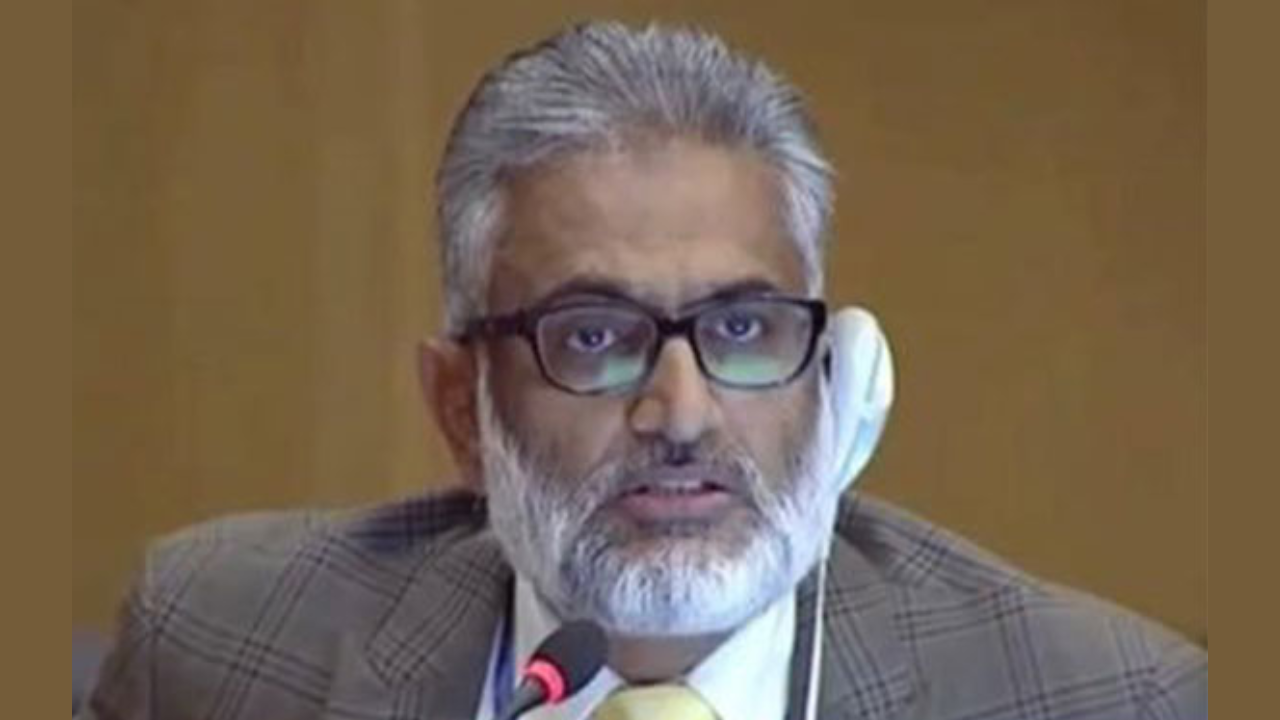
Politics is rarely about the policies printed on glossy brochures. It is about the ghosts that haunt the candidates and the words that slip out when the cameras are supposed to be off. In the frantic, rain-slicked streets of a British election cycle, a name began to circulate through the digital ether, carrying with it the weight of a geopolitical firestorm. Sajjad Raja. To some, he was just another face on a Reform UK poster. To others, he represented a fracture line in the very foundation of modern political discourse.
The controversy did not start in a boardroom or a debate hall. It started with eight words that have become the most radioactive sentence in the English language.
"From the river to the sea."
When those words left Sajjad Raja’s digital footprint, they didn’t just sit there. They ignited. For a candidate representing a party that prides itself on "common sense" and "straight talking," the phrase acted like a lightning rod in a thunderstorm. The backlash was instantaneous. But to understand why a few words can derail a political career, we have to look past the headlines and into the messy, complicated reality of a man trying to bridge two worlds that are currently at war.
The Weight of a Phrase
Imagine standing in a crowded room where half the people hear a cry for liberation and the other half hear a call for erasure. That is the tightrope Raja decided to walk. For the Jewish community and many political watchdogs, the phrase "from the river to the sea" is not a poetic aspiration. It is seen as a direct threat to the existence of Israel, a demand for the removal of a state and its people.
Critics argue that when a political candidate uses this language, they aren't just expressing sympathy for a cause. They are signaling an alignment with ideologies that the UK government and various international bodies have flagged as deeply problematic, if not outright hateful.
Raja, however, found himself in the middle of a different narrative. He is a man who has spent years vocalizing the struggles of marginalized groups, particularly in the context of Kashmir. For him, and for many who share his background, the language of "liberation" feels like a natural extension of human rights advocacy. But politics is not about intent. It is about impact.
The impact was a PR nightmare for Reform UK. The party, led by Nigel Farage and Richard Tice, has spent years trying to shed the image of being a haven for fringe or extremist views. They want to be the "voice of the forgotten," not the voice of the controversial. When Raja’s past comments surfaced, the friction between the party’s central messaging and the candidate’s personal rhetoric became a gaping wound.
The Search for the Real Sajjad Raja
Who is the man behind the headline? He isn't a career politician who grew up in the hallowed halls of Westminster. Raja’s journey is one of activism. He has long been a vocal proponent of self-determination, often focusing his energy on the disputed territories of South Asia. This history of activism provides a crucial lens through which to view his current predicament.
Activists often struggle with the transition to candidacy. In the world of activism, passion is the currency. The more uncompromising your stance, the more respected you are. In the world of parliamentary politics, however, every word is a hostage to fortune. You are no longer speaking for yourself; you are speaking for a platform, a party, and a constituency.
The disconnect was jarring. Here was a candidate for a party that often critiques "woke" culture and identity politics, yet he was under fire for using the most potent identity-based slogan of the decade.
The investigation into his social media history revealed more than just a single slogan. It painted a picture of a man deeply invested in the struggles of the Muslim world, often using rhetoric that pushed the boundaries of conventional British political speech. For the voters in his constituency, the question wasn't just about his stance on the Middle East. It was about judgment.
Can you trust a man to represent a diverse British town if his primary focus seems to be anchored in the grievances of distant lands?
The Invisible Stakes of the Reform Movement
Reform UK is currently a vessel for a specific kind of British anger. It is the anger of the person who feels the local high street is dying, that the GP wait times are too long, and that their culture is being diluted by a distant elite. This is the "common sense" appeal.
When a candidate like Raja is brought into the fold, it is often an attempt by the party to prove they are a "big tent." They want to show they aren't just a party for one demographic. They want to reach into minority communities and pull voters away from the Labor Party. It is a strategic move, a play for the soul of the working class across all ethnicities.
But this strategy carries a hidden cost. By recruiting activists rather than polished politicians, the party opens its doors to the "unvetted" passion of the streets. Sajjad Raja represents the collision between the strategic ambitions of a national party and the raw, unfiltered opinions of an individual activist.
The "river to the sea" comment wasn't just a mistake in the eyes of his detractors; it was a symptom of a deeper compatibility issue. It raised a haunting question: Does Reform UK actually know who is running under its banner? Or are they so desperate for growth that they are willing to overlook the red flags waving in their own backyard?
The Human Cost of Political Labels
Behind every "under-fire" headline is a human being watching their reputation be dismantled in real-time. For Raja, the defense was centered on the idea of misinterpretation. He argued that his words were about human rights, not the destruction of a people.
But in the digital age, nuances are the first thing to die.
Consider the voter. Imagine a woman named Sarah living in the constituency Raja hoped to represent. She’s worried about her energy bills and the fact that the local library is closing. She opens her phone and sees a candidate talking about rivers and seas thousands of miles away. She sees a party leader distancing himself from that candidate. She sees accusations of antisemitism flying back and forth like shrapnel.
To Sarah, this isn't a debate about geopolitics. It’s a sign of chaos. It’s a reminder that the people asking for her vote are often more interested in fighting ideological wars than fixing the pothole at the end of her street.
The "human element" here is the growing exhaustion of the British public. We are tired of the "gotcha" moments, but we are also terrified of the idea that those who seek power might harbor views that undermine the safety and dignity of our neighbors. Raja’s story is a tragedy of errors where personal conviction met the cold wall of political reality.
The Silence of the Party Machine
When the news broke, the Reform UK leadership faced a choice: defend or detach. The machinery of a political party is designed to protect the brand at all costs. In Raja’s case, the silence was often louder than the statements.
There is a specific kind of coldness in how parties handle "problem" candidates. One day you are the brave new face of the movement, the person who is going to "tell it like it is." The next day, you are a liability. You are "under investigation." You are a footnote in a press release.
This cycle of elevation and abandonment is what makes modern politics feel so hollow. It treats people as disposable assets. Raja’s predicament exposes the fragility of the Reform UK structure. It is a party built on the charisma of a few at the top, supported by a patchwork of candidates at the bottom who have not always been through the rigorous screening processes of the more established parties.
The "invisible stakes" are the trust of the electorate. Every time a candidate is "under-fire" for extremist rhetoric, the bridge between the public and the political class loses another plank. We stop looking at what they can do for us and start looking for what they are hiding from us.
The Echoes of the Past
Sajjad Raja’s story didn't happen in a vacuum. It is part of a longer history of British politicians struggling to balance international sympathies with domestic responsibilities. From the days of the Spanish Civil War to the modern debates over Ukraine and Gaza, the "outside world" has always had a way of crashing into local elections.
But something has changed. The speed of information means that a tweet from five years ago is just as relevant as a speech given yesterday. There is no longer a statute of limitations on your opinions.
Raja’s use of that specific phrase tapped into a vein of historical trauma that many in the UK feel deeply. It wasn't just about a policy disagreement; it was about the language of existential threat. For the Jewish community in Britain, seeing a candidate for a major party use that slogan is a reminder of a rising tide of hostility that feels increasingly mainstream.
Conversely, for Raja’s supporters, the backlash felt like a coordinated effort to silence a man who dares to speak for the oppressed. This is the tragedy of our current moment: we no longer have a shared vocabulary. One man’s cry for freedom is another man’s war cry.
The Mirror of the Electorate
In the end, the story of Sajjad Raja is a mirror. It reflects the fragmented nature of our society. It shows a country where we are increasingly divided by the conflicts of others, unable to find a common ground even in our own towns.
It asks us what we value more: the purity of a candidate’s conviction or the safety of the language they use. It asks us if a party like Reform UK can ever truly be a "national" party if it cannot control the messages being sent by its own representatives.
As the rain continues to fall on the campaign trail, the posters of Sajjad Raja might be torn down or replaced. The news cycle will inevitably move on to the next scandal, the next gaffe, the next candidate "under-fire." But the questions raised by those eight words will remain.
The ghosts are still there. They are waiting in the ballot box, tucked between the lines of the promises we are told to believe. We are left to wonder if we are voting for a future we can all live in, or if we are simply picking which side of a ancient, distant war we want to bring home to our own front door.
The silence that follows a political scandal is never really empty. It is filled with the quiet realization that the people we choose to lead us are just as lost in the noise as we are.
Perhaps the real problem isn't the words themselves, but the fact that we have forgotten how to speak to one another without turning every sentence into a weapon. We look at the river, we look at the sea, and we forget the people standing on the dry land in between, just trying to find a way home.