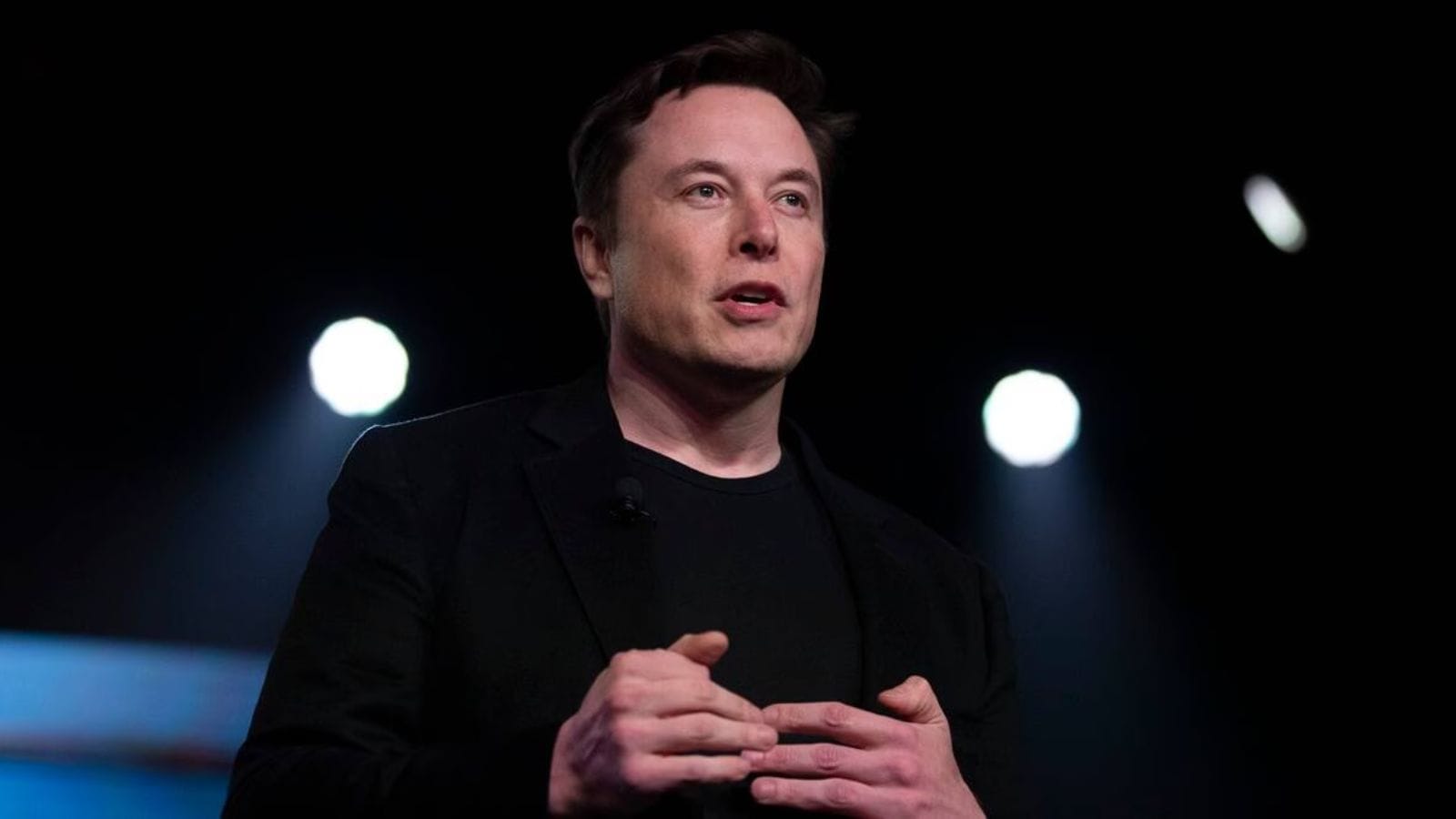
The room was likely quiet, save for the rhythmic, artificial hum of high-end electronics. Then, the chest tightness began. It wasn't a dull ache. It was the kind of crushing pressure that makes a person wonder if the floor is about to become their permanent resting place. Elon Musk, a man whose mind is usually tethered to the colonization of Mars or the neural mapping of the human brain, found himself trapped in the terrifyingly small cage of his own ribcage.
"Felt like I was dying," he later shared. Learn more on a similar subject: this related article.
Those five words didn't just drift into the digital ether; they ignited a dormant powder keg. When the most famous entrepreneur on Earth claims a medical intervention nearly killed him, the world stops looking at data and starts looking at their own heart.
We are living in an era where the divide between "the science" and "the felt experience" has become a jagged canyon. On one side, you have the cold, clinical spreadsheets of Pfizer and the regulatory bodies—numbers that speak of one-in-a-million risks and acceptable margins of error. On the other side, you have the individual body, the sweaty palms, and the sudden, sharp realization that you are not a statistic. You are a person. Additional reporting by World Health Organization highlights comparable views on the subject.
The Toxicologist in the Machine
The spark that turned Musk’s personal anecdote into a structural critique of modern medicine was a man named Dr. Michael Yeadon.
Yeadon isn’t a fringe internet personality shouting from a basement. He was a Vice President at Pfizer. He spent years in the belly of the beast, specializing in respiratory research. When a man who helped build the house starts pointing at the foundation and screaming that it’s rotting, people tend to listen—even if the architectural board insists everything is up to code.
Yeadon’s claims are heavy. They aren’t just about "side effects." He speaks of "toxicological design," suggesting that the very mechanism used to trigger immunity—the spike protein—is a bio-weapon of sorts, intentionally or negligently unleashed upon the vascular system.
Consider a hypothetical watchmaker. He creates a gear meant to keep perfect time. But once that gear is inside the watch, it begins to expand, grinding against the other delicate parts until the whole mechanism seizes. Yeadon argues that the mRNA instructions don't just stay in the shoulder muscle. They travel. They set up shop in the heart, the brain, and the reproductive organs.
Musk’s endorsement of these claims wasn't a clinical peer review. It was a bridge. He connected his own brush with mortality to Yeadon’s complex chemical accusations. For the millions of people who felt "off" after their shots—those who experienced the brain fog, the flutter in the chest, or the exhaustion that sleep couldn’t fix—this wasn't a debate about virology. It was a moment of profound validation.
The Weight of the Invisible
To understand why this resonates so deeply, we have to look at the invisible stakes of the last few years.
Medical trust is a fragile glass ornament. It takes decades to blow and shape, but only a second to shatter on a hardwood floor. For years, the public was told that the vaccines were "safe and effective," a mantra repeated so often it began to lose its meaning. When Musk speaks of his experience, he is tapping into the collective trauma of those who felt their concerns were dismissed as "anxiety" or "coincidence."
Imagine a young athlete, perhaps a nineteen-year-old soccer player. He’s spent his life treating his body like a temple. He gets the jab because he’s told it’s the right thing to do for his grandmother, for his team, for his future. Two weeks later, he’s clutching his chest on the pitch. The doctors call it myocarditis. They say it’s "mild."
But there is no such thing as "mild" inflammation of the heart when you are nineteen. There is only the sudden, terrifying knowledge that your internal engine has been compromised.
This is the human element that the "dry facts" miss. The debate isn't just about the presence of spike proteins in the blood; it’s about the betrayal of the contract between the healer and the patient. When that contract is broken, people look for a new narrative. They look for the Yeadons of the world to explain why their bodies feel like foreign territory.
The Digital Town Square as a Laboratory
The way this information spreads is as important as the information itself. Musk doesn’t just hold these opinions; he owns the platform where they are shouted.
When he interacts with accounts discussing "vaccine injuries," he isn't just a user. He is the curator of the global conversation. By amplifying the claims of an ex-Pfizer toxicologist, he is bypassing the traditional gatekeepers of medical information. The peer-review process is being replaced by the "viral-review" process.
There is a danger here, certainly. The medical establishment fears that this leads to a "post-truth" world where a billionaire's tweet outweighs a decade of clinical trials. They argue that Musk is using a single data point—his own body—to cast doubt on a system that saved millions of lives.
But the establishment often fails to realize that their own lack of transparency created the vacuum that Musk and Yeadon now fill. If you tell a man it’s raining while he’s watching the sun shine, he will eventually stop trusting your weather reports. When the public was told the vaccine would stop transmission, and then it didn't, the door was kicked wide open for every other claim to be re-examined.
The Science of the Heart
Let’s talk about the heart itself. It is a remarkable organ, a muscle that never rests, beating roughly 100,000 times a day. It relies on a delicate electrical system and a smooth, unobstructed flow of blood.
When we introduce a foreign instruction into the body—mRNA—we are essentially handing the body a blueprint and telling it to start manufacturing. The debate isn't over whether the technology is brilliant; it is. The debate is over the quality control of the factory.
If the body’s cells start producing spike proteins in the lining of the blood vessels, the immune system does exactly what it was trained to do: it attacks. This internal civil war is what leads to the inflammation Musk likely felt. It is a biological "friendly fire" incident.
The "standard" articles focus on the percentage of these occurrences. They tell us the risk of myocarditis from the vaccine is lower than the risk from the virus itself. This may be true in a spreadsheet. But it is cold comfort to the person whose heart is currently the battlefield.
Musk’s rhetoric brings the focus back to the individual. It asks the question: what is the price of a "marginal" risk when you are the one paying it?
A Fracture in the Consensus
The conversation is shifting from "should we take it?" to "what did we do?"
There is a palpable sense of unease in the air, a feeling that we are only now beginning to see the long-tail effects of a global medical experiment conducted at warp speed. It’s not just about the vaccine; it’s about the loss of agency.
We saw people lose their jobs, their ability to travel, and their standing in their communities over a medical decision that is now being publicly questioned by the man who builds the rockets that take us to the stars. The irony is thick enough to choke on.
Musk’s move to back Yeadon isn’t just a "news story." It is a cultural pivot. It signals that the era of unquestioned expert authority is dead. In its place is a messy, loud, and often frightening era of self-investigation.
The Echo in the Silence
As the debate rages on X, the quiet reality remains for the millions who aren't billionaires.
They are the ones sitting in doctor’s offices, trying to explain a fatigue they can’t name. They are the parents watching their children’s sports games with a new, nagging sense of dread. They are the scientists who want to speak up but fear the loss of their grants and their reputations.
The "invisible stakes" are the lives lived in the shadow of this uncertainty.
We are waiting for a clarity that may never come. Science is rarely a straight line; it is a zig-zag of errors, corrections, and ego. But while the experts argue over the "toxicological claims" and the "p-values," the human narrative continues. It is a story of bodies that feel different, of hearts that beat with a new, frantic rhythm, and of a world that is suddenly, sharply aware of its own mortality.
The billionaire felt like he was dying. For a moment, his vast wealth and his reach into the cosmos meant nothing. He was just a man in a quiet room, terrified by the thumping in his chest. And in that fear, he found a common language with the rest of us.
We are no longer just looking for "safety." We are looking for the truth, no matter how uncomfortable it makes the people who sold us the cure. The shadow in the blood isn't going away just because the news cycle moves on. It is a part of us now, a silent passenger in our collective journey toward whatever comes next.
The heart remembers what the spreadsheets choose to forget.