The coffee goes cold. That is the first thing you notice when the silence stretches too long in a room designed for waiting.
For years, the machinery of war in Syria has been measured in territory lost, maps redrawn, and numbers whispered by agencies tracking the untrackable. But numbers do not bleed. Statistics do not carry the weight of a damp cell floor or the distinct, hollow echo of a heavy metal door slamming shut against the damp night air. Behind every update from the front lines lies a quieter, more enduring machinery. The infrastructure of disappearance. Don't miss our recent coverage on this related article.
Consider what happens when a rescue worker, someone whose hands are perpetually stained with drywall dust and dried blood from pulling children from collapsed ceilings, becomes the target.
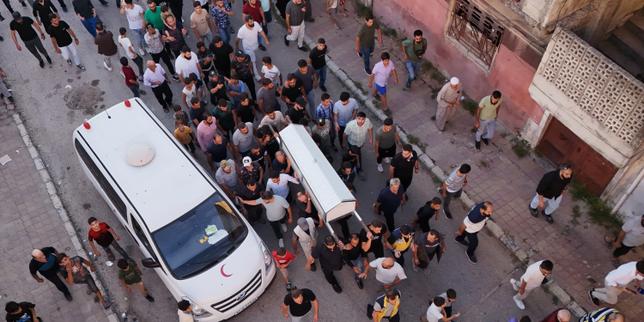
A White Helmet. A volunteer. A person who ran toward the sound of falling masonry while others fled. When such a man dies, the official bulletins speak of detention centers, of systematic abuse, of the persistent, grinding reality of torture that survived the shifting front lines. They use sterile words. Detention. Interrogation. Coercion. If you want more about the history of this, The Washington Post provides an informative summary.
They do not describe the smell of unwashed concrete and fear. They do not talk about the way time flattens into an endless gray when the windows are entirely missing.
We like to think that history moves in clean arcs. We tell ourselves that atrocities belong to specific chapters, bound by dates on a calendar, neatly sealed when a ceasefire is signed or a town changes hands. Yet the reality on the ground refuses to conform to our tidy narratives. Torture in detention facilities across Syria is not an administrative excess. It is not an accident of war. It is an architecture.
To understand this, you have to step away from the macro lens of geopolitical strategy and look at the geometry of a cell.
Imagine a room twelve feet square. There is no natural light. The bulb in the ceiling hums with a frequency that vibrates directly behind the eyes, relentless, turning sleep into an impossible luxury. In this space, identity is stripped away systematically, piece by garment, right down to the memory of your own name. When a man is brought here—perhaps a volunteer who documented an airstrike, perhaps a baker who gave bread to the wrong neighborhood—the process begins immediately.
The methods are old. They predate modern states, yet they have been refined with bureaucratic precision. Beatings. Suspension. Electric shocks. Psychological dismantling.
(Note: While the specific identities of every interrogator remain obscured behind masks and pseudonyms, the documented patterns compiled by international monitors and survivors paint a unified, harrowing picture of institutionalized cruelty.)
Yet, the most terrifying aspect of this system is not the physical pain alone. It is the absolute isolation. It is the certainty that the outside world has moved on. While neighbors argue over grocery prices in Damascus, or diplomats sip lukewarm water in Geneva conference rooms, time stops entirely inside those concrete boxes.
When news broke of the death of a White Helmet worker inside a government-run detention facility, it did more than add another digit to a tragic ledger. It pierced the insulation that shields the international conscience. These volunteer organizations were born out of absolute desperation. They were the civil society that refused to die. They dug through the ruins with bare hands because nobody else was coming.
And because they documented what they saw—because their helmet-mounted cameras captured the chemical attacks, the barrel bombs, the rubble—they became dangerous. Not because they carried rifles. But because they carried proof.
Power hates a witness.
This is why the machinery targets them with such specific venom. To break a rescue worker in a dark basement is to send a message to every other civilian who might dare to pick up a camera, or bandage a wound, or remember an atrocity. It is an attempt to cauterize the collective memory of a nation.
We often wonder how societies heal after the smoke clears. We look for truth commissions, trials, monuments, apologies carved into marble. But how do you build a monument when the foundation itself has been soaked in the silent suffering of thousands whose graves do not exist?
The persistence of torture in Syrian prisons is an open secret. It is documented in thousands of pages of smuggled documents, in the smuggled Caesar photographs, in the trembling testimonies of the rare few who survived Tadmor, Sednaya, or the myriad unofficial security branches scattered across the provinces. They tell the same story, over and over, until the repetition loses its shock value and hardens into background noise.
That is the true danger. Normalization.
We read the headline. We feel a momentary tightening in the chest. We scroll down to the next notification, the next distraction, the next crisis competing for our shrinking attention span. The horror becomes a weather pattern. Unfortunate, distant, inevitable.
But nothing about this is inevitable.
Every cell door has hinges forged by human choices. Every interrogator is a person who wakes up, puts on boots, and decides to inflict pain. Every piece of intelligence gathered through agony is a deliberate rejection of human dignity.
When a volunteer dies under interrogation, the loss echoes far beyond his immediate family. It strikes at the very idea that humanity can survive absolute brutality intact. It tells us that the war does not end when the bombs stop falling; it simply moves indoors, out of sight, into the quiet, suffocating dark where no cameras can reach.
We are left with a choice, though we rarely acknowledge it. We can treat these revelations as transient news items, consumed and discarded like yesterday's paper. Or we can let them disturb the quiet of our comfortable rooms. We can refuse to look away from the dark, narrow spaces where the light of the world has been deliberately extinguished, one breath at a time.
The coffee is cold now. The room is quiet. Somewhere, miles away, the concrete walls still hold their secrets, waiting for a dawn that feels impossibly far off.


.jpg)
