The scent of charred salt and roasted corn usually defines the air in Quintana Roo. It is a sensory promise of safety, the smell of a vacation earned through months of cubicle-bound drudgery. But lately, a sharper, metallic tang has begun to cut through the sea breeze.
Gunfire doesn't care about tourist brochures.
When a shooting erupted near a luxury hotel beach in late 2024, the sound didn't just scatter the seagulls. It sent a tremor through the very foundation of Mexico’s most ambitious decade. This isn't just about a localized tragedy or a single crime scene cordoned off with yellow tape. It is about the soul of the 2026 World Cup. Mexico is preparing to co-host the greatest show on earth, but the stage is currently being reinforced with ballistic shields.
Consider a hypothetical traveler named Elena. She has saved for four years to see her national team play at the Estadio Azteca. She wants to see the murals of Mexico City and the turquoise waves of the Mayan Riviera. To Elena, the World Cup is a celebration of human movement. To the Mexican government, it is a high-stakes survival exercise.
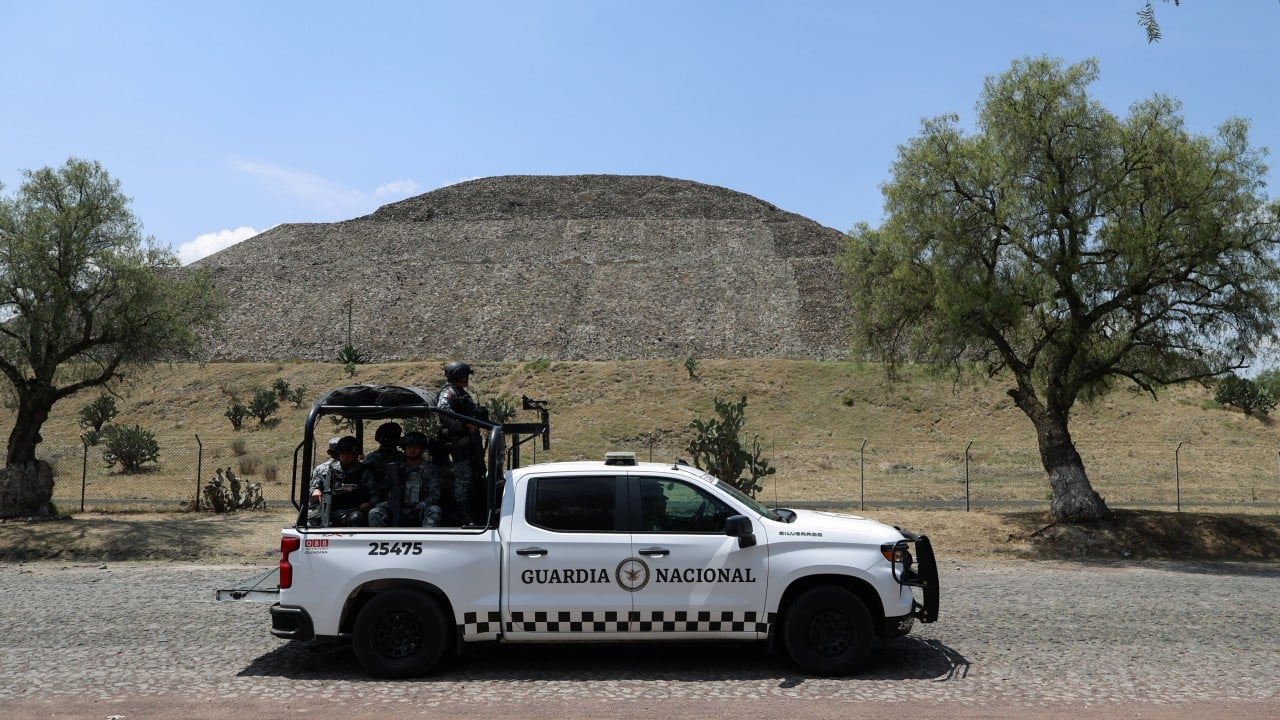
The reality is stark. In response to recent violence in tourism hubs, the federal government has deployed thousands of National Guard members to patrol the white sands. They aren't there to tan. They are there to prove that the country can protect the millions of international visitors expected to arrive in twenty-four months.
The tension is visible. You see it in the eyes of the vendors who sell beaded bracelets while camouflaged soldiers march past. Security is a double-edged sword. A heavy military presence makes some feel safe; it makes others feel like they’ve walked into a low-grade war zone. Mexico is gambling on the idea that more boots on the ground will translate to more peace of mind.
But the math of safety is rarely that simple.
Violence in tourist corridors isn't usually aimed at the visitors themselves. It is the byproduct of internal friction, a territorial dispute played out in the shadows of five-star resorts. The tourists are the bystanders, the "collateral" in a narrative they didn't sign up for. When a stray bullet hits a beach club, the ripple effect reaches across the Atlantic. It reaches the boardrooms of FIFA. It reaches the living rooms of families like Elena’s.
Mexico City, Guadalajara, and Monterrey are the three pillars of the Mexican portion of the 2026 tournament. These cities are bustling, vibrant, and fiercely proud. They are also under an intense microscope. The government has announced a massive ramp-up in intelligence sharing and surveillance technology. They are building a digital net to catch what the physical net might miss. Drones now hum above the palms. Face-recognition software is being integrated into transit hubs.
The cost of hosting a World Cup is often measured in billions of dollars. We talk about stadium renovations, grass quality, and hotel capacity. We rarely talk about the emotional cost of the security apparatus required to keep the party from crashing.
Why does this matter so much right now? Because the clock is ticking.
The North American World Cup—shared with the United States and Canada—is meant to be a symbol of continental unity. If Mexico cannot stabilize its most famous corridors, the narrative shifts from "The Beautiful Game" to "The Dangerous Game." The stakes aren't just points on a scoreboard. They are the livelihoods of millions of Mexicans who depend on the tourism industry to put food on the table. When the headlines scream about shootings, the reservations disappear.
If the hotels go empty, the stadiums feel like hollow monuments.
To understand the scale of the challenge, you have to look at the geography of the protection. It isn't just about the beaches in Cancun or Tulum. It’s about the arterial roads, the airports, and the small plazas where fans will congregate to drink mezcal and sing. The Mexican authorities are attempting to create a "bubble" of safety that extends across thousands of miles.
It is an impossible task, yet they have no choice but to try.
The deployment of the National Guard is a blunt instrument. It is a show of force designed to deter. But true security is quieter. It’s found in the strengthening of local police forces, the dismantling of the financial structures that fund the violence, and the social programs that give young people an alternative to the cartels. These are the slow, grueling fixes that don't make for good press releases.
Instead, we get patrols. We get armored vehicles parked next to taco stands.
The human element of this story is the most fragile. It’s the waiter who has to smile and serve margaritas while wondering if the peace will hold until his shift ends. It’s the taxi driver navigating checkpoints. It’s the fan who wonders if wearing their team's jersey makes them a target or just another face in the crowd.
We often treat security as a statistic—a "five percent decrease in incidents" or a "thousand-man surge." But safety is a feeling. It’s the ability to close your eyes on a beach towel and actually fall asleep. It’s the confidence to walk back to your Airbnb after a late-night match without clutching your phone like a weapon.
Mexico is a country of profound light and deep shadow. The light is its culture, its food, and the relentless warmth of its people. The shadow is the violence that stalks the edges of that beauty. As the World Cup approaches, the government is trying to pull the light further into the dark.
They are installing more cameras. They are vetting more personnel. They are conducting sweeps of the jungle.
The question remains: can you manufacture a sense of peace? Or does it have to grow from the ground up? For now, the answer is being written in the sand by the heavy boots of the Guard. They are the guardians of a dream that is currently under siege.
If you are planning to go, you will see them. You will see the green uniforms against the blue water. You will see the checkpoints on the highways. You will see the effort. What you won't see is the quiet desperation of a nation trying to prove it is more than its worst headlines.
The 2026 World Cup will be a test of infrastructure and athletics. But more than that, it will be a test of a country's ability to protect the magic of the experience. It is a gamble of historic proportions.
The ball hasn't even been kicked yet, but the most important game is already being played in the streets. It is a game where the trophy isn't gold. It is the simple, radical act of a tourist feeling safe enough to look at the sky instead of their shoulder.
The soldiers are waiting. The fans are coming. The shadows are long.