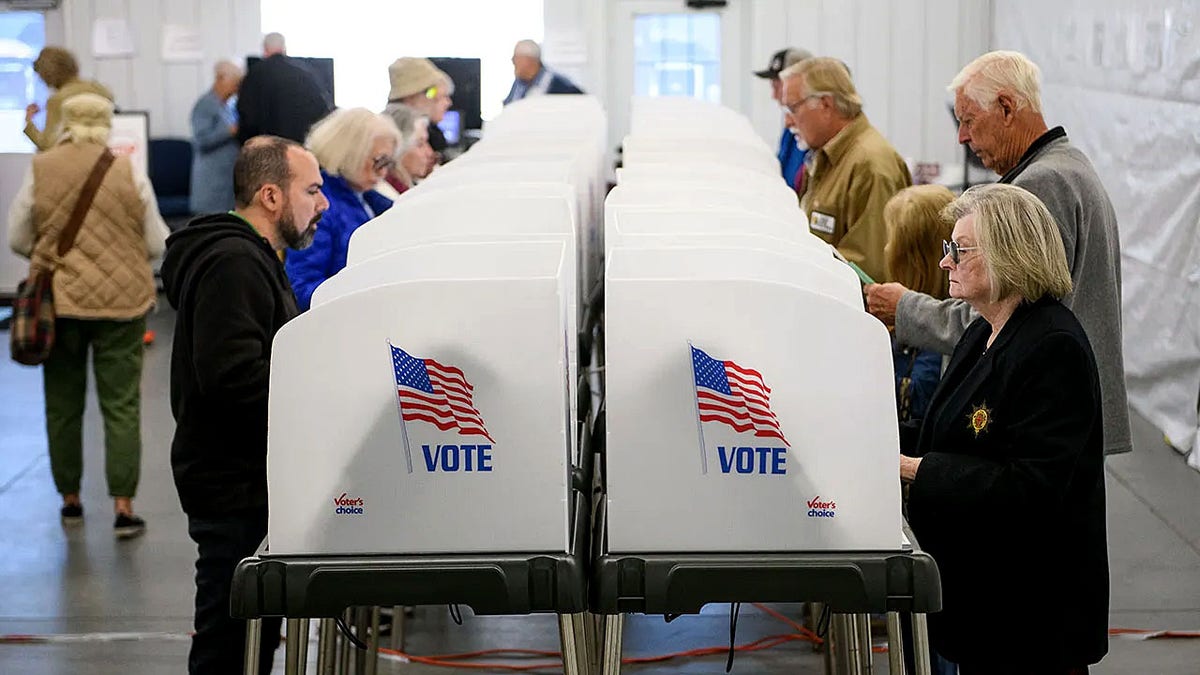
The ink on a ballot is dry. The sound of a stamp hitting paper is final. In a functioning democracy, these are the rhythms of legitimacy, the quiet, repetitive motions that anchor a nation to its own future. But in Ukraine, the rhythm has been broken for years. The clock stopped in February 2022, and since then, the country has existed in a perpetual, frozen present, held in place by the hard, unyielding constraints of martial law.
Mykhailo Fedorov, once a central architect of President Volodymyr Zelenskyy’s rise and a former minister who oversaw the modernization of the defense apparatus, has decided to break that silence. His recent video address was not merely a political critique. It was an alarm bell, ringing through the corridors of a government that has grown increasingly comfortable with its own opacity.
To understand why this matters, you must look at the soldiers in the trenches. Imagine a young infantryman—let's call him Dmytro—huddled in a bunker near the eastern front. Dmytro doesn't need to be an expert in statecraft to understand the weight of a choice. He is fighting for a vision of a country that belongs to its people, not to a singular administrative center. When he looks at the horizon, he isn't just looking for enemy incursions; he is looking for a reflection of the society he is sacrificing his youth to preserve. If that society becomes a space where leadership is a closed loop, immune to the refreshing friction of a vote, the fundamental purpose of his sacrifice begins to blur.
Fedorov’s argument is surgical. He posits that democracy is not a luxury afforded only to those in peacetime; it is the very engine of the resistance. By postponing elections indefinitely, the administration risks turning the state into a fortress that defends itself against its own citizens’ skepticism. When governance becomes a black box, shielded by the necessity of war, the line between protecting the state and protecting one’s own grip on power becomes dangerously thin.
This is the core of the friction. Critics of the call for elections argue that they would be a gift to the Kremlin, a moment of vulnerability that Moscow would surely exploit. They fear that a campaign would fracture the fragile unity required for survival. Yet, consider the alternative. A system that cannot tolerate the risk of a public mandate eventually withers from within. It invites the very thing it claims to fear: internal rot, corruption, and the slow, suffocating erosion of the public trust that is the ultimate source of military morale.
Fedorov’s call for a "legal, safe and realistic mechanism" is an admission of complexity. He does not propose a simple polling station on the front lines. He is asking for an evolution of the democratic process that acknowledges the reality of a long, grinding war. It is a demand for innovation in the face of stagnation. He is asking how a nation can be both a warrior and a republic simultaneously.
There is a visceral, human truth in his words. When citizens are denied the ability to choose, they stop feeling like participants and start feeling like subjects. The transition from active ownership to passive endurance is subtle, but it is lethal. The administration's current approach—rewarding loyalty, ignoring the cries for transparency, and relying on a war-time status quo—is a path toward isolation. It is a strategy that assumes the people will wait forever.
But history suggests that people do not wait forever. They eventually demand to be seen. They demand to be heard. They demand that the state they bleed for mirrors the values they claim to defend.
The tension in Kyiv is no longer just about the battlefield. It is about the soul of the country. If the war is a marathon, as many now suspect it to be, then the stamina of the Ukrainian state depends on its ability to breathe. And democracy, for all its chaotic, messy, and inconvenient noise, is the only way a country can truly take a breath.
The silence that currently sits over the voting booths is not a safety measure. It is a vacuum. And in a nation that has fought so hard for the right to exist, a vacuum is not where you keep a country safe. It is where you lose it.
The call for wartime elections marks a turning point in how Ukraine manages its internal governance during its ongoing conflict with Russia.
This video from Global News provides additional context on the political transitions and corruption challenges within the Ukrainian Ministry of Defence.