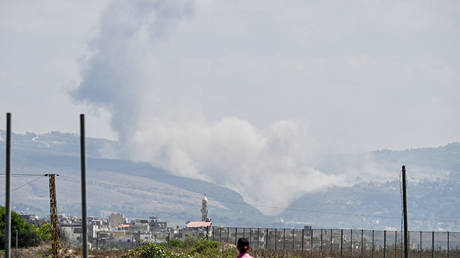
The air up there smells of wet slate, bruised pine, and the terrifyingly pure ozone that comes right before a sky decides to fall. You do not hear a flash flood coming until it is already inside your lungs. It sounds less like water and more like an iron freight train derailing inside a cathedral, a low-frequency groan of earth and stone shifting because gravity has finally won an argument it was having with the mountain for centuries.
We forget how fragile we are against vertical geometry. Down in the concrete grid, we mistake our maps for ownership. We draw lines across ridges and call them borders, assuming that political friction is the only kind that matters. But the rocks do not care about passports. When the monsoon-swollen currents of the Tibet-Nepal border surge through narrow gorges, they wash away more than timber and mud. They erase names. They erase futures. They leave behind a quiet so heavy that even the wind seems afraid to disturb it.
Consider what happens next in places where the geography is as merciless as the bureaucracy.
Forty-nine. That is the number of Indian citizens currently logged among the two hundred and sixty-one foreign nationals missing in the wake of the latest catastrophic flash floods along that volatile frontier. Behind that statistic are kitchens left warm, half-packed suitcases gathering dust in transit hotels, and cell phones that ring into empty canyons with a rhythmic, maddening optimism.
I know that ringing sound. I have stood at the edge of a newly carved mud-chute where a bridge used to stand, watching rescue choppers fight downdrafts that could snap a rotor like a dry twig. You look at the torrent below—a thick, churning sludge the color of cocoa and broken glass—and your brain simply refuses to compute that a human being was swallowed by it. Water is supposed to nourish. Water is supposed to flow. But when compressed into a Himalayan ravine by thousands of tons of displaced scree, water becomes a mechanical blade.
Communication lines snapped almost instantly. That is the first casualty of high-altitude disaster. Power grids go dark, cell towers are sheared off at the base like matchsticks, and an entire valley is plunged into an information vacuum. Families sitting in New Delhi, in Kathmandu, in remote villages across Uttar Pradesh, stare at glowing screens that tell them nothing. They refresh news feeds until their fingers cramp. They call consular hotlines that ring out to automated loops.
Uncertainty is a cruel architect. It builds waiting rooms out of seconds.
To understand the scale of what happened, we have to look past the cold arithmetic of missing persons tallies. The Tibet-Nepal borderlands are a corridor of trade, pilgrimage, and fragile high-altitude livelihoods. Every year, thousands cross these paths for work, for spiritual journeys, or simply to trade goods across ancient mountain passes that predate modern nation-states. They travel light because they have to. They sleep in guesthouses perched precariously on cliff edges, trusting the structural integrity of stone walls laid down by grandfathers who understood the temper of the local monsoons.
Except the monsoons are changing.
Scientists who study high-altitude hydrology will tell you that the atmosphere is holding more moisture now, packing torrential downpours into compressed windows that overwhelm glacial lakes and riverbeds. But you do not need a degree in climatology to understand what is happening. You just need to watch the rivers rise past the historical markers, eating away at the foundations of roads that took decades to carve into the rock face.
Rescue teams are currently doing the impossible. Move through the muddy operational hubs right now, and you will see exhausted men and women in high-visibility jackets drinking lukewarm instant coffee out of paper cups before heading back out onto unstable slopes. They are using thermal drones, sniffer dogs, and sheer grit to search downstream pockets where the roaring torrent might have deposited debris. Every boulder shifted is a gamble. Every eddy checked is a prayer offered to a river that gives up its secrets slowly, if at all.
Yet, foreign nationals caught in cross-border disasters face a unique bureaucratic purgatory. Jurisdiction is a fragmented puzzle. Local police forces coordinate with regional disaster management authorities, who must liaise with federal ministries, who in turn must negotiate diplomatic channels with neighboring governments to verify lists of transient workers, tourists, and traders. A missing person is not just a name on a clipboard; they are a diplomatic file waiting to be cleared, a notification that has to cross languages and time zones before a family can even begin to mourn.
Imagine sitting three countries away, watching blurry helicopter footage of a brown, raging river on your television, knowing your brother or your daughter was somewhere in that gorge last Tuesday.
That is where the real story lives. Not in the press briefings or the diplomatic cables, but in the waiting. It lives in the quiet homes where shoes are left by the door, untouched, as if waiting for an owner who might still walk through them.
The mountains will eventually settle. The mud will dry into a fine, grey crust that coats the valley floors, and the rivers will shrink back to their turquoise, deceptive calm. Tourists will return, drawn by the undeniable magnetism of the world's highest peaks, seduced by the illusion of permanence that stone provides.
Until the next storm breaks the silence, and the rivers remember how to roar.