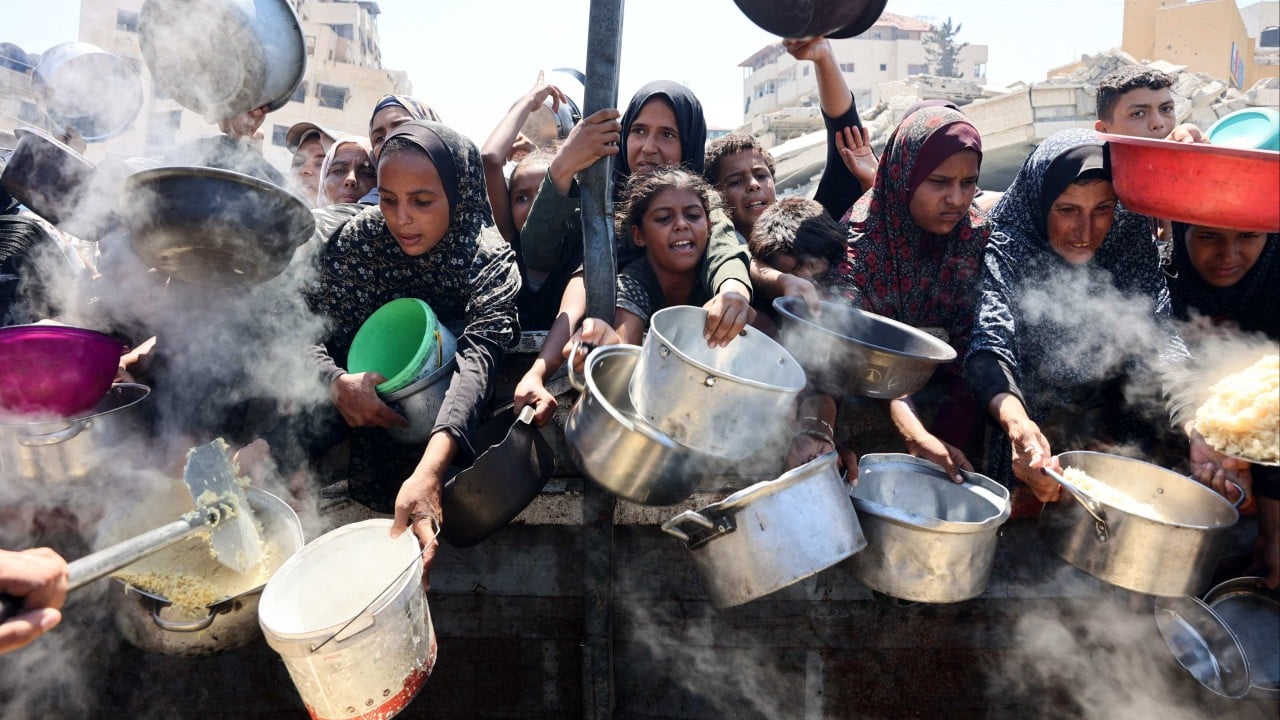
The ledger of human loss is rarely written in ink. In Gaza, it is written in the sudden, sharp absence of noise. It is the sound of a lullaby that stops mid-verse. It is the silence of a kitchen where the flour remains unkneaded and the tea kettle grows cold on a burner that will never be lit again.
When the United Nations recently updated its grim accounting of the conflict, the number was so large it felt mathematical rather than human. Over 38,000 women and girls. Dead. Since October 2023, a demographic shift of catastrophic proportions has been carved into the earth of a coastal strip no larger than a major metropolitan airport's footprint. We talk about "casualties" because the word is soft. It has rounded edges. It helps us sleep. But to understand the true weight of 38,000 missing women, we have to look past the spreadsheets and into the dust of a collapsed living room. Meanwhile, you can explore related stories here: Securing the Strait: The Mechanics of the Hormuz Multinational Maritime Shield.
The Architecture of a Ghost
Consider a girl named Amal. She is a hypothetical child, but her story is a composite of the verified data streaming out of Shifa, Khan Younis, and Rafah. Amal is nine years old. In August, her biggest worry was a math test or the way her older sister teased her about her messy hair. By November, Amal’s world had shrunk to the size of a basement.
The statistics tell us that women and children make up the vast majority of the victims in this theater of war. Why? Because war in Gaza is not fought on a distant battlefield between two standing armies. It is fought in the bedrooms. It is fought in the stairwells of apartment blocks. When a missile strikes a residential tower, it does not distinguish between a combatant and a mother nursing an infant. To explore the full picture, we recommend the detailed analysis by NBC News.
The "collateral damage" cited in military briefings is, in reality, the systematic erasure of the caregivers. In every society, but particularly in the tightly knit social fabric of Gaza, women are the glue. They manage the meager rations. They soothe the night terrors of the young. They keep the history of the family alive through oral tradition. When you kill 38,000 of them, you aren't just losing individuals. You are dismantling the infrastructure of survival.
The Mathematical Impossibility of Grief
Numbers have a way of numbing the brain. If you were to hold a funeral for every girl and woman killed in this conflict, and each service lasted only one hour, the procession would last for more than four years. You would be standing at a graveside until 2030 just to acknowledge the women who have fallen since last autumn.
The UN reports aren't just counting bodies pulled from the rubble; they are flagging a secondary crisis of the "missing." Thousands of these women are likely still entombed under the grey concrete of their own homes. There is a specific horror in being uncounted. To be a statistic is one thing; to be a "presumed" statistic, a body cooling beneath three stories of rebar where no crane can reach, is a different level of abandonment.
We see the footage of the "lucky" ones—the women sitting in the dirt outside of tents, their hands stained with the soot of cooking fires. But even for the living, the cost is a slow-motion theft of dignity. There are no sanitary pads. There is no privacy. There are mothers who have stopped lactating because of the sheer cortisol flooding their systems, watching their newborns waste away because the "siege" isn't just a military term—it’s a biological one.
The Myth of the Precision Strike
There is a persistent narrative that modern warfare is a surgical affair. We are told that technology allows for the removal of a threat with the scalpels of high-tech munitions. The data from Gaza suggests otherwise. When 38,000 women and girls are dead, the "precision" begins to look like a wide-brushed stroke of devastation.
The logic of the conflict has created a trap with no exit. One side uses the dense urban environment as a shield; the other treats the entire environment as a target. In the middle sits the girl in the pink pajamas who was told that moving south would keep her safe, only to find that "south" was just a different coordinate for a different explosion.
Military analysts often focus on the "neutralization" of targets. They talk about "degrading capabilities." They rarely talk about the ripple effect of a dead grandmother. A grandmother in Gaza is often the primary educator and the keeper of the peace in a multi-generational home. When she is gone, the anger that fills her seat is a potent, volatile substance. By losing 38,000 women, the region isn't just losing lives; it is losing the very people most likely to advocate for a future that involves something other than revenge.
The Invisible Stakes
Why does this matter to someone sitting thousands of miles away, scrolling through a news feed between meetings? Because the precedent being set in Gaza is that the civilian status of women and children is negotiable. If we accept that 38,000 girls can be erased in the pursuit of a military objective, we are rewriting the rules of the 21st century. We are moving back toward a world where total war is the only kind of war.
The UN's warnings are often dismissed as political posturing or "standard" bureaucratic concern. But these agencies are the ones on the ground, counting the empty chairs in the schools. They see the girls who will never become doctors, the women who will never see their children grow up, and the gap left in a civilization that was already struggling to breathe.
The human element is the only thing that actually survives the history books. We don't remember the exact strategic value of a ridge in a war from a century ago. We remember the poetry written in the trenches. We remember the photos of the mothers waiting at train stations. In Gaza, the "poetry" is being written in the dirt by children who no longer have mothers to read to them.
The Weight of What Remains
Imagine a classroom. It’s a standard size, maybe thirty desks. To reach the number of girls killed, you would have to walk through more than six hundred of those classrooms and find every single seat empty. Not a single backpack. No giggling. No pencil shavings. Just the wind blowing through a broken window.
The international community speaks often of "proportionality." It is a cold, legalistic term. Is it proportional to lose an entire generation of young women to settle a security debt? The answer depends entirely on whether you see those 38,000 as humans or as data points.
If they are data points, the war is a success of logistics and firepower.
If they are humans, the war is a collapse of the species.
The most terrifying part of the UN report isn't the number itself. It’s the trend line. The number isn't a final tally; it’s a progress report. Every day the sun rises over the Mediterranean, that 38,000 ticks upward. It is a clock that only moves in one direction.
We are witnessing the creation of a society composed almost entirely of orphans and grieving men. The women, who were the bridge to the past and the guardians of the future, are being systematically removed from the equation. When the dust finally settles and the last drone returns to its hangar, the silence that follows will not be the silence of peace. It will be the silence of 38,000 voices that were supposed to be here, telling stories, raising children, and reminding the world that they existed.
The ledger is almost full. The ink is running out. And somewhere in a tent in Rafah, a girl is waking up to a world where the only thing she has left is the memory of a woman who isn't coming back.