The Midnight Watch
Commander Elena Vance smelled burnt coffee. It was 3:00 AM in a bunker carved beneath the jagged granite of the Cheyenne Mountain complex, and the air tasted of recycled ozone and quiet dread. She did not look at her watch. She looked at the blue arc of the Earth spinning lazily across the main wall display, segmented by hundreds of tiny white dots moving in clockwork precision.
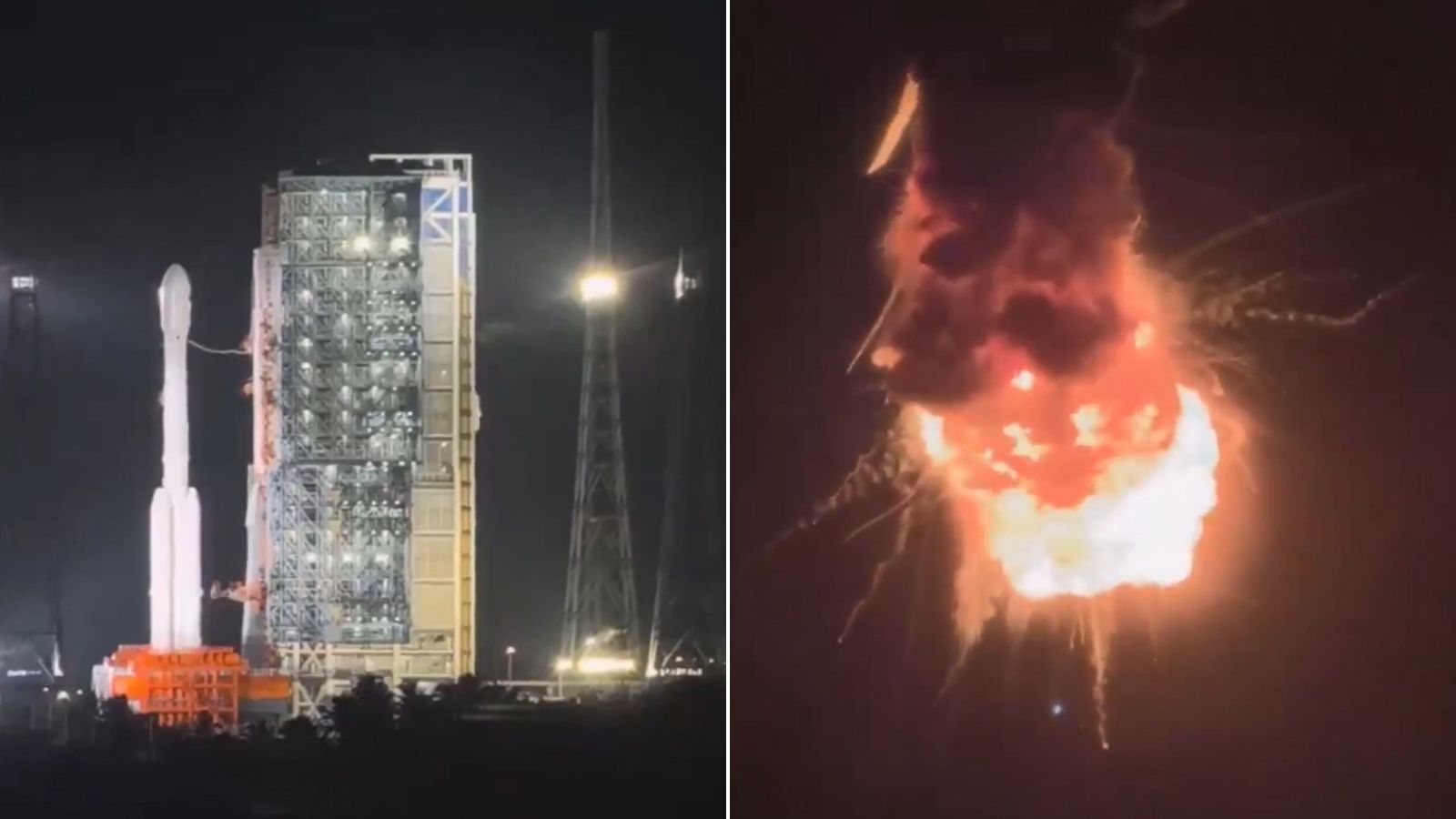
To the casual observer on a Friday night in Kansas or Kyoto, those dots are satellites beaming weather reports, sports scores, and midnight text messages. To Elena, who has spent twenty-two years tracking the silent geography of the exosphere, they are something else entirely. Meanwhile, you can explore other events here: Why China Space Program Accidents Will Force a Massive Launch Schedule Reality Check.
They are high ground.
And the ground is shifting. To explore the bigger picture, check out the excellent analysis by MIT Technology Review.
For decades, we treated orbit as an infinite ocean where any ship could sail without waking the neighbors. We launched our tin cans, gathered our data, and looked down at our own mud with a sense of mastery. But space was never an ocean. Space is a hill. And whoever holds the top of the hill dictates the terms of everything below.
Right now, halfway around the world, a different kind of watch is ending. In a windowless control room outside Beijing, engineers are staring at similar screens, tracking the exact same dots. Only their calculus is different. They are not looking at infrastructure. They are looking at vulnerability.
The Geometry of Power
Gravity is a stubborn landlord. To put a kilogram of metal into low Earth orbit, you need thousands of kilograms of fire, noise, and sheer chemical violence. It is expensive. It is unforgiving.
For a long time, the United States held a near-monopoly on that violence. We built the architecture of modern navigation, global communication, and reconnaissance from the top down. Every GPS ping that guides a delivery driver through downtown Chicago or a cruise missile across a desert was born up there. We thought our monopoly was permanent because the barrier to entry was so catastrophically high.
Then came the democratization of the sky.
Reusable rockets turned the cosmos from an exclusive country club into a busy turnpike. Prices dropped. Access widened. And nations that once watched from the sidelines realized a fundamental truth: if your economy, your power grid, and your military communications rely on fragile metallic needles floating four hundred miles above your head, you are living inside a glass house.
And everyone knows how heavy stones are.
Consider what happens next when a nation decides it cannot afford to be blind. It builds its own eyes. Then, it builds hands to protect those eyes. Finally, it builds tools to blind the other guy.
China harbors military ambitions in space not because of some comic-book villainy, but because of cold, logical paranoia. If you are a rising global power with sprawling trade routes, contested maritime borders, and an economy tethered to global networks, the worst thing you can imagine is fighting a war while looking through a keyhole while your rival owns the panoramic window.
So they built the keyhole. Then they built the window. And now, they are building the shutters.
The Invisible Architecture
Walk outside tonight. Look past the streetlights, past the neon hum of the diner on the corner, past the low clouds if they are hanging heavy. Look up.
There is a war happening right now, and you cannot hear the shots.
It is fought in the electromagnetic spectrum. It is fought through robotic inspector satellites that can maneuver close to American communication nodes, lingering just close enough to read their electronic signatures or spray them with invisible paint. It is fought through ground-based lasers designed to dazzle sensors, burning out the delicate optics of orbital reconnaissance before anyone on Earth can scream foul.
We call these capabilities counter-space technologies. The phrase sounds sterile, bureaucratic, and safe. It belongs in a PowerPoint presentation delivered by a man in a gray suit who speaks in acronyms.
Let me translate it into human terms.
Imagine driving down a dark highway at midnight with your headlights suddenly smashed by an unseen sniper. You are still moving forward at seventy miles an hour. Your foot is still on the gas. But you have no idea if the next second brings a smooth curve or a concrete bridge abutment.
That is what happens to a modern military when its orbital assets go dark. Ships lose their horizons. Precision-guided munitions turn into expensive, falling rocks. Command centers become deaf and dumb, reduced to shouting blind orders through local radio frequencies that can be jammed by a teenager with a laptop.
This is the prize China is chasing. Not dominion over the stars, but dominion over the earth, won from the heavens.
The Mechanics of Paranoia
I remember sitting in a classified briefing room ten years ago when the first rumblings of this new space race started leaking past the firewall. The room smelled of old wool and damp carpet. A senior analyst pulled up a satellite imagery slide showing a Chinese experimental craft equipped with a mechanical arm.
Someone in the back row laughed. It sounded nervous.
"What is that for?" a junior officer asked.
"Cleaning up space debris," the analyst replied dryly.
Nobody laughed anymore.
A robotic arm designed to grasp a dead rocket booster and drag it into a disposal orbit can just as easily grasp an active military surveillance satellite belonging to a rival nation, crush its solar panels, or nudge it out of alignment. The technology is dual-use by design. It is the ultimate diplomatic gray zone. How do you declare an act of war when the weapon looks like a garbage truck?
This is where the narrative of peaceful exploration fractures against the reality of state survival. China's military modernization program, known formally as the People's Liberation Army Strategic Support Force, treats space and cyberspace not as separate domains, but as the central nervous system of future conflict. They have built communication relays, quantum-encrypted satellite links, and kinetic kill vehicles designed to shatter targets in high orbit.
They are not hiding it. They publish papers on it. They test it in broad daylight, or rather, in the pitch-black void where day and night do not exist.
When a Chinese SJ-21 satellite grappled a defunct navigation satellite in 2022 and towed it away to a graveyard orbit, Western defense analysts didn't panic. They calculated. They measured the mass, the delta-v, the approach vector. They realized that the nation doing the towing had just demonstrated the ability to reach out and snatch the throat of every critical American intelligence asset in geostationary orbit.
The Threshold
We are standing on a precipice, and most of us don't even feel the wind.
The danger is not that a sudden sci-fi war will erupt tomorrow with flashing laser beams and exploding star cruisers. Wars rarely start with a bang; they start with a series of quiet adjustments, unchecked escalations, and mutual miscalculations.
When both Washington and Beijing invest billions into anti-satellite missiles, electronic jammers, and maneuverable orbital interceptors, they are building a hair-trigger mechanism around the planet.
Kessler Syndrome is no longer a theoretical thought experiment debated by astrophysicists in university lounges. It is an impending probability. If a conflict ever spills into orbit, the resulting shrapnel from destroyed satellites will create a cascading chain reaction of hyper-velocity debris. One shattered relay could trigger a shrapnel cloud that takes out thirty neighboring satellites in an hour. Within weeks, low Earth orbit could become an impenetrable wall of microscopic metal shards traveling at seventeen thousand miles per hour, rendering the entire exosphere unusable for generations.
We would trap ourselves on this planet by our own violence.
We would blind our weather forecasters, cut off global shipping lanes, sever financial networks, and ground commercial aviation, all because we couldn't resist the urge to turn the final frontier into another trench line.
The Quiet Aftermath
Back in the Cheyenne Mountain bunker, Commander Vance watches a blip on her screen execute a small, unscheduled burn. It is a minor course correction. A thousand miles above the Pacific, a piece of hardware the size of a minivan has adjusted its angle by a fraction of a degree.
Nobody in the room speaks. They wait.
The blip stabilizes. It stays in its lane. The crisis, for this specific Tuesday morning, evaporates before it can be born.
Down the hall, the coffee machine gurgles, finishing another pot of bitter, black sludge. Elena takes a sip, her eyes burning from lack of sleep, and turns back to the glass wall of monitors.
The stars outside the bunker are ancient, indifferent, and cold. They have watched empires rise out of the dust, invent fire, build ships of wood, then steel, then silicon, and finally, rockets of fire. They have watched every generation look up with the same mixture of ambition and terror, convinced that this time, things would be different.
The dots keep moving. The orbit keeps turning. And the silent arch above us waits to see what we decide to do with the light.