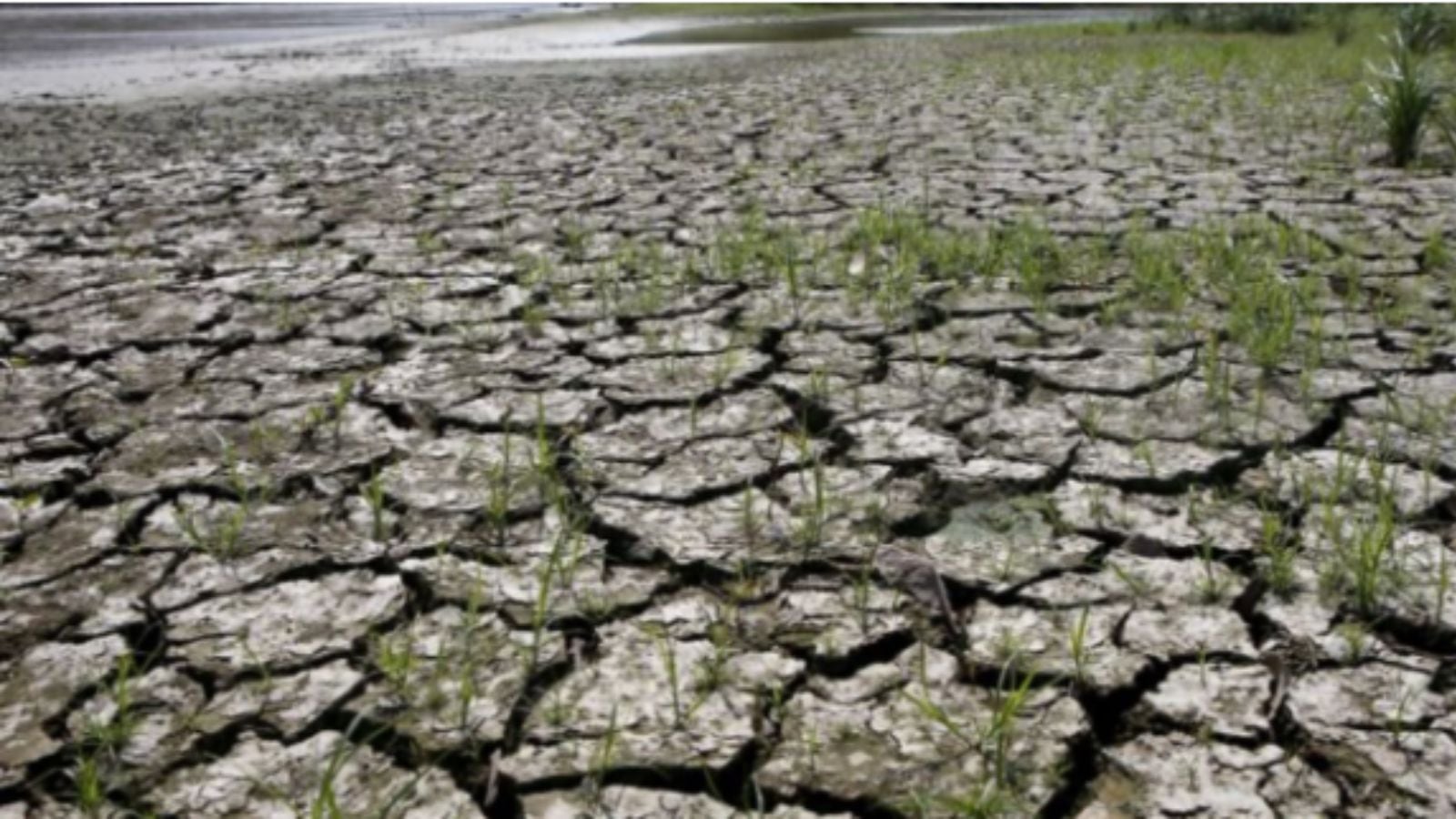
The dust in the Marathwada region of India does not merely settle; it invades. It coats the throat, stings the eyes, and turns the vibrant green of hope into a dull, uniform gray.
Consider a farmer named Anand. He does not read United Nations climate bulletins. He does not track sea-surface temperature anomalies in the equatorial Pacific Ocean. But Anand knows the exact weight of a dry spell. He feels it in the brittle snap of sugarcane stalks that should be bursting with sweet juice. He reads it in the widening cracks of his baked earth, fissures that look like tiny, desperate mouths begging the sky for a drop of water.
Thousands of miles away, an invisible shifts occurs. Deep beneath the waves of the Pacific, the trade winds weaken. Warm water, usually corralled toward Indonesia, begins to slosh backward, slithering toward the coast of South America.
This is El Niño. It is a deceptively gentle name for a climate pattern that carries the economic and physical survival of over a billion people in its wake.
When the UN issues a warning about El Niño coinciding with global heatwaves, meteorologists look at charts. Anand looks at his empty well. The connection between an ocean current half a world away and the price of a plate of lentils in Mumbai is direct, brutal, and entirely human.
The Pacific Whisper That Becomes a Roar
To understand why a warming ocean in the Americas dictates life in rural India, we must abandon the idea that weather is local. The atmosphere is a tightly coiled spring. When El Niño pushes warm water eastward, it alters the massive atmospheric conveyor belts known as the Walker Circulation.
Think of it as a global game of dominoes. The heat rising from the altered Pacific shifts the jet streams. It repositions the high-pressure zones. By the time this atmospheric ripple effect reaches the Indian subcontinent, the southwest monsoon—the lifeblood that delivers nearly 70 percent of India's annual rainfall—finds itself choked of moisture.
The monsoon is not a mere weather event for India. It is the true finance minister of the country.
More than half of India's population relies directly on agriculture for their livelihood. When the rains fail, the economic gears grind to a halt. Reservoirs dry up. Hydroelectric power generation plummets. Cities face severe water rationing, and the rural economy, which drives the consumption of everything from motorcycles to gold, collapses into debt.
Lessons Written in the Dust
History provides a stark ledger of what happens when this cycle takes hold. We have been here before, and the scars are still visible.
During the severe El Niño cycle of 2015–2016, the consequences were devastating. Nearly 330 million Indians—roughly a quarter of the entire population—suffered from acute water shortages and drought. In places like Latur, the crisis grew so severe that the government had to dispatch special trains, dubbed the 'Water Express,' carrying millions of liters of water across hundreds of miles just to keep communities alive.
Imagine waiting on a concrete platform, plastic jerrycan in hand, under a noon sun that registers 45 degrees Celsius, just for a ration of drinking water. That is the human face of a statistical anomaly in ocean temperatures.
The agricultural fallout from that period was equally grim:
- Grain Production: Food grain production dropped significantly, forcing the government to draw heavily from emergency reserves.
- Food Inflation: The scarcity of pulses and vegetables caused prices to skyrocket, turning basic nutritional needs into luxury items for the urban poor.
- Rural Migration: Millions of farmers abandoned their ancestral lands, migrating to city slums in search of daily wage labor, fracturing families and communities.
A similar story played out in 2009, when India experienced its worst monsoon deficit in three decades due to another aggressive El Niño phase. The pattern is undeniable. It is a recurring ghost that haunts the Indian farmer, reappearing just as communities begin to find their footing again.
The Double Threat of Modern Warming
The current warnings from global scientific bodies carry a sharper edge of anxiety than those of the past. We are no longer dealing with El Niño in isolation. We are witnessing this natural phenomenon supercharged by a baseline of global warming that has already raised global temperatures to record heights.
It is a compounding crisis. A naturally occurring hot phase is now sitting on top of a human-induced furnace.
When a heatwave hits an already parched landscape, the evaporation rates of reservoirs accelerate dramatically. The soil loses what little moisture it held, turning into a hydrophobic powder that cannot even absorb water properly when it finally does rain. Instead of nourishing the crops, sudden downpours trigger flash floods, washing away the topsoil and leaving the land even more barren than before.
This creates a psychological toll that numbers cannot capture. The constant state of uncertainty erodes the human spirit. Farmers must decide whether to risk their meager savings on seeds that might never sprout, or to give up entirely before the first seed even hits the dirt.
Reimagining the Shield
If the threat is systemic, the defense must be equally comprehensive. India cannot stop El Niño from forming in the Pacific, but the nation can change how it receives the blow.
The traditional reliance on massive, centralized irrigation projects is proving insufficient against the erratic nature of modern climate shifts. True resilience is being built from the ground up, focusing on decentralized water management and smarter agricultural choices.
Consider the shift toward climate-resilient crops. For generations, policy incentives encouraged the cultivation of water-intensive crops like rice and sugarcane in naturally arid regions. It was an unsustainable strategy. Today, there is a slow but vital return to traditional millets—sorghum, pearl millet, and finger millet. These ancient grains require a fraction of the water that rice demands and can thrive in punishing temperatures.
Simultaneously, village-level water harvesting is transforming communities. By reviving ancient stepwells, building small check dams, and practicing aggressive rainwater harvesting, communities are creating localized buffers. They are catching the water where it falls, ensuring that even if the monsoon is weak, the subterranean aquifers remain charged.
But the real problem lies elsewhere: in the speed and accessibility of information. A weather forecast is useless if it arrives as an abstract percentage on a smartphone a day before a heatwave. It must be translated into actionable, localized advice delivered weeks in advance, allowing a farmer to alter their planting schedule or choose a different crop variety entirely.
The Long Road to the Next Monsoon
The sun sets over the fields, casting a deep, copper glow across a landscape waiting for relief. The UN warnings will continue to circulate through air-conditioned conference halls, and scientists will continue to parse the shifting boundaries of the Pacific currents.
But on the ground, the reality remains stark and simple. The climate crisis is not a future projection; it is a current reality measured in the sweat of a farmer's brow and the drying beds of ancient rivers. The silent ocean half a world away will continue to dictate terms, but the story of how India survives those terms is still being written in the resilience of its people, the choices of its leaders, and the crops that find a way to grow in the heat.