The Iron Ghost of the Horizon
On a clear day from the cliffs of Musandam, you can see the tankers. Or, you used to. They were the slow-moving, rhythmic pulse of the world’s jugular—monoliths of steel carrying the combustible lifeblood of modern civilization. But lately, the horizon looks empty. It is a blue, shimmering void that masks a terrifying stillness.
Data analysts talk about "standstills" and "decreased throughput." They use charts that look like heart monitors flatlining. But if you were standing on the deck of a stagnant Suezmax tanker anchored just outside the Strait of Hormuz, the reality isn't a chart. It’s the smell of salt and stagnant diesel. It’s the sound of nothing. For a merchant mariner, silence is the most expensive sound in the world.
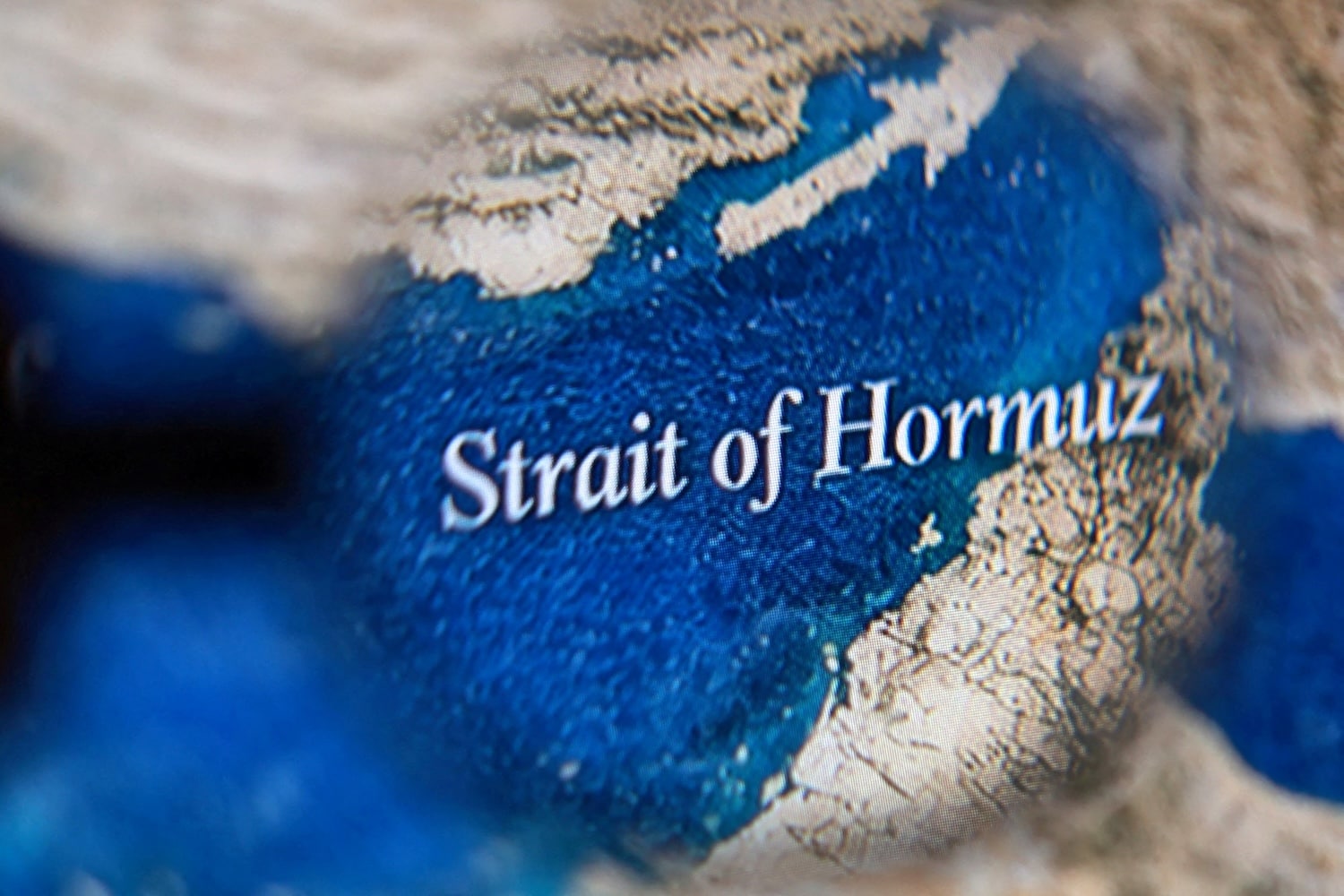
Twenty percent of the world’s petroleum passes through this narrow stretch of water. When the flow stops, the world doesn't just get more expensive; it gets fragile.
The Man on the Bridge
Consider a hypothetical captain named Elias. He has spent thirty years navigating the chokepoints of the globe, from Malacca to the English Channel. Usually, his biggest worry is the weather or the tedious bureaucracy of port authorities. Today, his worry is invisible.
Elias stands on the bridge of a vessel worth two hundred million dollars, carrying a cargo worth twice that. He is watching the radar, but he is also watching the news. He knows that a few dozen miles away, the geopolitical tension has reached a pressure point that makes insurance companies scream. The "virtual standstill" the headlines mention is, for Elias, a series of frantic satellite calls and a crew that hasn't slept because every rogue wave looks like a fast-attack craft.
The math of global trade is ruthless. If a ship sits idle, it loses tens of thousands of dollars every hour. If it moves and gets hit, the cost is measured in lives and ecological catastrophe.
Risk has its own gravity. It pulls the ships toward the shore, where they huddle in "wait-and-see" patterns, turning the Gulf of Oman into a giant, high-stakes parking lot. This isn't a strike or a holiday. It is a collective holding of breath.
The Invisible Pipeline to Your Pocket
We like to think of our economy as digital, ethereal, and instant. We tap a screen, and a package arrives. We turn a key, and the engine purrs. We forget that underneath the sleek interfaces of the twenty-first century lies a gritty, physical reality of heavy oil and rusted iron.
When the Strait of Hormuz clogs, the friction is felt in places that have never heard of Musandam.
- A trucking company in Ohio suddenly finds its margins evaporated by a twenty-cent jump at the pump.
- A plastics manufacturer in Vietnam realizes the raw polymer they need is sitting on a ship that isn't allowed to move.
- A family in London wonders why their heating bill looks like a mortgage payment.
The standstill is a ghost in the machine. Because the shipping industry operates on razor-thin schedules, a three-day delay ripples out for three months. It’s the "butterfly effect" with a hundred thousand tons of displacement. We are currently witnessing a global arrhythmia. The heart is beating, but the blood isn't reaching the extremities.
The Architecture of a Chokepoint
Geographically, the Strait of Hormuz is a fluke of nature. At its narrowest, the shipping lanes are only two miles wide in either direction. It is a funnel. You cannot go around it without adding weeks to a journey and millions to the fuel bill.
The current data suggests that traffic has dropped to a trickle. This isn't because the oil has run out or the demand has vanished. It's because the "security premium"—the literal cost of staying safe—has become higher than the profit of the voyage.
When you read that shipping is at a "virtual standstill," you are reading about a failure of trust. Global trade is built on the assumption that the sea belongs to everyone and no one. Once that assumption breaks, the ocean becomes a series of walls.
Imagine the logistical nightmare of a ship like Elias’s. He cannot simply turn around. These vessels are the size of skyscrapers and have the turning radius of a small moon. They are committed. To stay still is to bleed money; to go forward is to gamble with the crew's lives.
The Digital Shadow
We track this stillness with satellites. Every ship carries an Automatic Identification System (AIS) transponder. It’s a digital heartbeat that tells the world: I am here, I am this big, and I am going this fast.
In the last few weeks, the AIS map of the Strait has started to look like a scattering of broken glass. Some ships have "gone dark," turning off their transponders to avoid being tracked by hostile actors. Others are broadcasting strange destinations or "Armed Guard on Board" messages in their status fields.
This digital obfuscation makes the data even more chilling. If the official numbers say traffic is down by forty percent, the reality might be weirder. We are losing sight of the very things that keep our world running. We are flying blind in the most important corridor on Earth.
The Human Cost of Stillness
It is easy to focus on the CEOs and the oil ministers, but the standstill is felt most sharply by the 1.8 million seafarers who keep the world's fleet moving. These are men and women who are already isolated, spending months away from their families. Now, they are trapped in a geopolitical chess match they didn't sign up for.
Elias’s crew is tired. They are checking the fire-suppression systems for the tenth time today. They are looking at the horizon through binoculars, trying to distinguish a fishing boat from a threat. The mental toll of "standstill" is a grinding, low-level anxiety. It is the weight of being a target simply because you are a link in a chain.
If the chain breaks, the seafarer is the first to feel the snap.
Why This Time is Different
We’ve seen tensions in the Gulf before. We’ve had the Tanker War of the 80s and the sporadic skirmishes of the last decade. But the current standstill is happening in a world that has no slack left.
Our supply chains are "just-in-time." We don't keep months of reserves in warehouses anymore; we keep them on ships. The ship is the warehouse. When the warehouse stops moving, the shelves don't just get thin—they go empty.
The technology that was supposed to make us more efficient has made us more vulnerable to this specific kind of paralysis. We are so optimized for flow that we have forgotten how to handle the freeze.
The Weight of the Blue Void
The sun sets over the Strait, casting long, golden shadows across the water. On the radar screen, the little green triangles that represent ships remain motionless. They are anchored in deep water, waiting for a signal that may not come for days.
Underneath the surface, the currents move with an indifference that is almost mocking. The water doesn't care about insurance premiums or the price of Brent Crude. It only knows the weight of the hulls that sit on top of it.
The world waits. We check the price of gas. We read the headlines about "data shows." We hope that the pulse returns. But for now, the most powerful economy in human history is being humbled by a narrow strip of blue water and the terrifying reality of a quiet horizon.
A single ship begins to move, its engine thrumming a low, bass note that vibrates through the hull. It moves slowly, tentatively, like a creature testing the air after a storm. It is one ship in a sea of hundreds. It carries the hopes of a thousand spreadsheets and the fears of twenty sailors. It heads toward the narrowest point of the Strait, its wake a white scar on the dark water.
The rest stay still. The silence remains. The world is on the hook, and the hook is made of cold, unmoving iron.