When a doctor tells you that you have two to four years left to live, nobody expects you to talk about how lucky you are.
Yet, that's exactly what Sir Chris Hoy did.
The six-time Olympic gold medallist shook the sporting world when he revealed his stage four prostate cancer had spread to his bones, making it terminal. Shortly after, his wife Sarra was diagnosed with an aggressive form of multiple sclerosis. It’s the kind of double-blow that would break almost anyone. But Hoy didn't retreat into despair. Instead, he’s spent the last couple of years rewriting the script on what it means to live with an incurable illness.
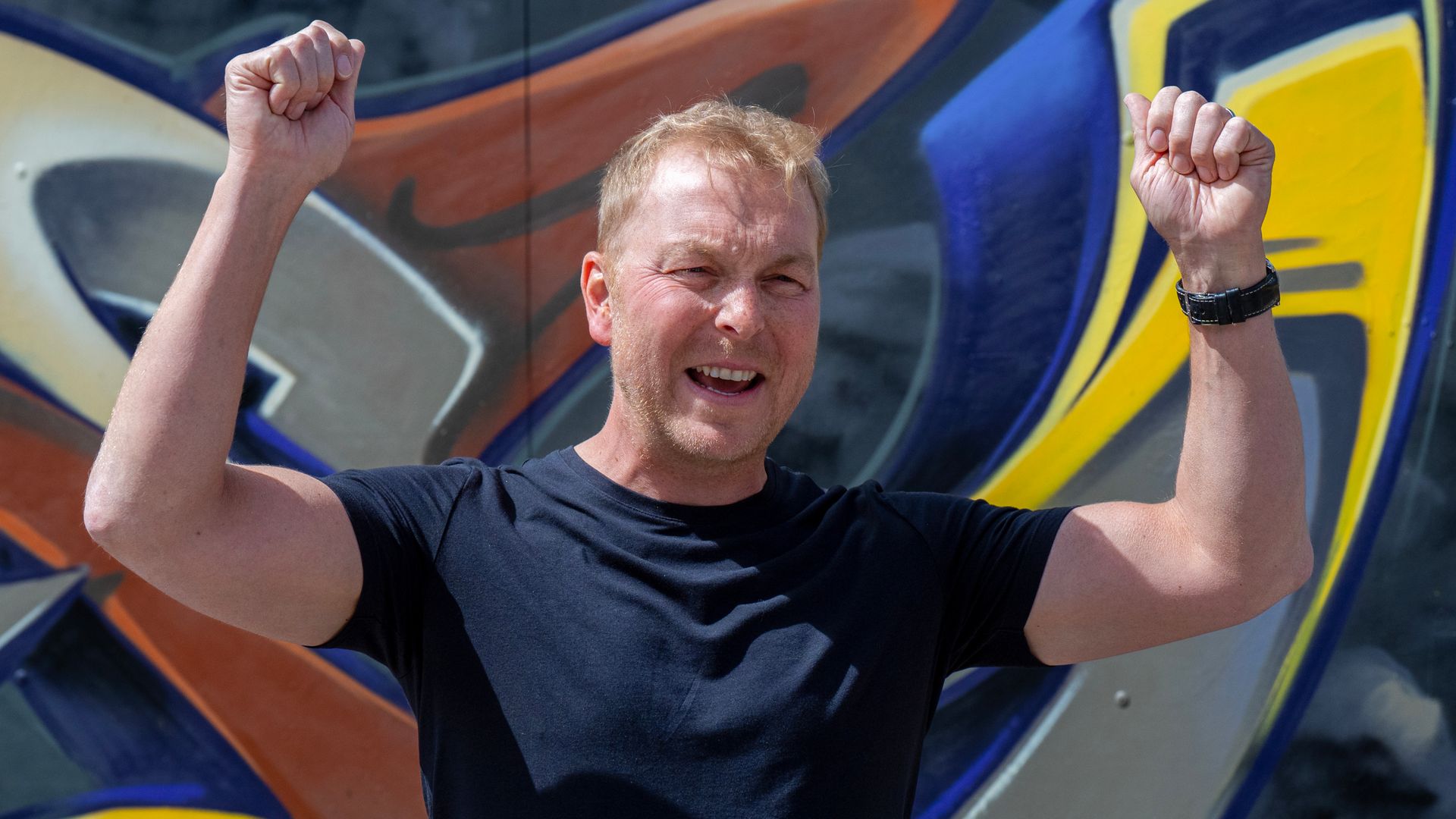
During an interview in Glasgow, standing in front of a new mural celebrating his legacy ahead of the 2026 Commonwealth Games, Hoy dropped a line that should change how we look at terminal diagnoses: "There’s plenty of life left in us."
It’s not just a nice, comforting soundbite for a morning chat show. It’s a direct challenge to the collective assumption that a terminal diagnosis means a person is already gone. Hoy is proving that you can face mortality head-on without letting it dictate the terms of your daily existence.
The Flawed Mindset of Treating the Sick Like Ghosts
We have a bad habit of treating people with advanced cancer as if they’re already figures of the past. The moment the word "terminal" gets attached to a name, the conversation turns hushed, awkward, and mournful. People start walking on eggshells.
Hoy is actively fighting that exact perception. He doesn't want pity, and he certainly isn't acting like a man with an expiration date.
His massive charity cycling event, the Tour de 4, is the perfect example of this defiance. After raising an incredible £3.1 million in its 2025 debut, the event is gearing up for another massive run this September. The goal isn't just to raise money for five major UK cancer charities, though that's a huge part of it. The real purpose is to show, rather than just talk about, what people with late-stage cancer are still capable of doing.
When you see a guy given a couple of years to live organizing national cycling events, launching athletic scholarships, and telling reporters he's "doing fine," it shatters the stereotype of the passive, bedridden patient. He’s showing that an incurable diagnosis doesn't mean you immediately stop contributing, moving, or thriving.
Applying the Athlete Mindset to the Ultimate Race
How do you get to a place where you can look at a scan showing tumors in your shoulder, pelvis, hip, spine, and ribs, and not completely lose your mind?
For Hoy, it comes down to the brutal, practical mental training of an elite track cyclist.
In elite sports, you learn very quickly that you can't control the weather, the track conditions, or how fast your opponent rides. You can only control your own effort, your own legs, and your own mind. In sports psychology, they call this "controlling the controllables."
Cancer operates on the exact same rules. Hoy can’t control the cells mutating in his bones. He can't control the prognosis the doctors handed him. But he can control how he responds to the fear. He can control what he eats, how much he exercises, and how he shows up for his kids, Callum and Chloe.
It’s easy to look at his positivity and think it's just fake cheerfulness or denial. It isn't. It’s a highly disciplined, deliberate strategy. When you're lining up at the Olympic velodrome with the pressure of a nation on your shoulders, letting panic take over means you lose. When you're facing stage four cancer, letting anxiety dominate means you lose the precious time you actually have left. He's simply using the exact same focus that won him six Olympic golds to win back his daily peace of mind.
What True Resilience Looks Like in the Present Moment
We live in a culture obsessed with the next thing. We’re constantly planning for next year, saving for a distant retirement, or worrying about what might happen five years down the road.
A terminal diagnosis forces you to stop doing that. But according to Hoy, that forced shift in perspective isn't entirely a curse.
He's been incredibly open about how facing his mortality at 48 years old has forced him to appreciate the small stuff. He notes how easy it is to miss the nice things right in front of you because you're always racing toward a big target. When you stop looking so far ahead because the long-term future is uncertain, the present moment suddenly gets a lot brighter.
It’s about enjoying a coffee, watching your kids play, or just feeling the wind on your face during a bike ride. It sounds simple, even a bit cliché, until you realize it’s being said by a man who knows exactly how finite his time is. His message isn't just for cancer patients; it’s a wake-up call for healthy people who are completely wasting their present moments by stressing over trivial nonsense.
Taking Action Instead of Waiting Around
If you want to adopt a piece of Hoy's mindset, you don't need to be an Olympic athlete, and you don't need to wait for a crisis to change your perspective. You can start changing how you approach your own challenges right now by focusing on practical, day-to-day shifts.
- Audit your daily worries: Ask yourself how much time you waste stressing over things you can't actually change. Shift that energy into something you can control immediately.
- Support the cause directly: The main rides for the Tour de 4 in September are already sold out, but there are still spaces left for the family loop and the static bikes in the track centre. You can also donate directly to help beat last year’s £3.1 million total, with every pound going toward improving lives for people living with cancer.
- Get screened early: Caught early, prostate cancer has a massive survival rate. If you're a man, or have men in your life, take 30 seconds to check the risk factors through organizations like Prostate Cancer UK. Don't ignore random aches and pains as just "getting older" like Hoy initially did with his shoulder.
Sir Chris Hoy is proving that a terminal diagnosis is not a prompt to start fading away. It's a reminder to live louder, push harder, and appreciate every single lap around the track.