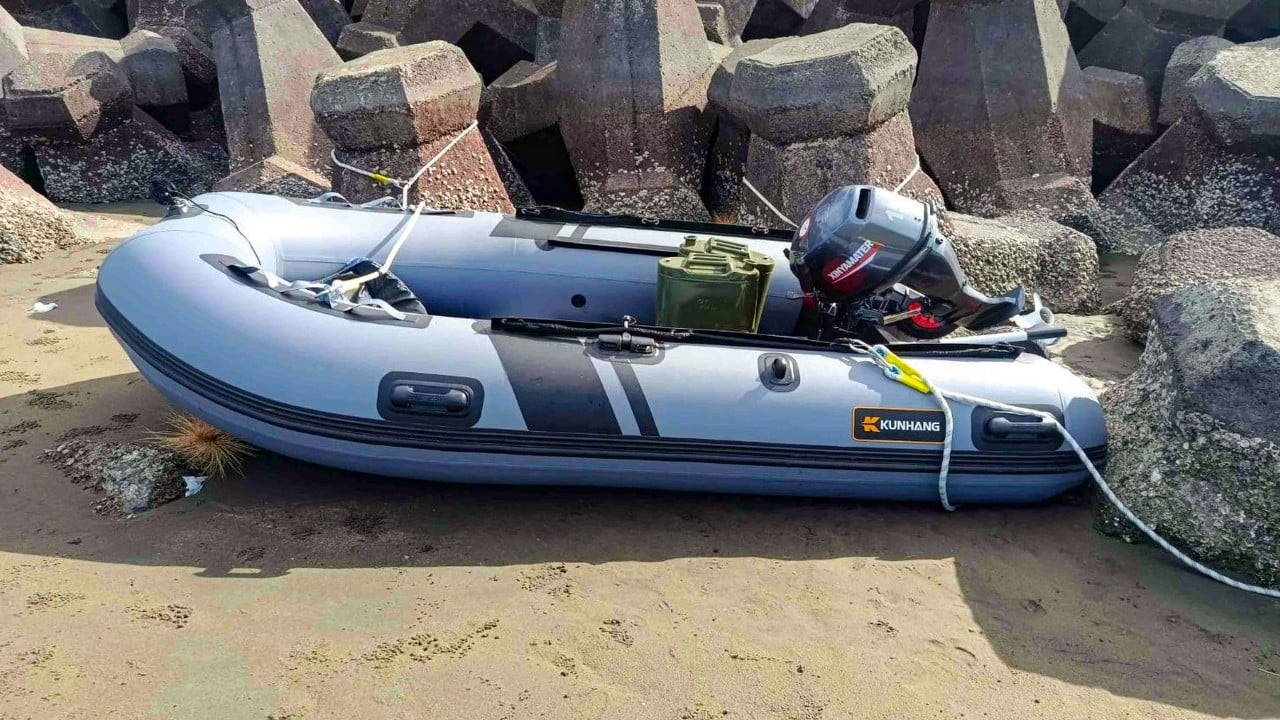
An inflatable rubber boat quietly touching ashore near a major metropolitan port isn't just an administrative headache. It is an exposed nerve for coastal security. When two mainland Chinese men managed to cross the Taiwan Strait and land undetected—remaining at large for nearly a week right as major military exercises kicked off—people started asking hard questions.
Was it an accidental voyage gone wrong, or was it a calculated probe of maritime vulnerabilities? The reality of modern border security is that small, low-profile watercraft present an absolute nightmare for radar operators.
The Blind Spots in Modern Coastal Defense
Big military radars look for big targets. They track destroyers, frigates, and commercial cargo haulers. A 3-meter rubber dinghy sitting low on the waterline barely registers as a blip. It blends right into background sea clutter.
When a recreational angler stumbled across an abandoned boat near the shore, it exposed a fundamental gap in how coastal zones are monitored. You can have all the high-tech defense hardware in the world, but if human patrols miss a physical landing or local surveillance systems ignore anomalies, the shield develops cracks.
The Coast Guard quickly admitted to procedural lapses. Officers dropped the ball on standard operating protocols. That kind of human error happens when monitoring vast coastlines relying on overstretched personnel. But admitting a mistake doesn't fix the underlying architectural flaw in maritime surveillance.
Decoding the Grey Zone Playbook
We need to talk about grey zone tactics without falling for hysteria, but we also can't afford to be naive. Grey zone operations live in the uncomfortable space between peaceful maritime traffic and open conflict. They use deniable, low-cost assets to wear down a defender's resources and test reaction times.
Think about what happens when small, undocumented vessels repeatedly slip through.
- Defenders are forced to deploy scarce assets to chase every single anomaly.
- Constant false alarms or minor incursions create fatigue within coast guard ranks.
- Intelligence agencies waste precious hours trying to verify whether a lost fisherman is actually an infiltrator.
Even if an individual incident turns out to be an amateur mishap, the cumulative effect benefits an adversary. Every successful clandestine landing forces the island's security apparatus to reevaluate its blind spots, buy more thermal imaging gear, and shift personnel away from strategic priorities.
Fixing the Gaps Before the Next Test
Throwing money at hardware won't solve this alone. Buying more patrol boats or upgrading radar signatures only helps if the data is processed intelligently. Security forces need automated anomaly detection cells that can fuse automatic identification system data, visual reports, and radar tracks in real time.
Furthermore, coastal communities play an outsized role. In many of these recent infiltration cases, it wasn't a multi-million-dollar military array that sounded the alarm—it was a local civilian or an observant angler. Empowering local populations and establishing clear, fast reporting channels for coastal workers creates a dense human sensor network that technology alone cannot replicate.
The security apparatus around vital entry points must tighten accountability. When standard operating procedures fail, swift internal discipline matters, but operational redesign matters more. If small craft can exploit gaps during high-alert military drills, the system is begging to be tested further.
Close the monitoring gaps at the water's edge, upgrade thermal coverage on vulnerable beaches, and treat every stray dinghy as a stress test for the entire defense architecture.