The hospital room in El Paso smelled of industrial antiseptic and the metallic tang of a desert rainstorm hitting hot pavement. Elena gripped the plastic bed rails, her knuckles white, watching the sun dip below the Franklin Mountains. She was miles from the home she had left, but as her son took his first breath, he didn’t belong to that distant past. He belonged to the floor beneath her feet. He was, by the simple, radical act of being born on this specific patch of earth, an American.
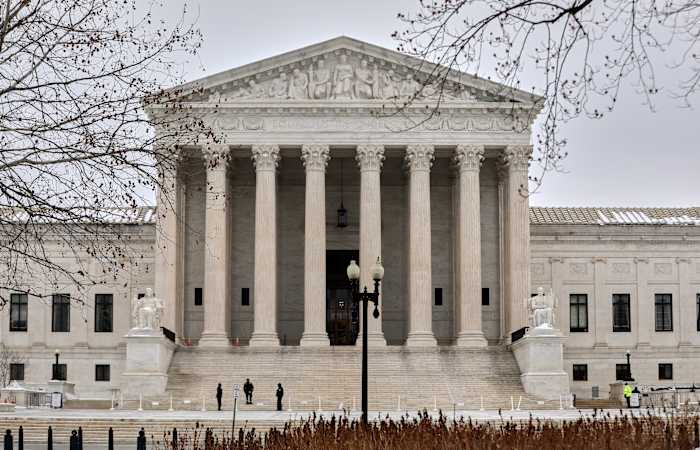
This is the promise of jus soli—the right of the soil. It is a concept so deeply embedded in the American identity that we often treat it as a law of nature, like gravity or the changing of the seasons. But as a Supreme Court case looms on the horizon, that floor is beginning to feel less like solid ground and more like a trapdoor.
We are entering a season of profound uncertainty. For millions, the definition of "citizen" is shifting from a settled fact into a high-stakes legal debate. To understand why this matters, you have to look past the dry legal briefs and into the eyes of parents who see a passport not just as a travel document, but as a shield.
The Two Ways to Belong
Most of the world does not work like the United States. If you are born in Montpellier to parents who are not French, you do not automatically become a citizen of France. If you are born in Tokyo to non-Japanese parents, you are a foreigner in the only home you have ever known. This is jus sanguinis—the right of the blood. It is an ancient, ancestral way of viewing the world, where citizenship is an inheritance passed down through DNA, a closed circle that is difficult to break into.
The United States, along with much of the Western Hemisphere, chose a different path.
The 14th Amendment was born out of the wreckage of the Civil War. It was designed to ensure that formerly enslaved people could never again be told they weren't "real" Americans. It states, with a clarity that seems almost defiant today, that "all persons born or naturalized in the United States, and subject to the jurisdiction thereof, are citizens."
It was a reset button for a broken nation. It declared that your value, your rights, and your belonging were determined by your future on this soil, not your ancestors' past in another land.
The Invisible Stakes of a Border
Imagine a girl named Maya. She is ten years old, loves soccer, and thinks in English but dreams in a mix of Spanish and jazz. Her parents arrived twenty years ago and stayed past their visas. Under the current interpretation of the 14th Amendment, Maya is as American as the President. She has a Social Security number. She can vote when she’s eighteen. She can never be deported.
Now, consider the alternative being whispered in the halls of the Supreme Court.
If the court decides that "subject to the jurisdiction thereof" excludes the children of those without legal status, Maya’s world evaporates. Overnight, she becomes a "stateless person." She would belong nowhere. The country she loves wouldn't want her, and the country of her parents wouldn't know her.
This isn't just a legal technicality. It is a psychological earthquake.
When you strip away birthright citizenship, you create a permanent underclass. You create a generation of people who pay taxes, speak the language, and build the infrastructure, but who live in a shadow world where they have no voice and no safety net. We have seen this play out in other parts of the world. In some nations, guest workers stay for decades, raising children and grandchildren who remain "guests," forever tethered to a homeland they’ve never visited.
A Global Map of Closed Doors
The United States is an outlier, but it’s an outlier with company. About 30 of the world’s 195 countries offer some form of birthright citizenship. Most are in the Americas—Canada, Mexico, Brazil, Argentina. It is a "New World" philosophy. It was the engine of the Great Migration and the secret sauce of the American Century. It told the tired, the poor, and the huddled masses that if they could just get their children to this shore, those children would be equal to the sons of kings.
In Europe and Asia, the trend has moved in the opposite direction.
The United Kingdom tightened its rules in the 1980s. Ireland was the last holdout in the European Union, ending unrestricted birthright citizenship in 2004 after a tense national referendum. The arguments there mirrored the ones we hear today: concerns about "birth tourism" and the strain on public resources.
But the data often tells a quieter story. In countries that have moved toward the "right of the blood," the result hasn't been a sudden disappearance of immigrants. Instead, it has led to deeper social fractures. When you tell a child they don't belong to the place where they were born, they listen. They grow up feeling like outsiders. They don't invest in a society that refuses to invest in them.
The Jurisdiction Trap
The coming legal battle hinges on four words: subject to the jurisdiction.
Opponents of birthright citizenship argue that if you are in the country illegally, you are not truly under its "jurisdiction" in the way the Founding Fathers intended. They argue that jurisdiction implies a mutual consent—a social contract that the state must agree to enter.
It is a clever linguistic pivot.
But legal scholars point out the dangerous logic here. If a person isn't subject to the jurisdiction of the U.S., does that mean they don't have to follow its laws? If an undocumented person commits a crime, can they claim they are exempt from prosecution because they aren't "under the jurisdiction"? Of course not. The law applies to everyone within our borders. You cannot pick and choose when jurisdiction starts and ends based on a person’s paperwork.
The historical record from 1866 is surprisingly clear. The authors of the 14th Amendment were asked specifically if this would apply to the children of Chinese immigrants and Gypsies—groups that were deeply unpopular at the time. Their answer was a resounding yes. They knew exactly what they were building: a nation defined by its borders, not its bloodlines.
The Human Cost of the Debate
While the lawyers argue over 19th-century grammar, the anxiety in communities across the country is palpable.
Think of a nurse in Chicago or a mechanic in Phoenix. They have lived their lives with the absolute certainty that their children are safe. That certainty is the foundation of every mortgage they sign, every college fund they start, and every dream they harbor. When we debate birthright citizenship, we are debating the fundamental stability of the American family.
We are also debating our own history.
Every time the United States has tried to narrow the definition of "American," we have later looked back with regret. From the Chinese Exclusion Act to the internment of Japanese Americans—many of whom were citizens by birth—the impulse to exclude has always left a scar on the national conscience.
The current debate feels different because it strikes at the very first moment of American life: the cradle. It asks us to look at a newborn in a hospital wing and decide if their presence is a blessing or a legal error. It asks us to check the papers of the parents before we congratulate the child.
The Ghost of Dred Scott
Hovering over this entire conversation is the ghost of the Dred Scott decision. In 1857, the Supreme Court ruled that Black people could never be citizens. It was a moment of profound moral failure that nearly destroyed the country. The 14th Amendment was the corrective. It was the "never again" of American law.
To backtrack on birthright citizenship is to flirt with the logic of that era. It is to suggest that citizenship is a privilege to be granted by the powerful, rather than a right earned by being a human being on this land.
If we move toward a system based on blood, we are moving toward a smaller, more fearful version of ourselves. We are saying that the "soil" isn't strong enough to hold us all. We are saying that the American experiment has a guest list.
Beyond the Briefs
In a few months, the robed justices will sit in their high-backed chairs and listen to arguments about sovereignty and intent. They will flip through centuries of precedent. They will weigh the political pressures of a divided nation.
But the real verdict won't be found in the text of the ruling. It will be found in the neighborhoods where kids are playing tag, unaware that their right to be there is being litigated. It will be found in the quiet moments of parents like Elena, looking at their sleeping children and wondering if the ground beneath them is still solid.
The United States has always been a country of arrivals. We are a nation built by people who left one place to become something else in another. Birthright citizenship is the bridge that makes that transformation possible. It is the mechanism that turns "them" into "us."
Without it, we are just a collection of people living on the same land, divided by the circumstances of our ancestors. With it, we are a community.
The sun sets over the Franklin Mountains, casting long, purple shadows across the Rio Grande. In the hospital, Elena’s son sleeps, his chest rising and falling in the steady rhythm of a new life. He doesn't know about the Supreme Court. He doesn't know about the 14th Amendment. He only knows the warmth of his mother and the air in his lungs. He is here. He is home. And for now, that is enough.


