Morning usually arrives with routine. The steady hiss of a kettle. The dull thrum of traffic two blocks over. The distinct click of a front door locking behind a neighbor rushing for the early bus.
Then came the rupture.
It did not sound like thunder. Thunder rolls, carrying a heavy, distant warning across the horizon. This was sharp. A sudden, violent tear in the fabric of the morning that rattled windowpanes for a mile in every direction and turned brick into gravel before the echoes had even finished bouncing off the tarmac.
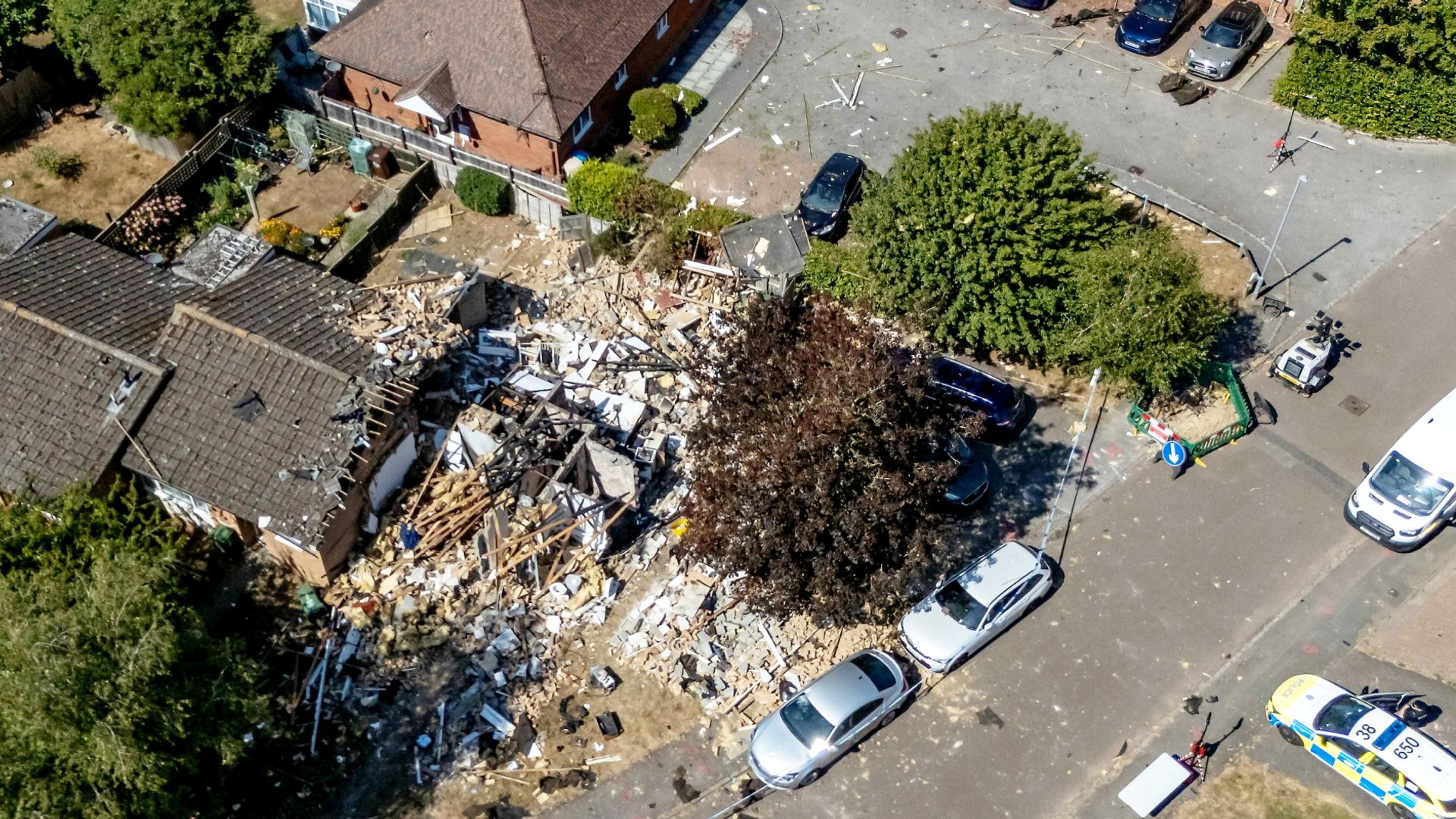
When a bungalow collapses from a suspected gas explosion, the physical transformation is absolute. One second, there is a living space—a worn armchair by the radiator, a mug left half-full on the sideboard, family photographs pinned crookedly to a refrigerator door. The next, there is only a crater of splintered timber and rising gray dust.
Silence followed. Not a peaceful quiet, but the heavy, suffocating stillness that settles over a neighborhood when people realize the world has just shifted beneath their feet.
Emergency services arrived with the frantic urgency that defines these moments. Blue lights washed across the brickwork of adjacent houses, painting panicked faces in rhythmic flashes of crimson and azure. Firefighters waded into the debris pile not with heavy machinery at first, but with their bare hands, moving chunks of masonry as if handling fragile glass.
They were looking for a life.
Every neighborhood holds a collection of invisible lines running beneath the grass and behind the walls. Steel arteries carrying invisible fuel. We live with them constantly, resting our foundations inches away from a potent, pressurized potential that we trust completely until the moment we cannot.
Consider what happens when that trust breaks.
Gas leaks do not usually announce themselves with a theatrical hiss. Often, they pool quietly in floor voids or crawl spaces, creeping through the silent hours of the night. A worn valve. A hairline fracture in an aging pipe. A fitting that loosened by a millimeter during the seasonal shift of the ground. By the time morning air meets a stray spark—a refrigerator compressor clicking on, a light switch flicked by someone walking down the hall in the dark—the house is no longer a shelter. It is a chamber waiting for a match.
The human cost of these disasters is rarely captured by emergency bulletins or the dry notes filed in municipal records. Those reports speak in cold metrics. They note the total destruction of a single-story dwelling. They log the response times of three fire engines and two rescue units. They confirm the tragic fatality of a man whose name is withheld pending formal identification and notification of next of kin.
Numbers are safe. Numbers keep the horror at a distance.
Close up, the reality is entirely different. It is the sudden absence of a neighbor who waved from the driveway yesterday afternoon. It is the scatter of personal belongings—a stray shoe, a singed book page, a blown-out curtain fluttering from a shattered window three doors down—now exposed to the indifferent sky.
In communities like this, vulnerability is a shared condition. We share the same underground grid. We share the same municipal water mains, the same electrical poles, the same hidden infrastructure that allows modern life to function without our having to think about it. Until we are forced to think about it.
After the smoke clears and the investigators in high-visibility vests sift through the charcoal and ash with metal combs and notebooks, the neighborhood is left to grapple with the aftermath. The police tape comes down eventually. The debris is cleared away by heavy trucks. A vacant patch of leveled earth remains where a home used to stand, a missing tooth in the tidy smile of a suburban street.
The questions linger longer than the rubble. Could it have been detected? Was there a faint scent ignored during the evening television news? Did an aging appliance finally give up its integrity after decades of faithful service?
Most of the time, the answers offer no comfort. They point to the quiet, unyielding mechanics of everyday materials succumbing to time, pressure, and invisible decay.
Across the street, another kitchen window reflects the afternoon light. Someone inside turns on a burner to boil water for tea, the small blue flame catching instantly with a familiar, comforting snap. But for a few blocks around that empty crater of earth, the sound of that ignition is heard differently now. It is a reminder of how thinly the margin between normal life and absolute catastrophe is drawn, and how quickly a home can vanish into the quiet morning air.