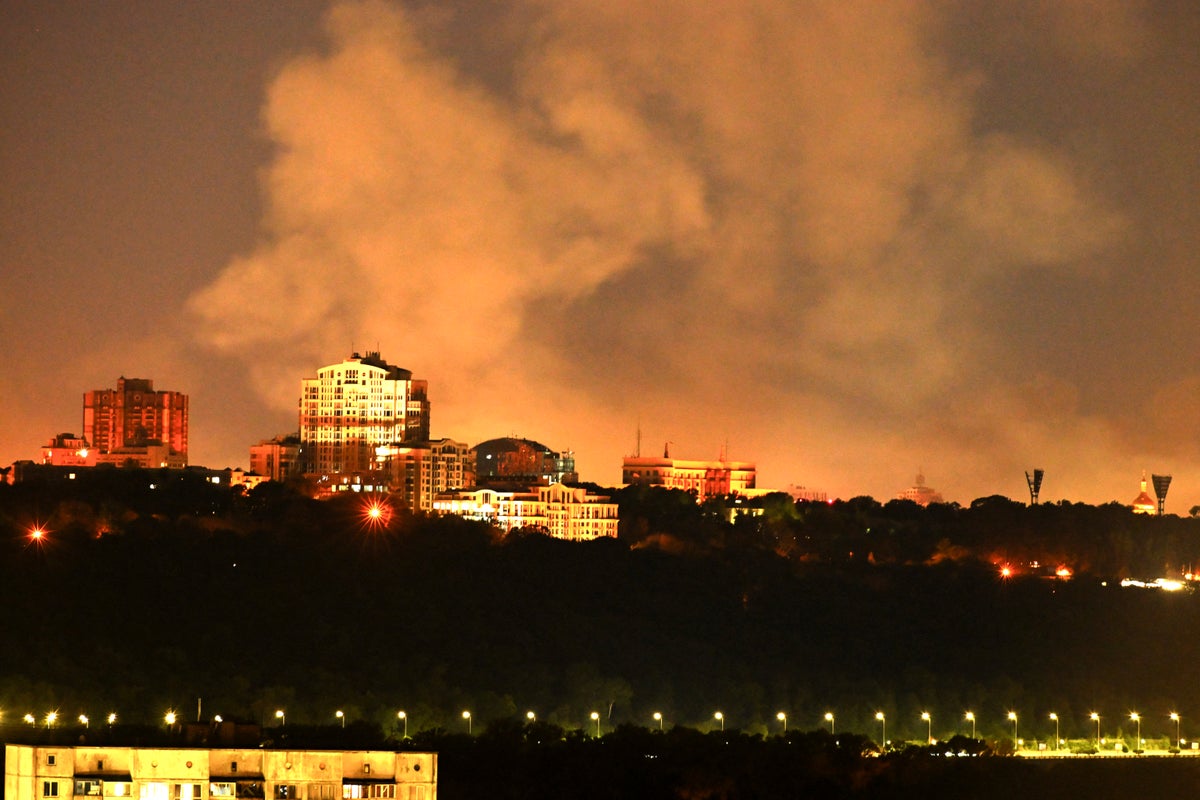
The sirens do not sound like warnings anymore. They sound like routine. In a city where breathing has become an act of defiance, the air-raid alert is simply the baseline rhythm of survival, a mechanical howl that cuts through morning coffee and midnight dreams alike. But routine is a fragile shield.
Dawn came differently to Kyiv this week. It arrived wrapped in fire.
When Vladimir Putin launched what military analysts dryly categorize as a "massive attack," the numbers began to tick upward across news tickers. At least five dead. Dozens injured. Infrastructure fractured. To someone sitting thousands of miles away, those figures are data points on a screen, easily scrolled past between weather updates and sports scores.
Stop scrolling.
Imagine waking up to the ceiling buckling inward. Imagine the sensory violence of a hypersonic missile breaking the sound barrier, an earth-shattering crack that turns windows into lethal glass shrapnel before your brain has even finished processing the morning light. This is not a geopolitical abstraction. This is the ordinary Tuesday of an ordinary family living down the street from an ordinary playground that now resembles a cratered moonscape.
History has a cruel way of repeating its worst movements while we watch through high-definition lenses. We have grown numb to the lexicon of destruction. Words like barrage, escalation, interceptor, and fallout have lost their teeth through overuse. We read them and nod, compartmentalizing the horror so we can function.
Yet, behind every casualty report is an unwritten biography cut brutally short.
Consider a hypothetical resident named Olena, a schoolteacher whose apartment overlooks a quiet courtyard in the Shevchenkivskyi district. (While Olena is a composite character, her reality mirrors thousands of verified accounts documented by human rights monitors on the ground). Her morning routine involves grading essays by the dim light of a battery-powered lamp, nursing a cup of instant chicory coffee because real coffee is a luxury saved for better months. She knows the sound of the air defense batteries better than she knows her favorite Schubert sonatas. She knows the exact second a distant rumble means "stay in the hallway" versus "get into the basement."
When the massive strike hit, Olena’s building did not collapse entirely. It just lost its face. One entire side of the concrete structure sheared off like a dollhouse sliced by a scalpel, exposing pink wallpaper, a child's bunk bed hanging precariously over a thirty-foot drop, and a framed photograph swinging crazily from a single exposed wire.
Five dead. That was the official count released by municipal authorities in the immediate aftermath. Five human beings who went to sleep planning what to wear the next day, who left half-eaten pieces of bread on wooden tables, who will never answer another text message.
The strategy behind these relentless morning raids is transparent and brutal. It is an exercise in psychological attrition. The aggressor knows that destroying a power grid or flattening an administrative block does not win a ground war overnight. The true objective is invisible: to exhaust the human spirit. The goal is to make the cost of endurance so unbearably high that ordinary citizens begin to look at the ruins of their lives and ask, Why keep fighting? Why rebuild what will only be broken again tomorrow?
This is where the true battle is fought. Not just in the trenches of the Donbas or the contested skies over the capital, but inside the quiet, exhausted minds of people who are simply tired of being strong.
I have spoken with volunteers who spend their days clearing rubble with bare hands, their fingernails permanently stained with concrete dust and dried blood. They do not talk about geopolitics. They talk about the smell of plaster. They talk about the strange, heavy silence that settles over a neighborhood right after a strike, before the sirens start up again and the first ambulance cuts through the haze.
There is a profound vulnerability in witnessing this. It forces us to confront the fragility of our own safe assumptions. We build our lives around the promise of permanence—mortgages, retirement accounts, weekend plans, the quiet predictability of a Tuesday morning. We assume the ceiling will stay where it is. We assume the ground beneath our feet will not suddenly turn into a graveyard.
When that illusion is shattered in Kyiv, it ripples outward. It reminds us that peace is not a natural state of the universe; it is a delicate, artificial ecosystem maintained entirely by human choice, and when someone decides to break it, the consequences cascade with terrifying speed.
Yet, amidst the shattered glass and the soot-stained bricks, something illogical happens. It is something the strategists in command bunkers fail to calculate in their algorithmic models of deterrence.
People sweep up the glass.
Within hours of the attack, long before the official rescue operations have even concluded, neighbors emerge from subterranean shelters with brooms and trash bags. They clear the sidewalks. They share flasks of hot tea with strangers whose homes were vaporized. They patch the gaping holes in their windows with heavy-duty plastic sheeting and duct tape, creating a pathetic, resilient patchwork armor against the next inevitable night.
It looks small. It looks futile in the face of ballistic missiles and geopolitical malice. But it is the ultimate act of rebellion. It is a collective refusal to grant the aggressor the victory of permanent despair.
The human heart is stubborn that way. It breaks, it splinters, and then it stubbornly pieces itself back together using whatever scrap materials are left lying around in the dust.
As the sun sets over the wounded skyline of Kyiv, casting a bruised orange glow over twisted steel and silent minarets, the air-raid sirens begin to wail once more. Somewhere in the dark, a child whimpers, and a mother begins to hum a lullaby, drowning out the mechanical howl of the night with the oldest, quietest weapon known to humanity.