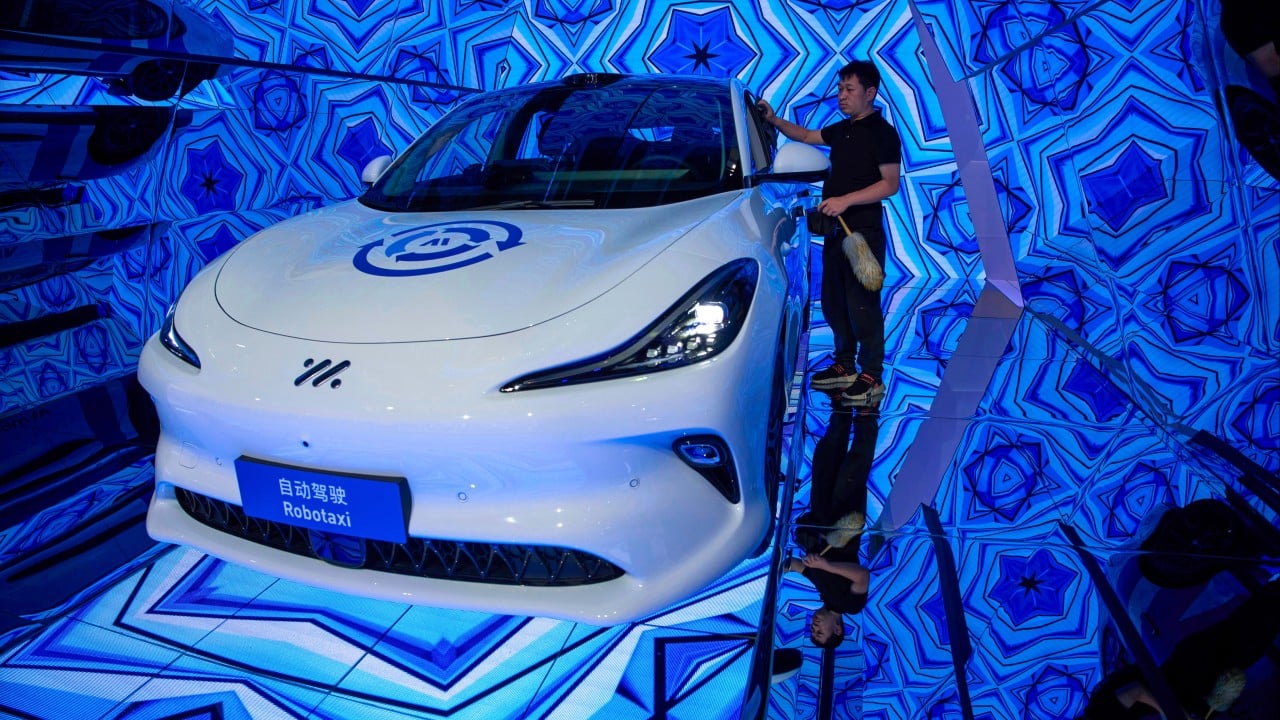
The retail portion of Chinese autonomous driving startup Momenta Global Ltd closed its Hong Kong public offering oversubscribed by an astonishing 414 times. The Suzhou-based smart-driving company locked in an offer price of HK$295.60 per share, raising HK$5.89 billion ($751 million) and securing a post-IPO valuation of HK$69.63 billion. While retail mania points to an institutional frenzy, the truth is more nuanced. This oversubscription is a direct consequence of a tightly restricted public float rather than a sudden, unbridled faith in autonomous tech.
The Mechanics Behind the Massive Retail Multiple
A 414-fold oversubscription commands headlines, but understanding the math deflates the hysteria. Momenta offered a total of 19.94 million Class A ordinary shares globally. Following standard Hong Kong listing conventions, only 10% of that total—roughly 1.99 million shares—was originally allocated to the local public offering.
When a tiny pool of shares meets retail investors hunting for momentum, the oversubscription multiple climbs instantly. Margin financing from brokers artificially inflates these numbers, as retail buyers borrow up to 20 times their actual cash deposit to chase hot tech listings. The true anchor of this transaction lies not with the retail public, but with the 14 heavyweights who occupied half the board before bookbuilding even finished.
Cornerstone investors committed a massive $376 million, locked down for at least six months. These entities include Singapore's sovereign wealth fund GIC, asset managers BlackRock and Fidelity International, alongside automotive giants Mercedes-Benz and BYD. For these players, backing Momenta is less about an immediate financial return and more about locking down access to the software layer powering the next decade of passenger vehicles.
The Physical AI Monopoly in China
To understand why global asset managers are queuing up for a loss-making startup, look at the shifting structure of the Chinese automotive industry. Momenta has positioned itself within what investors call the third-party intelligent driving market.
City NOA (Navigation on Autopilot) Market Share in China (2026 Data)
+------------------------------------+---------+
| Provider                           | Share   |
+------------------------------------+---------+
| Huawei (Integrated/Allied Brands)  | ~43%    |
| Momenta (Independent Provider)     | ~30%    |
| All Other Competitors Combined     | ~27%    |
+------------------------------------+---------+
As the table shows, Huawei and Momenta command a clear duopoly over China's urban Navigation on Autopilot market, controlling over 72% combined. If you exclude Huawei's captive ecosystem of allied brands, Momenta holds an unchallenged 65% share of the independent, third-party provider niche.
Automakers are terrified of ceding total control to Huawei. Turning to an independent supplier like Momenta allows legacy brands to maintain their identity while implementing high-end smart-driving software. Momenta now lists 24 global manufacturers on its client roster, spanning SAIC, Toyota, BMW Group China, Audi, and General Motors. Its software is already running inside more than 733,000 vehicles worldwide.
The Hidden Financial Trap for Public Investors
While revenue growth looks extraordinary on paper, the underlying cash burn tells a different story. Momenta's revenue jumped 82% to 2.41 billion yuan ($354.5 million) last year, driven by a surge in software licensing fees. Gross margins expanded to a healthy 71.6%.
Yet, net losses widened simultaneously, reaching 3.45 billion yuan.
Autonomous driving requires perpetual, aggressive capital deployment. Momenta is allocating 60% of its newly raised cash directly back into research and development, specifically to fund its R7 reinforcement learning world model and scale its AI computing infrastructure. The company has explicitly warned public markets that it may not see profits for the foreseeable future.
Public market investors rarely possess the same long-term patience as private venture capital. Unlike the early institutional backers who tolerated years of heavy deficits, public stock buyers expect a visible path toward positive cash flow.
The Looming Counter-Trend of In-House Development
The greatest threat to Momenta’s valuation does not come from rival startups like Pony.ai or WeRide. It comes from its own customers.
The relationship between third-party software providers and major automakers is inherently fragile. Right now, legacy brands rely on Momenta because building autonomous driving software from scratch is slow, expensive, and technically punishing. But long term, every major automotive group wants to own its software stack to avoid paying perpetual licensing fees and losing control of valuable driver data.
As automakers expand their internal software divisions, the volume of external orders will face downward pressure. Momenta has attempted to mitigate this risk through deep corporate cross-shareholdings, notably with SAIC and its premium IM brand. These joint setups ensure that Momenta receives a steady stream of test data and guaranteed vehicle deployments, but they also expose the startup to downstream sales volatility. If SAIC or Mercedes-Benz experience a dip in vehicle deliveries, Momenta’s top-line revenue takes an immediate hit.
The capital raised from this Hong Kong listing buys Momenta time to perfect its next-generation AI models. But as trading debuts on July 8, the company moves from the protected enclosure of private funding into a unforgiving public market that will judge it on margins, not just oversubscribed headline multiples.