History does not always arrive with the thunder of a collapsed dynasty or the sudden flash of a bayonet. Sometimes, it slips in quietly, wearing a tailored suit, horn-rimmed glasses, and a stiff smile that has survived decades of ideological storms.
Picture a Beijing autumn. The air turns sharp, carrying the scent of coal smoke and roasted chestnuts from street corners. Inside the cavernous halls of power, men in identical dark suits adjust their ties with mechanical precision. They are preparing a ghost story. Not of chains and rattling bones, but of a man who once played Elvis tunes on an accordion for foreign dignitaries and wrestled the state through the turbulent crucible of the 1990s.
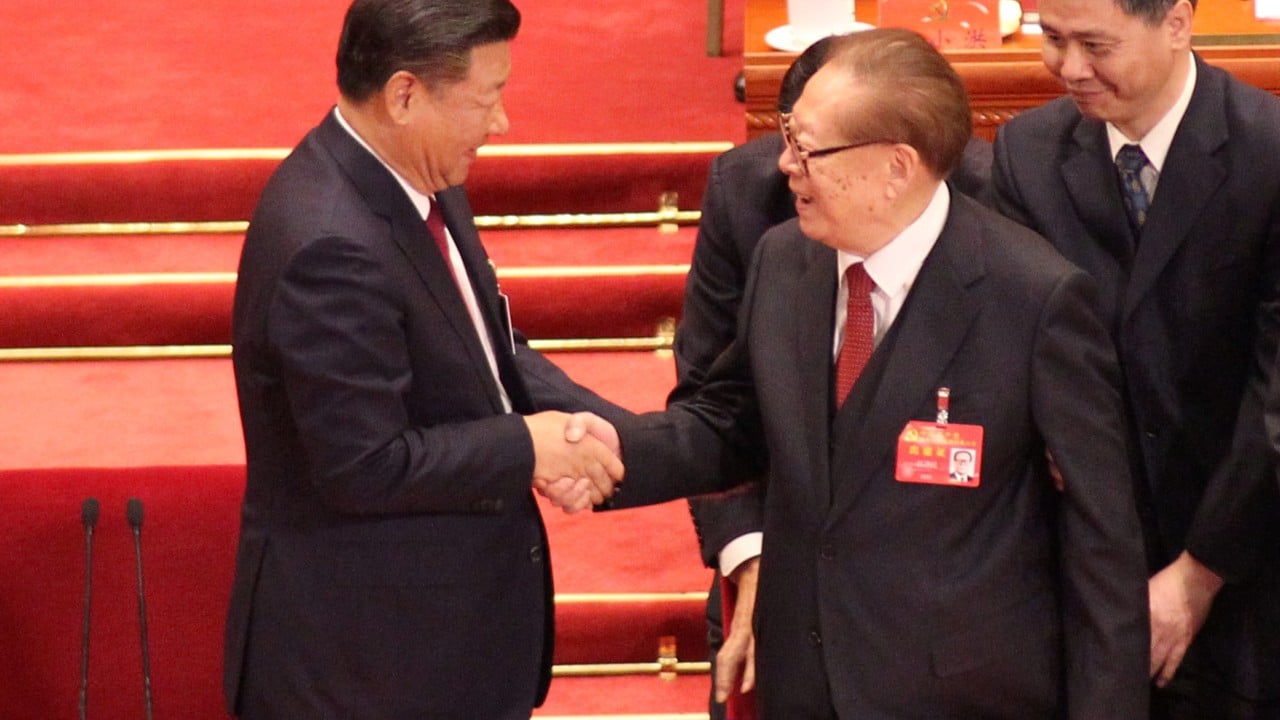
China is preparing to mark the centenary of Jiang Zemin.
To understand why this matters, you have to strip away the marble and the state-run broadcasts. You have to look at the invisible architecture of modern daily life. When a young software engineer in Shenzhen swipes her phone to buy a midnight train ticket, or when a retired steelworker in Shanghai walks past the neon glow of the Pudong skyline, they are inhabiting a reality that Jiang engineered. He was the bridge between the revolutionary asceticism of Mao Zedong and the digital, globalized ambitions of the twenty-first century.
Memory is political currency. And right now, the current administration is minting it carefully.
Let us be honest about the man himself. When Jiang took the helm in the fractured summer of 1989, few believed he would last. He was seen as a transitional figure, a safe pair of hands chosen precisely because he lacked a fierce factional army. He was the librarian drafted to run a burning house. Outsiders mocked his theatricality. He quoted Abraham Lincoln in English, flirted clumsily with foreign reporters, and showed an un-communist penchant for showing off.
Yet beneath the caricature lay a terrifyingly sharp political survival instinct.
Consider what happens when an empire tries to open its windows to the world without letting the storm outside blow down the walls. That was Jiang's tightrope. He ushered China into the World Trade Organization in 2001, betting that economic integration would inoculate the regime against collapse. He told the party to embrace private entrepreneurs—the very capitalists Marx condemned to the dustbin of history—under his ideological banner of the "Three Represents."
It was a contradiction of staggering proportions. A communist party welcoming billionaires into its central committee.
Walking through the former French Concession in Shanghai on a humid afternoon, you can feel the ghost of that era in the peeling paint of old lane houses and the towering glass monoliths just across the river. The 1990s were frantic. They smelled of wet cement, cheap instant noodles, and unbridled ambition. Millions of people left their ancestral villages with woven plastic bags, trading the certainty of the soil for the brutal anonymity of the assembly line.
Jiang gave them permission to get rich. But he also drew a red line in blood and iron.
The suppression of the Falun Gong movement in 1999 and the uncompromising stance on Taiwan were twin pillars of his iron-fisted rule. The man who could recite poetry in foreign tongues could also authorize security sweeps with ruthless efficiency. We often separate the charming diplomat from the authoritarian warden, but history rarely allows for such clean divisions. They were the exact same man.
Now, as the centenary approaches, the state apparatus faces a delicate theatrical challenge.
Why honor him now? The answer lies in the psychological undercurrents of the present moment. China today feels heavy. Economic growth has slowed from the dizzying double-digit sprints of the Jiang and Hu Jintao eras into a grinding, uncertain marathon. Real estate bubbles have burst. Youth unemployment has sparked quiet, desperate forms of resistance like "lying flat."
In times of national anxiety, regimes reach backward to stabilize the present.
By elevating Jiang Zemin, the current leadership is performing a dual ritual. First, they are projecting historical continuity. They are signaling that despite fierce factional shifts and sweeping anti-corruption purges, the lineage of the party remains unbroken, an ancient river flowing through different hands. Second, they are evoking an era of expansion and possibility. For many citizens, the 1990s and early 2000s, despite their chaos and corruption, represent a golden age of upward mobility. A time when tomorrow was almost guaranteed to be richer than today.
Imagine an archivist in the bowels of the National Museum in Beijing, wearing white cotton gloves as they handle a pair of Jiang’s signature oversized glasses. They wipe away microscopic dust that has settled over the decades. The metal frames are cold. They hold no secrets of their own, only the memory of the faces they once looked through.
That is what a centenary is. A pair of glasses handed back to the public, asking them to see the world through a dead man's eyes once more.
We are watching a masterclass in political choreography. Official biographies are being polished. Documentaries are being edited to highlight his decisive crisis management during the 1998 Yangtze River floods and his steadfast navigation of the turbulent aftermath of the Asian financial crisis. The rough edges—the rampant corruption of the era, the censorship, the crushing of dissent—are sanded down into smooth, heroic timber.
It is easy to dismiss this as mere propaganda. But that would miss the deeper human truth of how societies process time. Nations, no less than individuals, need origin myths for their modern comforts. The smartphone in your hand, the highway outside your window, the university degree that cost your parents their savings—they all trace their lineage back to decisions made behind closed doors in Zhongnanhai three decades ago.
Jiang Zemin understood that power is ultimately a performance. You must look strong when the world doubts you, and adaptable when the ground shifts beneath your feet.
As the commemorative banners go up across the boulevards, under the gray, heavy skies of northern autumn, the crowds will walk past them with the weary indifference typical of urban life anywhere on earth. They have bills to pay. They have children to feed. They are too busy surviving the present to worry much about the ghosts of the past.
Yet those ghosts dictate the architecture of their lives.
The centenary will pass with military bands, solemn speeches in the Great Hall of the People, and editorials in the party newspapers praising his profound contributions to the socialist modernization of the nation. Flowers will be laid. Heads will bow.
And somewhere in the humid alleys of the south, a migrant worker stepping off a night train will look up at the glittering skyline of a city built on a gamble, unaware that the man whose birthday they are celebrating is the reason the lights are still on.
The past never stays buried. It simply changes uniforms and waits for the next anniversary to remind us who built the cage we live in.