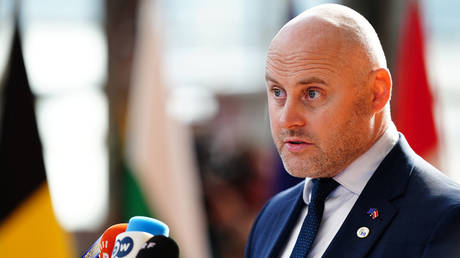
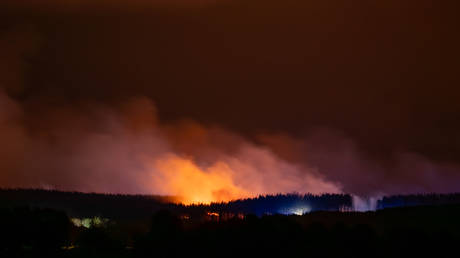
You read the headline. The 60-day ceasefire clock ran out. An Iranian spokesperson stepped up to a podium and flatly denied any back-channel negotiations with the United States.
The pundits are already updating their threat matrixes. The algorithms are pricing in a crude oil supply shock. The geopolitical analysts are rushing to television studios to predict an immediate, inevitable spiral into kinetic conflict in the Middle East. They are panicking.
They are also entirely wrong.
Taking a foreign ministry spokesperson at their word is the geopolitical equivalent of believing a poker player who loudly announces they only hold a pair of twos. Statecraft is an exercise in organized deception. If Tehran publicly admitted to negotiating with Washington right after a formal ceasefire lapsed, hardline factions would burn the civilian government to the ground.
The denial is not proof the talks are dead. The denial is the strongest signal that the talks are actually serious.
The Anatomy of a Calculated Denial
Amateur observers treat diplomacy like a contract negotiation between two transparent corporations. They assume that if both parties aren't shaking hands in a well-lit European hotel lobby, nothing is happening.
I have spent years tracking maritime shipping data, overlaying it against diplomatic flight logs, and comparing both to the public rhetoric of warring nations. The pattern is always the same. The louder the public denial, the deeper the private engagement.
To understand why, you must understand the domestic pressures on both sides of this standoff.
In Tehran, the Islamic Revolutionary Guard Corps (IRGC) holds the actual monopoly on force. The civilian government—the diplomats issuing these denials—operates on a tight leash. The Supreme Leader has drawn absolute red lines regarding direct, formal capitulation to Western demands. Any public admission that Iran is begging for a deal, especially after a ceasefire has officially "failed," looks like weakness. Weakness invites domestic unrest and emboldens regional rivals.
In Washington, the math is equally restrictive. As we navigate the volatile political arena of late 2026, no U.S. administration can survive the optics of handing concessions to an adversary while that adversary is ostensibly enriching uranium and funding proxy militias. Appearing soft on Iran is political suicide.
Therefore, both sides require plausible deniability.
Plausible deniability is the primary currency of track-two diplomacy. The back-channel doesn't happen with the Secretary of State and the Foreign Minister. It happens through intelligence chiefs meeting in neutral territory. It happens through Omani intermediaries shuttling messages between separate rooms in a Muscat resort. It happens through Swiss diplomats carrying non-papers.
A public denial is simply a tool to buy these silent negotiators more time. It pacifies the domestic hardliners in both capitals who demand blood and defiance.
The Lapsed Ceasefire Fallacy
The lazy consensus dominating the news cycle today is that the expiration of the 60-day ceasefire is a catastrophic failure. The assumption is that without a formal, signed extension, the missiles will immediately start flying.
This fundamentally misunderstands how modern deterrence functions.
A formal ceasefire is highly dangerous for politicians. Formal agreements require measurable compliance. Measurable compliance creates rigid tripwires. If an unsanctioned proxy militia in Iraq or Syria fires a rogue rocket at a coalition base while a formal ceasefire is active, the agreement is officially violated. Washington is then legally and politically bound to retaliate to maintain credibility. A piece of paper forces an escalation that neither side actually wants.
A lapsed ceasefire, however, offers strategic ambiguity.
By letting the clock run out, both sides achieve their primary objectives without making dangerous commitments.
- Iran can claim to its proxies and domestic audience that it refused to bow to Western deadlines, maintaining its "resistance" branding.
- The United States can claim it refused to offer unearned concessions just to keep a fragile truce on paper.
- Both militaries can quietly issue stand-down orders, maintaining a de facto pause in hostilities without the legal straitjacket of a treaty.
Imagine a scenario where Washington and Tehran actually agreed to a formal 60-day extension today. The U.S. Congress would immediately demand hearings. Hawks would demand to know what secret price was paid. Iranian media would dissect the text for signs of Western trickery.
By allowing the formal mechanism to die, they kill the scrutiny. The absence of a treaty is exactly what keeps the weapons in their silos.
The Mechanics of Shadow Diplomacy
If you want to know what is actually happening between hostile nations, you must ignore the microphones and follow the money. Rhetoric is cheap. Financial flows require state-level authorization.
Right now, Iran is exporting well over a million barrels of crude oil per day. They are doing this using a "dark fleet" of aging tankers that disable their Automatic Identification System (AIS) transponders. They conduct ship-to-ship transfers in the middle of the ocean, blending their crude with oil from other nations to obscure its origin before it arrives in Asian ports.
The public narrative is that Iran is brilliantly evading U.S. sanctions.
The reality is that the United States government commands the most sophisticated satellite and signals intelligence apparatus in human history. The U.S. Navy and the Treasury Department's Office of Foreign Assets Control (OFAC) know exactly where every single one of those tankers is. They know who insures them, who flags them, and where the oil is going.
The United States allows this trade to happen.
Why? Because enforcing a total blockade on Iranian oil would remove a massive amount of supply from the global market, spiking energy prices and triggering crippling inflation at home. Furthermore, allowing Iran to maintain a baseline level of economic survival is the unspoken concession of the current back-channel negotiations.
The deal already exists. It is unwritten, unsigned, and vehemently denied by everyone involved.
The terms are simple: Iran keeps its proxy network on a leash, avoids killing American service members, and caps its nuclear enrichment below weapons-grade. In exchange, the United States turns a blind eye to the shadow fleet, allowing Tehran to generate enough revenue to prevent total economic collapse.
When an Iranian official stands up and says, "There are no back-channel talks," what they are really saying is, "The unwritten arrangement is holding, and we are not going to ruin it by writing it down."
Rethinking the Wrong Questions
When analyzing a geopolitical standoff, the general public and mainstream media consistently ask the wrong questions. Their inquiries are rooted in a fundamental misunderstanding of state motivations. Let's dismantle the most common, flawed premises.
"Will the US and Iran go to war?"
This question assumes war is a binary switch—that nations are either completely at peace or launching full-scale invasions.
The United States and Iran are already at war. They have been at war for decades. It is a war fought through cyberattacks on critical infrastructure, financial strangulation, assassinations of scientists, and armed proxy groups operating across the Levant.
A direct, kinetic war—bombers striking Tehran, or ballistic missiles raining on U.S. aircraft carriers—is terrible for business. It destroys the global economy. Neither the current U.S. administration nor the Iranian theocracy has the appetite for a regime-ending conflict. They are playing a high-stakes game of threshold management. The goal is to inflict maximum pain without crossing the threshold that forces a conventional military response.
"Who is winning the standoff?"
Nobody wins a standoff. The concept of "winning" implies a finite game with a scoreboard and a buzzer. Geopolitics is an infinite game. The objective is not to win; the objective is to stay in the game.
For the Iranian government, staying in the game means regime survival. For the U.S. administration, staying in the game means containing a nuclear threat without triggering a regional conflagration that costs them an election. Both sides are currently achieving their baseline objectives through the very back-channels they publicly deny.
"What happens if the back-channel fails?"
This is the only valid question, and it is where the true risk lies.
The downside to relying entirely on unwritten, denied shadow diplomacy is the margin for error. Without formal communication protocols, a localized mistake can spiral rapidly.
If a low-level proxy commander miscalculates and launches a drone that hits a U.S. barracks, causing mass casualties, the unwritten deal evaporates. The U.S. President's hand is forced. The Treasury cracks down on the shadow fleet. The IRGC retaliates by harassing commercial shipping in the Strait of Hormuz. The cycle of escalation takes over, not by design, but by accident.
That is the actual threat. The danger is not that the talks don't exist. The danger is that unwritten talks are fragile.
The Cost of Geopolitical Illiteracy
There is a massive financial and strategic cost to taking official government statements at face value.
I have watched institutional investors dump assets and restructure portfolios based on a single aggressive tweet or a staged press briefing from a foreign ministry. They trade the rhetoric. They let the theater dictate their capital allocation.
Smart money ignores the theater.
If you are trying to determine the true state of relations between Washington and Tehran, close the news apps. Stop reading the transcripts of State Department press briefings.
Instead, look at the port of Kharg Island. Track the volume of crude oil leaving Iranian shores. Monitor the enforcement actions, or lack thereof, from the U.S. Treasury. Watch the diplomatic flight schedules in and out of Muscat and Doha.
The truth of international relations is rarely spoken into a microphone. It is written in shipping manifests, financial clearances, and the quiet movements of intelligence officers.
The 60-day ceasefire did not fail. It successfully transformed from a dangerous public liability into a functional, deniable reality. The public denials you are hearing today are the operational security required to keep that reality alive.
Stop waiting for a white smoke announcement from Geneva. Watch the oil. If the tankers are moving, the deal is alive. Act accordingly.