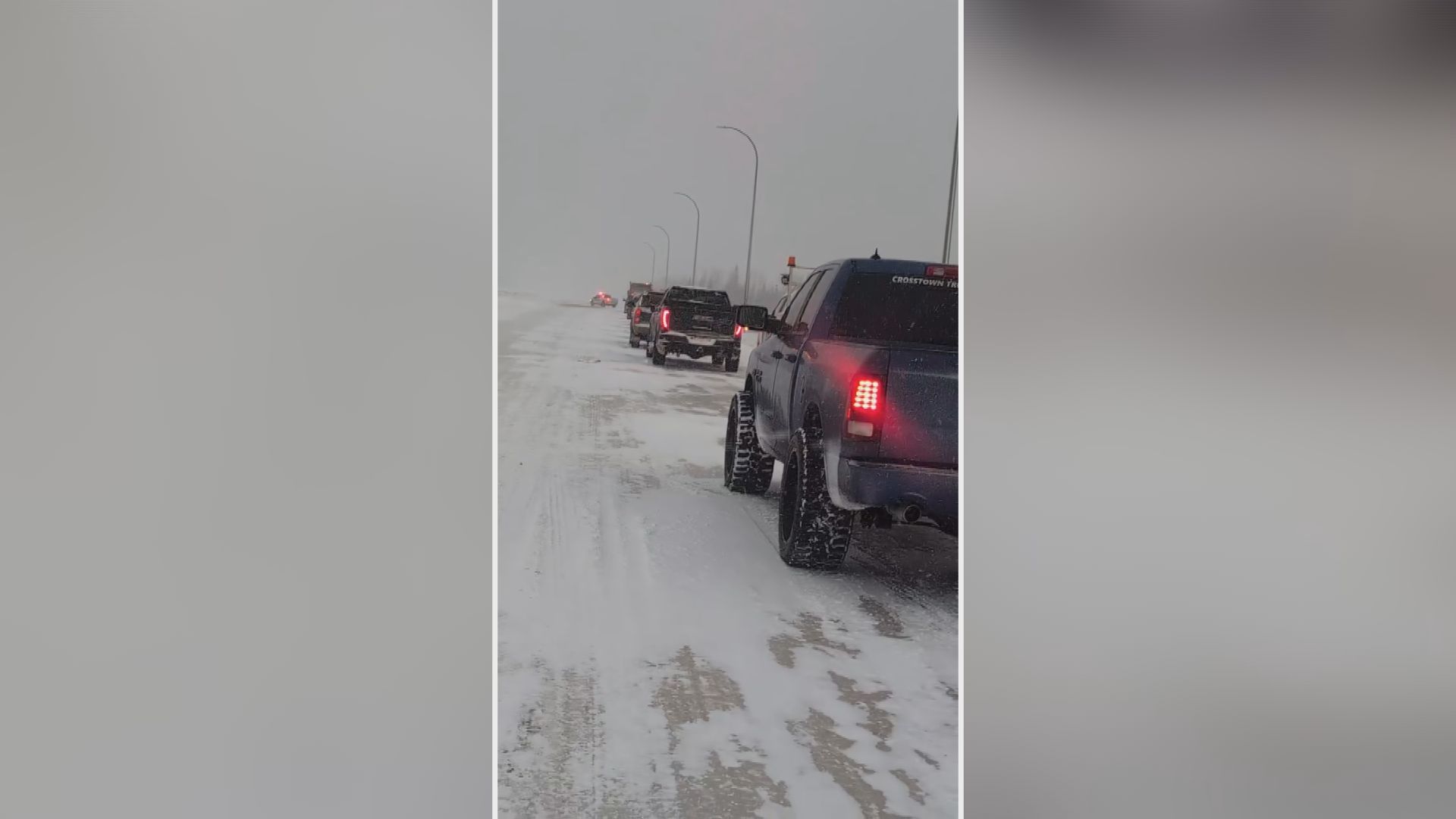
The outrage in Fort McMurray right now is as predictable as the first frost. A heavy spring storm hits, Highway 63 turns into a white-knuckle skating rink, and the immediate reflex is to point the finger at Edmonton. "Where were the plows?" "Why wasn't the salt down?" Local leaders demand a post-mortem from the province as if a few more bureaucrats in a meeting room can defy the laws of physics and logistics in the Canadian subarctic.
It is a tired, lazy narrative. For an alternative view, consider: this related article.
Demanding "answers" from the provincial government over a storm response is the ultimate exercise in passing the buck. We’ve been conditioned to believe that if we pay enough taxes, the government should be able to keep a 400-kilometer ribbon of asphalt pristine in the middle of a blizzard. It is a fairy tale. The reality is that Highway 63 is not just a road; it is a logistical bottleneck serving one of the most demanding industrial hubs on the planet. Expecting a government-contracted fleet to stay ahead of a northern Alberta dump is not just optimistic—it is delusional.
The Myth of Total Maintenance
The central fallacy in the current outcry is the idea that "better response" equals "clear roads." I have spent a decade watching supply chains buckle under northern conditions, and I can tell you that the math doesn't care about your commute. Related coverage on the subject has been published by Associated Press.
When a storm hits with high-intensity snowfall and shifting winds, the "return period" for a plow—the time it takes for a truck to clear a section and return to it—is often longer than the time it takes for the road to become impassable again. You could double the fleet of snowplows tomorrow, and on a bad day, the road would still be a mess.
More trucks on the road during a whiteout actually increases the risk of collisions. Every additional maintenance vehicle is another slow-moving obstacle for an exhausted oilsands worker or a heavy-haul trucker to slam into. We are stuck in a feedback loop where we demand more "action," which creates more congestion, which leads to more accidents, which leads to more finger-pointing.
The Outsourcing Scapegoat
Everyone loves to hate on the private contractors. The moment the snow starts sticking, the armchair engineers come out to complain about "reduced service levels" and "profit over safety."
Let’s get real. Provincial maintenance is outsourced because the government is fundamentally incapable of managing the seasonal volatility of northern road clearing. If the province ran the plows directly, the inefficiency would be staggering. You would have fleets of trucks sitting idle for eight months of the year, maintained by a unionized workforce with no incentive to pivot when the weather turns.
The current contractors operate on razor-thin margins and strictly defined Key Performance Indicators (KPIs). If they aren't meeting those, they get fined. But those KPIs are based on average conditions. They are not designed for the one-in-fifty-year storm event. Nor should they be. Building a system that can perfectly handle the absolute worst-case scenario would require a budget that would make the current deficit look like pocket change.
The Oil Sands Accountability Gap
Here is the truth that nobody in Wood Buffalo wants to say out loud: The industry creates the hazard.
We have thousands of workers shifting in and out of sites, often driving hours after a 12-hour shift, desperate to get back to Edmonton or Calgary. They are driving on tires that aren't rated for the conditions, at speeds that ignore the reality of black ice, in vehicles that give them a false sense of security.
Why are we asking the province for answers when the major operators continue to push "business as usual" during extreme weather warnings? The burden of safety shouldn't fall solely on a plow driver trying to clear a lane; it should fall on the employers who insist on shift changes during a blizzard.
Imagine a scenario where the major oil players synchronized their logistics with weather forecasts. If the industry collectively hit the pause button on non-essential travel for six hours, the maintenance crews could actually do their jobs. Instead, we have a chaotic mix of private commuters, high-speed pickups, and massive transport trucks all fighting for space on a half-cleared road.
The Infrastructure Trap
We spent billions twinning Highway 63. It was supposed to be the "Highway of Death" no more. And while the safety stats have improved, the twinning has created a psychological trap.
Drivers now treat the 63 like a 400-series highway in Ontario. They see two lanes and think "speed." But a twinned highway in the North just means there is twice as much surface area to clear and twice as many ditches to slide into. The infrastructure has outpaced the average driver's respect for the environment.
The province can't fix "stupid." They can't salt away arrogance.
The False Security of "Answers"
When local politicians demand a meeting with the Minister of Transportation, they aren't looking for solutions. They are looking for a soundbite. They want to tell their constituents, "We’re holding them accountable."
Accountability is a cheap word. Real accountability would be admitting that living and working in the North comes with an inherent risk that no amount of government spending can fully mitigate. It would mean telling people to stay home. It would mean telling industry to eat the cost of a delayed shift change.
But it’s much easier to blame a contractor in a yellow truck.
The Cost of the "Perfect" Road
Let’s talk about the fiscal reality. To achieve the level of service the public seems to be demanding during a storm, we would need to triple the current maintenance budget for the region.
- Equipment: High-speed blowers and specialized de-icing tech aren't cheap.
- Labor: Finding qualified operators willing to live in the North or fly in for storm events is a nightmare.
- Environmental Impact: The amount of salt and urea required to keep a road "black" at -20°C is an ecological disaster waiting to happen.
Are the people of Fort McMurray willing to pay a "highway surcharge" to fund this? Of course not. They want the service, but they want someone else to pay for it. They want the province to reach into a magical pot of gold and make the snow disappear.
Moving Toward a Hard Reality
The fix isn't more meetings in Edmonton. The fix is a fundamental shift in how we approach northern travel.
- Mandatory Industrial Staging: When the weather hits a certain threshold, the province shouldn't just issue a "warning"—they should coordinate with industry to mandate a travel freeze. Stop the shift changes. Hold the buses.
- Technological Integration: We need real-time, sensor-based salt application and plow tracking that is public-facing. Not to "hold them accountable," but so drivers can see exactly how futile it is to try and beat the storm.
- Driver Responsibility: If you are on Highway 63 in a blizzard without true winter tires and an emergency kit, you are the problem. Not the plow. Not the Minister. You.
The provincial government isn't a god. It cannot stop the wind from blowing snow back over a lane ten minutes after it was cleared. If you want someone to blame for the chaos on Highway 63, stop looking at the legislature and start looking in the rearview mirror.
Nature doesn't care about your "right" to a clear road. Neither does the physics of a 40-ton truck on ice. It is time we stopped pretending that a government report will change that.
Stay home or take the risk. Just stop whining when the North acts like the North.