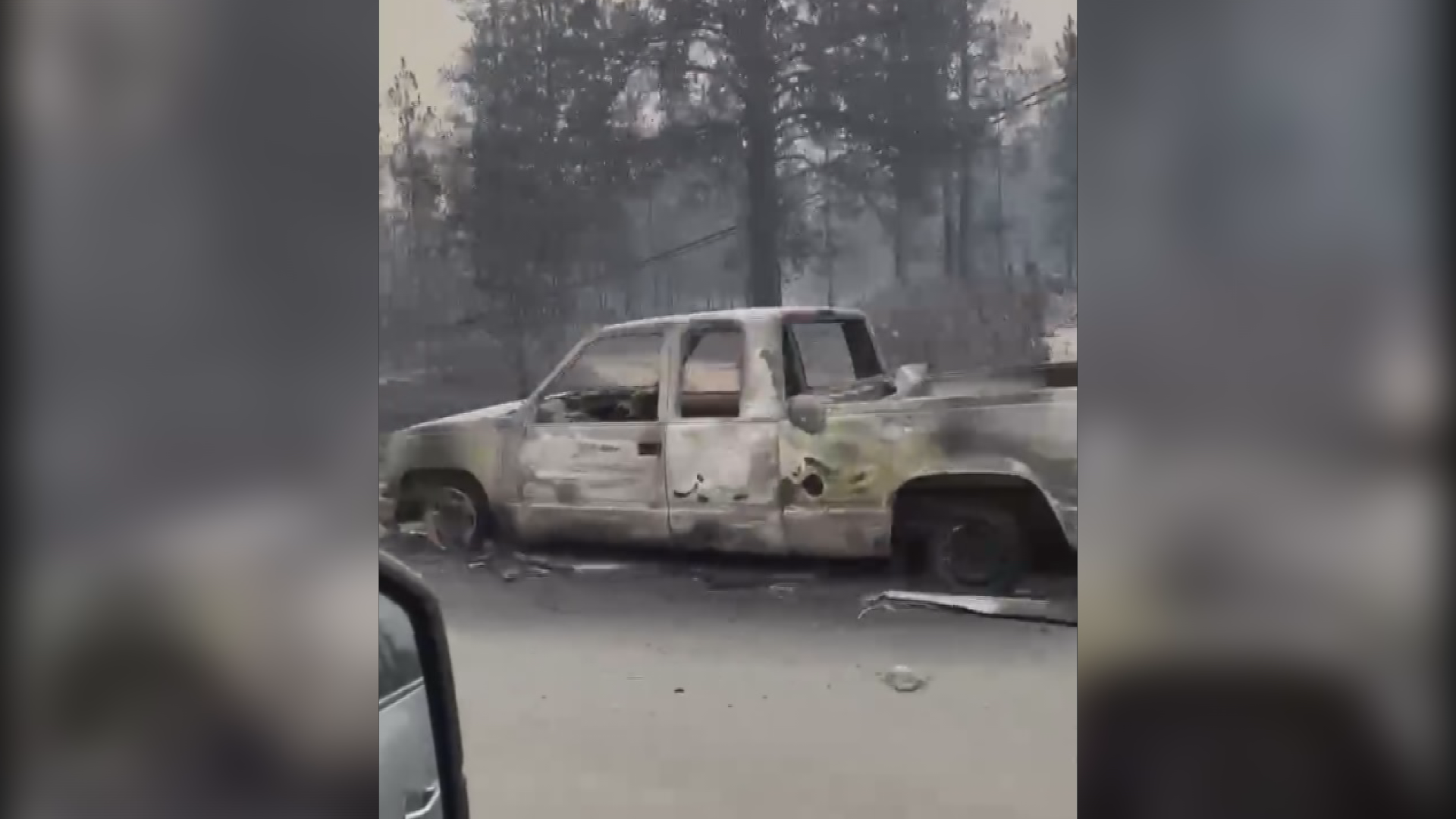
Every single time flames chew through a hillside near Summerland, the media rolls out the exact same tired script. The cameras pan over smoking timber, interview a visibly shaken local talking about how "eerie" the silence is, and wrap up with a solemn nod to community resilience. We swallow the footage, murmur our sympathies, and move on to the next algorithm-fed crisis.
It is lazy, sentimental garbage.
The aftermath of a wildfire in Faulder or anywhere else in the southern interior is not eerie. It is predictable. It is mathematical. And yet, we treat ecological reality like a ghost story so we can avoid the uncomfortable work of admitting that our land management policies are absolute failures.
I have spent years watching municipalities throw millions of dollars at reactive suppression while ignoring the structural rot beneath their feet. I have seen communities draft evacuation plans that read like fiction, relying on wishful thinking rather than hard-nosed infrastructure design.
Let us strip away the adjectives and look at what actually happens when a fire tears through dry timber.
The Comforting Lie of Sudden Tragedy
The primary narrative pushed by standard reporting frames wildfires as unprovoked assaults by nature. This allows everyone involved to play a comforting role. The politicians look heroic distributing sandbags. The residents look stoic rebuilding on the exact same ash. The journalists get their moody B-roll of charred fence posts.
This framing is dangerous because it treats a structural certainty as an act of God.
Fire is not an invader. It is a biological necessity that our modern zoning laws, suppression dogma, and suburban expansion have turned into a catastrophe. When people whisper about the eerie quiet of a burned zone, they are mourning the absence of noise. They want the birds back. They want the green canopy back.
What they refuse to accept is that the green canopy they loved was dangerously overstocked fuel, choking out the understory because we spent decades putting out every lightning strike within fifty miles.
Imagine a scenario where a homeowner builds a house in a dry pine forest, clears away zero defensible space because they want to keep the "rustic aesthetic," and then acts shocked when a crown fire treats their cedar shake roof like kindling. That is not a tragedy. That is physics.
The Economics of Denial
Why do we keep repeating this cycle? Because panic pays.
Disaster response funding is a multi-million-dollar machine. It employs contractors, funds equipment upgrades, and gives elected officials a stage to look decisive. Prevention, on the other hand, is boring. Thinning a forest does not make a great photo op. Prescribed burns create smoke that angers tourists and disrupts local commerce in the short term, so local councils kick the can down the road until the wind blows the wrong way in August.
Let us look at the data that the local news segments conveniently leave out.
Fuel load accumulation follows a strict logarithmic curve. Every year a parcel of forest goes unmanaged, the literal megajoules of potential energy stored per acre increase exponentially. When ignition finally happens—and it always happens—the resulting intensity overwhelms any firefighting force on Earth.
We can throw every water bomber in North America at a firestorm fueled by a century of accumulated brush, and we will accomplish nothing. We are trying to put out a blast furnace with a garden hose while patting ourselves on the back for effort.
What Real Preparedness Looks Like
If you want to fix the Summerland region, the Okanagan, or any fire-prone basin in the interior, you have to abandon the language of grief and adopt the language of engineering.
First, we need to completely overhaul property insurance models. Right now, insurers penalize entire regions based on crude postal codes, punishing responsible landowners right alongside negligent ones. Policies should demand mandatory ignition-resistant retrofits—metal roofs, ember-resistant vents, and zero combustible materials within ten meters of a foundation. If you refuse to harden your home, you should self-insure. Period.
Second, municipal zoning must stop catering to developers who want to cram high-density subdivisions into narrow, single-access forested valleys. If a neighborhood only has one road in and one road out, it is a human trap. Local governments love the tax revenue from rural-urban interface developments, but they are writing death warrants by proxy.
Third, we must radically expand controlled burning windows, even when it makes people uncomfortable. Smoke in June is the price we pay for clean air in August. The Indigenous stewardship practices of the past understood this balance implicitly; our modern obsession with pristine, untouched wilderness is a colonial fantasy that ends in charcoal.
The Downside of Hard Truths
I know what the critics of this approach will say. They will argue that heavy mitigation destroys the natural beauty of the landscape. They will claim that aggressive thinning turns a vibrant ecosystem into a scarred moonscape.
They are right. It does look ugly for a season or two.
Nature heals on its own timeline, not ours. But I would rather look at ugly, charred stumps and regenerating bunchgrass for five years than watch an entire community turn to ash because we were too fragile to look a chainsaw in the eye.
The eerie quiet of Faulder after the smoke clears is a warning. It is the sound of an ecosystem trying to reset a system we broke. Stop listening to the ghost stories. Start changing the code.