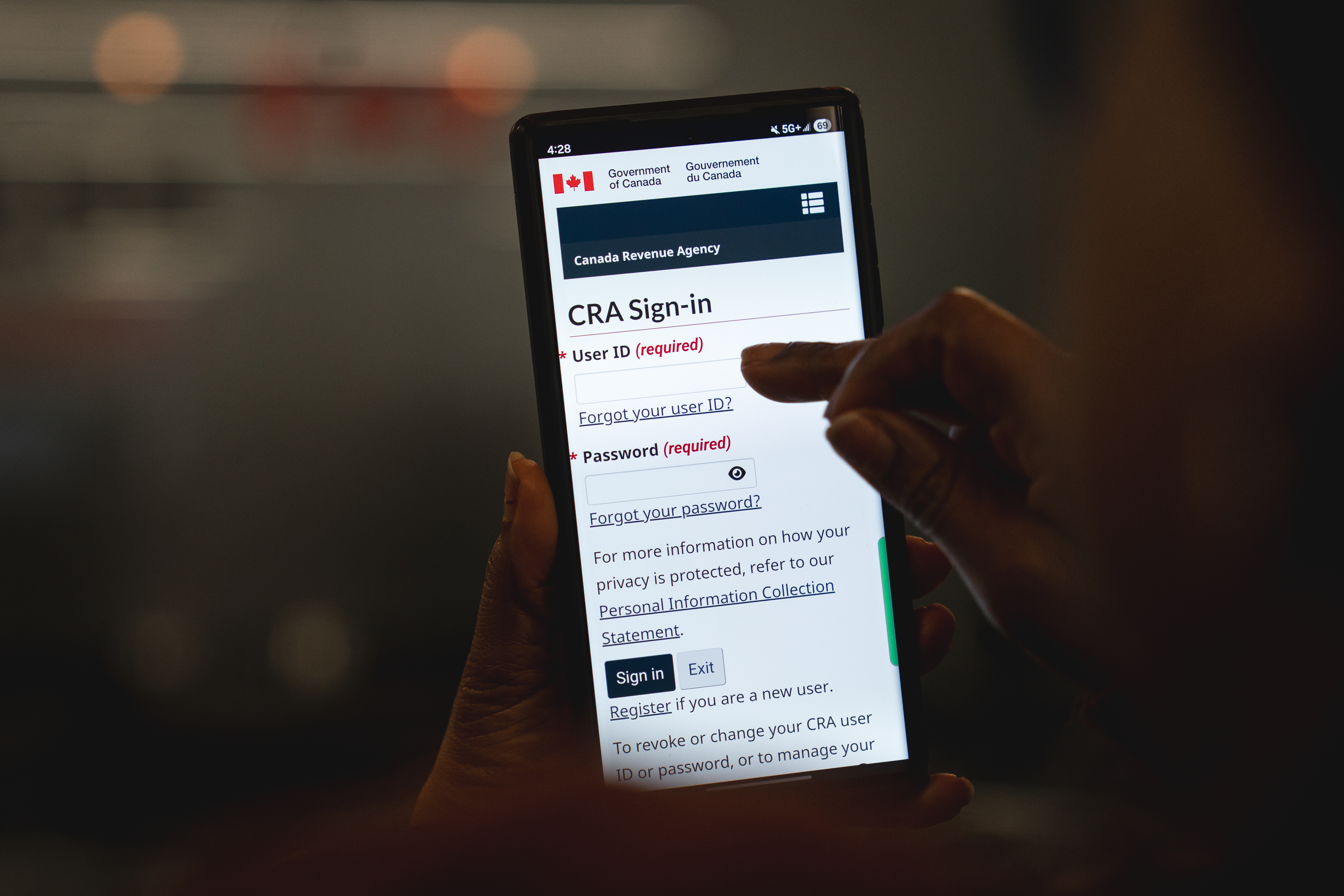
Canadian taxpayers are currently being fed a steady diet of "hidden gems" and "secret deductions" that amount to nothing more than fiscal distraction. Every April, the national media cycle churns out the same tired list of minor credits—a few hundred bucks for a home office, a pittance for medical expenses, or the digital news subscription credit.
They call it "maximizing your refund." I call it a tragedy of misplaced effort. Meanwhile, you can find similar events here: Why Canada's Economic Engine is Stalling and How to Fix It.
While you spend three hours digging through shoeboxes for a receipt to save $45, the Canada Revenue Agency (CRA) is laughing. You aren’t winning; you’re being pacified. The real cost of Canadian taxation isn't what you fail to claim—it's the structural inefficiency of how you earn, hold, and move your money. If you’re focused on line items for your kids’ soccer equipment, you’ve already lost the war.
The Home Office Deduction Is A Trap Of Triviality
The "flat rate" method for home office expenses is the ultimate participation trophy of tax season. It exists to make people feel like they’re getting away with something without actually impacting their tax bracket. To see the full picture, check out the detailed article by CNBC.
Most people don’t realize that the CRA’s simplified methods are designed for their convenience, not yours. They want you to take the easy path because it prevents you from doing the math on the actual costs of running a business from your residence. But even for those who go the detailed route, the ceiling is low.
I’ve seen high-earners obsess over the square footage of their den while ignoring the fact that their entire income is being ravaged by the highest marginal tax rates in North America. In provinces like Ontario or Quebec, once you cross the $246,000 threshold, the government is effectively your majority partner. Claiming a portion of your internet bill is like trying to drain the ocean with a thimble.
The real move isn't finding more expenses; it's transforming your relationship with the income itself. If you are an employee, you are the most taxed entity in the country. No amount of "hidden claims" will fix that.
The Medical Expense Myth
Every year, articles suggest you "might not know" you can claim medical expenses. What they fail to mention is the high threshold that makes this credit useless for the middle class. You can only claim expenses that exceed the lesser of $2,635 or 3% of your net income.
For a household earning $150,000, you need over $4,500 in out-of-pocket medical costs before you see a single cent of relief. This isn't a "benefit." It’s a catastrophe insurance policy that most people will never trigger. Yet, taxpayers spend hours tracking prescriptions and dental bills, hoping to hit a target that is mathematically designed to exclude them.
Stop tracking the small stuff. Unless you’ve had a major surgery or significant dental reconstruction not covered by insurance, your time is better spent elsewhere. The opportunity cost of this administrative labor is massive. If your time is worth $50 an hour and you spend five hours organizing medical receipts for a $200 credit you might not even qualify for, you’ve effectively paid the government for the privilege of filing your taxes.
The Digital News Credit Is Insulting
The fact that we even discuss the Digital News Subscription Tax Credit proves how desperate the narrative has become. You get a 15% non-refundable tax credit on up to $500 in subscriptions. That is a maximum of $75.
If $75 changes your financial life, you don't have a tax problem; you have a survival problem.
The government uses these micro-credits to nudge behavior and support dying industries, not to help you build wealth. When you see this on a "things you didn't know you could claim" list, recognize it for what it is: filler content designed to meet a word count. It provides no strategic value. It is noise.
The Fallacy of the Large Refund
A large tax refund is not a win. It is an interest-free loan you gave to the federal government.
If you get $5,000 back in May, that means you overpaid by roughly $416 every month for a year. In a high-inflation environment, that money lost significant purchasing power while sitting in the CRA’s coffers. Had you adjusted your TD1 form at the start of the year and kept that $416 monthly, you could have put it into a Tax-Free Savings Account (TFSA) or a high-yield investment.
The psychological "high" of a big check is a cognitive bias that keeps Canadians poor. We celebrate getting our own money back while ignoring the fact that we were deprived of its utility for twelve months.
Structural Defense Over Line-Item Offense
If you want to actually move the needle, you have to stop thinking like a consumer and start thinking like a corporation.
In Canada, the tax system is a tiered hierarchy. At the bottom is the T4 employee. At the top is the private corporation and the trust.
The Incorporation Pivot
Most people are told that incorporation is only for "big" businesses. This is false. If you have a side hustle or a specialized skill set, earning income through a Canadian Controlled Private Corporation (CCPC) allows you to access the Small Business Deduction. Instead of paying personal rates upwards of 50%, the corporate rate on the first $500,000 of active business income is significantly lower—often around 9% to 12% depending on the province.
This isn't about "claiming" a laptop. This is about deferring taxes on hundreds of thousands of dollars. You leave the money in the corp, invest it, and only take out what you need personally. That is how wealth is built in this country. Not through news subscriptions.
The TFSA vs. RRSP Debate Is Rigged
The standard advice is to max out your RRSP to get a refund. This is often bad advice for young professionals who expect to be in a higher tax bracket later in life.
An RRSP is a tax deferral mechanism, not a tax avoidance mechanism. You will pay the piper eventually. If you take a deduction now at a 30% rate but withdraw it in retirement at a 40% rate because you were successful, you didn't save money—you made a bad bet.
The TFSA is the only true "gift" in the Canadian tax code. It is the only place where capital gains, dividends, and interest are truly shielded from the CRA forever. Yet, people prioritize the RRSP because they want that immediate "hit" of a refund check. They are trading their future wealth for a dopamine spike in April.
The Myth Of The "Aggressive" Tax Return
Canadians are notoriously risk-averse. We fear the audit. This fear leads to "tax leakage"—money left on the table because we’re too afraid to claim legitimate, large-scale deductions.
The CRA uses "matching" programs. They look for discrepancies between what your employer reports and what you report. They aren't kicking down doors because you claimed a reasonable home office or shifted income through a prescribed rate loan to a lower-income spouse.
A prescribed rate loan is a perfect example of a sophisticated strategy that is completely legal but rarely discussed in "4 things you didn't know" articles. If you have a high income and your spouse has a low income, you can loan them money at the CRA's prescribed interest rate. They invest that money, and the gains are taxed at their lower rate, not yours.
Is it more complex than claiming a digital news subscription? Yes. Does it actually work? Absolutely.
Stop Asking The Wrong Questions
The "People Also Ask" section of Google is filled with queries like "How can I get a bigger refund?" or "What are the best tax loopholes for 2026?"
These are the wrong questions. They assume the game is played within the lines of a standard T4 return.
The right question is: "How do I restructure my life so that I am not an easy target for the CRA?"
This involves:
- Asset Location: Putting high-growth assets in your TFSA and interest-bearing assets in your RRSP (or vice versa depending on your specific horizon).
- Income Splitting: Using legal structures to ensure income is taxed at the lowest possible marginal rate across a family unit.
- Flow-Through Shares: For high-net-worth individuals, investing in Canadian resource sectors to get deductions that exceed the actual cash invested.
These strategies require a professional accountant, not a piece of software or a checklist from a blog.
The Brutal Reality of Compliance
Here is the truth no one wants to admit: The Canadian tax system is designed to be complicated enough to keep you confused, but simple enough to keep you paying.
By dangling small credits in front of you, the government keeps you focused on the periphery. You feel like a "smart taxpayer" because you remembered to claim your $200 in charitable donations, while the system quietly extracts 40% of your labor through payroll taxes, HST, and property taxes.
The "lazy consensus" says you should be grateful for these deductions. I say they are breadcrumbs intended to keep you from noticing the loaf of bread being stolen from your table.
If you spend more than thirty minutes thinking about your tax return without considering a total structural overhaul of your finances, you are wasting your life. You are performing "wealth theater." You are acting like a person who manages money without actually managing any.
Stop looking for things to claim. Start looking for ways to exit the traditional tax trap entirely.
The CRA isn't your friend, and that $75 news credit isn't a gift. It’s a bribe to keep you quiet while they take the rest.
Stop filing. Start planning.