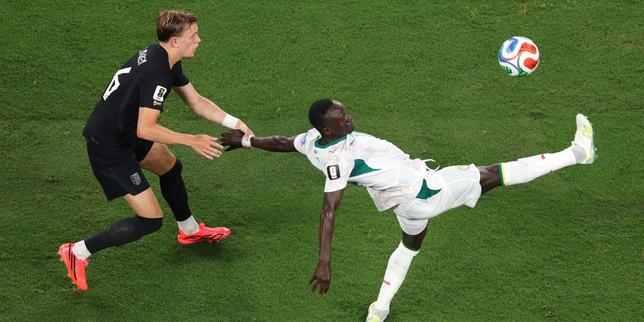
The lazy media consensus has already written the script for Senegal's rocky start at the 2026 World Cup. You see it across every major sports desk: "The Lions need a revolution." "They need to find their hunger." "It is time for a total systemic revolt."
It is predictable, emotional nonsense.
When a giant stumbles on the world stage, the immediate instinct of punditry is to demand blood, passion, and sweeping philosophical overhauls. They treat elite international football like a movie script where the protagonist just needs to "want it more."
Here is the cold reality: Senegal does not need a "revolt at all levels." In fact, blowing up the system right now is the fastest way to guarantee an early flight home. The panic gripping the commentary surrounding the Teranga Lions misses the tactical and structural mechanics of short-tournament football entirely.
I have watched football federations blow millions of dollars tearing down perfectly functional structures because of a bad two-game sample size. Let us dismantle the emotional panic and look at what actually wins tournaments.
The Myth of the "Systemic Collapse"
The loudest argument right now is that Senegal’s slow start is symptomatic of a deeper, institutional rot that requires an immediate, aggressive overhaul. This is a fundamental misunderstanding of how the World Cup works.
A World Cup is not a 38-game domestic league season. It is a hyper-condensed tournament of variance. In a domestic league, the best team almost always wins because a massive sample size filters out bad luck, weird refereeing decisions, and minor fitness drops. In a group stage, you have 270 minutes to survive. A single deflected shot or a mistimed tackle can completely distort the narrative of a team's actual quality.
When you look at the underlying metrics of Senegal's opening performances, the picture changes. We are not seeing a team that has forgotten how to play football; we are seeing a team suffering from acute transitional friction.
National teams do not get months of pre-season to install complex tactical architectures. They get a handful of days. Forcing a "total revolt" in the middle of a tournament introduces cognitive overload to players who are already dealing with extreme pressure. You do not fix a leaky faucet by bulldozing the house.
The Danger of Pundit-Driven Passion
Every talk show host wants the coach to give a Hollywood locker room speech and drop half the starting lineup to "send a message."
This is terrible management.
Dropping established leaders to appease a frustrated fanbase creates structural voids. International football relies heavily on hardcoded chemistry—relationships built over years of shared qualifying campaigns and continental tournaments. When you disrupt that chemistry based on a ninety-minute sample size, you do not motivate the squad; you destabilize it.
Consider the 2018 tournament dynamics. Teams that panicked after matchday one and made radical changes to their tactical identities almost universally crashed out. Meanwhile, teams that maintained tactical continuity—even in the face of brutal media criticism—allowed their natural talent advantages to correct their course over time.
The contrarian truth here is boring but undeniable: stability under pressure is a competitive advantage. The best move right now is not a revolution. It is aggressive, micro-tactical execution.
The Tactical Fix Nobody is Talking About
If the solution isn't a grand ideological shift, what is it? It comes down to optimizing the transition phases.
The current tactical blueprint to stop Senegal is simple: sit in a low block, clog the central passing lanes, and dare the full-backs to beat you with high-volume crossing. The media looks at this and blames a "lack of desire." The real issue is a failure of structural spacing.
Instead of demanding the players run harder, the coaching staff needs to adjust the positioning of the midfield pivot. Senegal's progression numbers show a massive bottleneck in the middle third of the pitch. The midfielders are dropping too deep to pick up the ball from the center-backs, effectively doing the defenders' jobs for them and leaving a massive gap between the midfield and the forward line.
The Solution: Forced Verticality
- Fix the Spacing: The central midfielders must refuse to drop past the opposition's first line of pressure. Force the center-backs to carry the ball forward or find diagonal passing lanes directly into the half-spaces.
- Isolate the Wingers: Stop forcing slow, methodical buildup play that allows the opposition defense to shift and lock down the flanks. Senegal needs to bait the opposition into pressing higher up the pitch, creating the isolated 1v1 scenarios where their world-class attackers thrive.
- Accept the Defensive Vulnerability: To win in a short tournament after a bad start, you have to accept higher levels of risk. That means pushing the defensive line five yards higher, accepting the risk of a counter-attack, and choking the opposition in their own half.
Is this approach risky? Absolutely. A high defensive line can leave you exposed to long balls over the top. But playing it safe and relying on a mythical "spiritual awakening" is a guaranteed path to elimination.
Stop Asking the Wrong Questions
The public is currently asking: "How do we restore the pride of the jersey?"
That is a flawed premise. The players care. The pride is there. Asking questions rooted in emotion leads to answers rooted in emotion, which results in reactive, short-sighted decision-making.
The brutal question we should be asking is: "How do we maximize our structural efficiency with the specific 26 players currently in the camp?"
You do not achieve efficiency by screaming louder or making dramatic gestures for the cameras. You achieve it by looking at the video footage, identifying the three-meter gaps that are killing your passing angles, and fixing them on the training pitch.
Stop looking for a savior. Stop looking for a revolution. Fix the spacing, trust the established chemistry, and let the variance of football do the rest. Anything else is just noise designed to sell newspapers.