The convergence of twenty naval assets near Iranian maritime boundaries combined with informal backchannel dialogue creates a high-friction environment where traditional deterrence models fail to capture the underlying financial and logistical realities. When state actors mix military posture with semi-negotiated diplomatic tracks, market actors and maritime insurers price risk based on variance rather than absolute outcomes.
The Dual-Track Signaling Model
Diplomatic friction coupled with concurrent force projection operates through a dual-track mechanism. Statecraft under these conditions relies on simultaneous escalation and containment, where naval deployment serves as a physical constraint on the adversary's economic calculations while parallel communication channels prevent stochastic escalation.
- Hard Power Constraints: Positioning maritime strike groups within proximity of critical chokepoints restricts an opponent's operational bandwidth. This physical presence shifts the baseline assumptions of regional military planners, forcing them to account for rapid response windows and asymmetric counter-measures.
- Soft Signaling Channels: Unofficial or semi-official diplomatic probes test the elasticity of the adversary's red lines. By communicating terms outside formal treaty frameworks, political leadership maintains plausible deniability while probing for concessions on core strategic assets.
This dual approach creates an informational vacuum. Observers struggle to isolate whether naval assets are deployed for offensive pre-emption or defensive signaling. The structural ambiguity is intentional, designed to maximize the opponent's uncertainty cost.
The Cost Function of Chokepoint Disruption
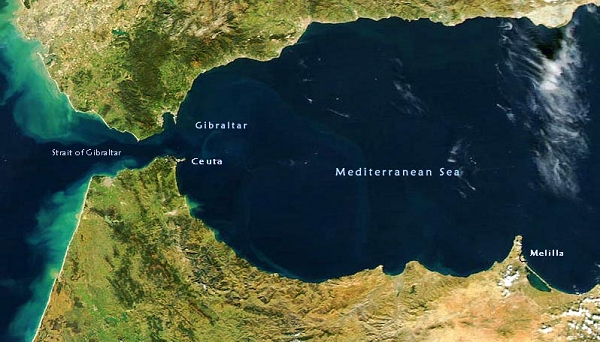
The Strait of Hormuz handles roughly twenty percent of global petroleum liquids consumption. Any systemic friction in this corridor alters global energy pricing through three distinct cost transmission vectors: physical transit delay, insurance premium escalation, and rerouting inefficiencies.
- Transit Delay and Hull Risk: Under conditions of heightened naval posturing, commercial vessel operators face elevated threat profiles. War risk insurance premiums escalate rapidly, often calculated as a percentage of the hull value per transit. For a standard very large crude carrier, a spike in war risk rates adds hundreds of thousands of dollars to a single voyage cost.
- Alternative Routing Limitations: Unlike land-based supply chains, maritime logistics possess fixed bottlenecks. While regional pipelines offer marginal mitigation capacity, they cannot absorb the full volume of traffic moving through the strait. The capacity deficit means that any physical closure or severe slowdown forces immediate supply destruction or inventory drawdown.
- The Elasticity Mismatch: Crude oil demand exhibits low short-term price elasticity. When supply throughput drops even marginally due to perceived naval conflict risks, the price adjustment must be sharp to clear the market. Financial speculators amplify this volatility by pricing in worst-case tail risks long before any physical disruption occurs.
Deterrence Dynamics Under Asymmetric Warfare
Modern naval positioning in narrow bodies of water like the Persian Gulf differs fundamentally from open-ocean blue-water operations. Proximity to coastlines introduces vulnerabilities to land-based anti-ship missiles, fast attack craft swarms, and aerial drones.
When a superpower deploys a significant naval force into a constrained theater, it accepts a distinct tactical trade-off. The concentration of high-value assets provides overwhelming localized firepower, but it also concentrates target density. The adversary's doctrine relies on asymmetric deterrence, leveraging low-cost munitions against high-cost capital ships to create an unacceptable political cost for the intervening power.
The interaction between these two doctrines produces a delicate equilibrium. Neither party seeks total kinetic conflict because the economic fallout invalidates their respective strategic objectives. Instead, the confrontation settles into a war of attrition fought through economic pressure, electronic warfare, cyber probes, and calculated close-quarters maneuvers.
Market Pricing of Geopolitical Variance
Energy markets and global supply chains price uncertainty rather than just confirmed military action. When news cycles highlight naval buildups alongside stalled diplomatic overtures, commodity traders reprice risk premiums instantly.
The mechanism functions through options pricing and futures curves. As the probability distribution of a supply shock widens, out-of-the-money call options on crude oil experience massive demand surges. Refineries and airlines respond by hedging forward exposure, locking in higher operational costs regardless of whether a physical conflict materializes.
This financial feedback loop exerts pressure back onto political actors. High energy prices threaten domestic economic stability for consuming nations, which in turn influences the duration and intensity of the naval standoff. The diplomatic track accelerates whenever the economic friction of the military posture begins to outweigh the perceived strategic gains of coercion.
Strategic Execution and Operational Horizon
Resolving the standoff requires managing the transition from coercive signaling to durable institutional guardrails. Stakeholders navigating this risk environment must monitor specific leading indicators rather than rhetorical escalations.
- Track the velocity of war risk insurance rate adjustments for Persian Gulf transits, as marine underwriters possess superior real-time intelligence on operational threat levels.
- Monitor the utilization rates of alternative bypass pipelines in the Arabian Peninsula to gauge the true systemic absorption capacity during periods of heightened tension.
- Separate public political rhetoric from formal diplomatic backchannel communications, focusing resource allocation on the structural constraints of the opposing state's fiscal health rather than temporary posturing.
The primary vulnerability in current deployment strategies lies in the friction of miscalculation. As naval assets operate in constrained maritime zones with restricted reaction times, tactical accidents carry systemic consequences. Mitigation relies on maintaining rigid operational de-confliction channels, ensuring that tactical friction does not permanently override strategic restraint.
:max_bytes(150000):strip_icc()/ar-American-Cheese-taste-test-horizon-4x3-54cc339550cd44b9a818c17bdfd5428d.jpg)