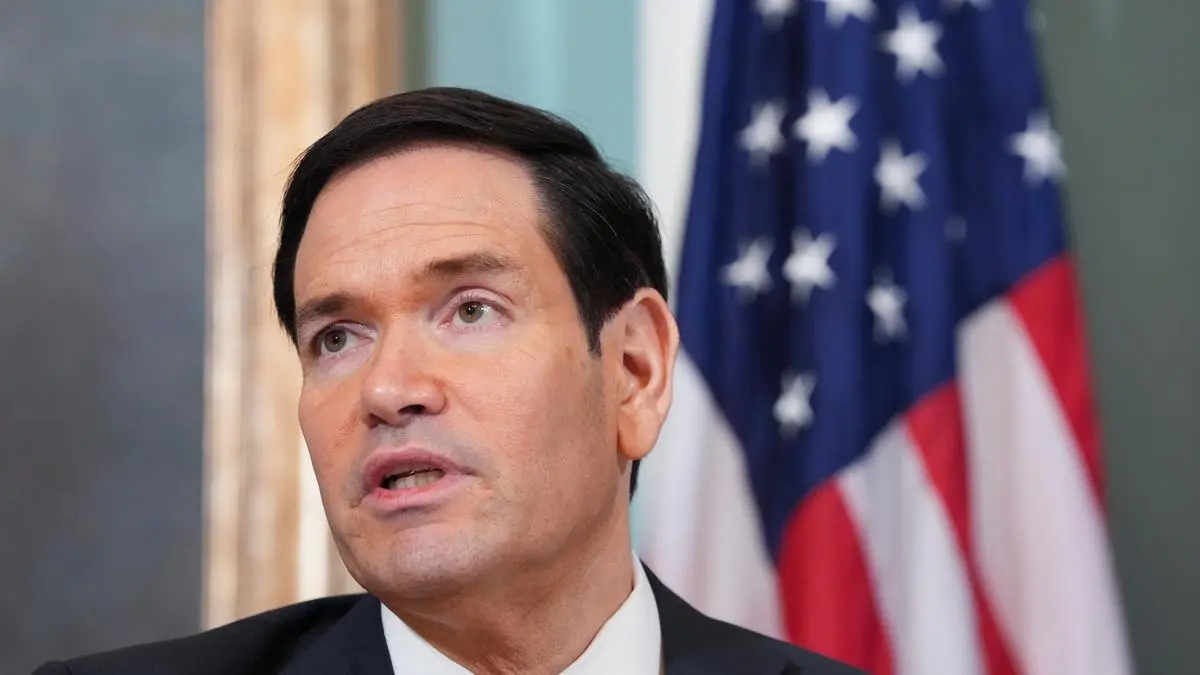
Washington is currently vibrating with a specific brand of performative outrage that serves nobody but the defense contractors. Secretary of State Marco Rubio’s recent declarations regarding Iranian "tolls" in the Strait of Hormuz aren't just hawkish; they are functionally illiterate regarding how global shipping actually operates. The "lazy consensus" dictates that Iran is a pirate state waiting to stick a figurative coin slot on a global choke point, and the US must spend billions in carrier strike group deployments to prevent it.
This narrative is a fantasy. It ignores the cold, hard mechanics of maritime law, the reality of insurance premiums, and the fact that the United States is currently fighting a 19th-century naval war against a 21st-century economic reality. If you want to understand why the US is losing its grip on maritime hegemony, stop looking at Iranian fast boats and start looking at the balance sheets of Singaporean shipowners.
The Transit Passage Trap
The primary argument coming out of the State Department is that any Iranian attempt to "normalize" tolls would violate the United Nations Convention on the Law of the Sea (UNCLOS). Here is the first bit of nuance the "experts" missed: The United States has never ratified UNCLOS. We demand others follow a rulebook we refuse to sign.
More importantly, the Strait of Hormuz is governed by the regime of transit passage. Unlike "innocuous passage," which allows coastal states more oversight, transit passage is supposed to be an unimpeded highway. The US argument is that any fee equals a blockade.
But let’s look at the Suez Canal. Let’s look at the Panama Canal. We have spent a century "normalizing" the idea that geography is a commodity. When Egypt hikes Suez fees by 15%, the world grumbles and pays. When Iran suggests a "security fee" or an "environmental tax," the US treats it as an act of war. This isn't about international law; it's about who gets to collect the rent.
The Insurance Market is the Real Navy
I have spent years watching shipping conglomerates navigate high-risk zones. Here is a secret the State Department won't tell you: Lloyd’s of London has more influence over the Strait of Hormuz than the US Fifth Fleet.
When tension rises, the "War Risk" premiums spike. Shipowners don't care if Rubio says the passage is "open." If the insurance premium for a VLCC (Very Large Crude Carrier) jumps from $10,000 to $150,000 per voyage, the strait is effectively closed to anyone without a death wish or a sovereign guarantee.
Iran doesn't need to physically stop ships to "collect a toll." They just need to maintain a level of "managed friction" that makes the US military presence look ineffective and expensive. Every time a US destroyer shadows a tanker, the cost of that transit—borne by the American taxpayer—skyrockets. The Iranians are essentially forcing the US to pay a "reverse toll" in operational wear and tear.
The Myth of the "Global Choke Point"
The "People Also Ask" sections of the internet are obsessed with one question: "What happens to the price of oil if Hormuz closes?"
The answer is: Not what you think.
The conventional wisdom says oil goes to $300 a barrel and the global economy collapses. This is 1970s thinking. Today, we have the East-West Pipeline in Saudi Arabia and the Abu Dhabi Crude Oil Pipeline. These bypasses can move roughly 6.5 million barrels per day. Is it enough to replace the 21 million barrels that flow through the Strait? No. But it is enough to keep the lights on in the places that matter most to US interests.
The real victim of a Hormuz disruption isn't the American commuter; it's the Chinese industrial base. China imports roughly 11 million barrels of oil per day, a massive chunk of which comes through that narrow strip of water. By "protecting" the Strait, the US Navy is effectively acting as a free security guard for Chinese energy supplies.
Why are we threatening a war to protect the supply chain of our primary geopolitical rival? It is a strategic absurdity.
The Ghost of "Freedom of Navigation"
The US military likes to use the phrase "Freedom of Navigation" as if it’s a magic spell. In reality, it’s a diminishing asset.
Imagine a scenario where Iran doesn't demand a "toll" paid in cash to a bank in Tehran. Instead, they demand that every ship transiting the Strait must use an Iranian-sanctioned pilot or purchase "environmental insurance" from a non-Western entity.
How does a carrier strike group fight an insurance policy?
They can't. The moment the maritime industry accepts a new administrative burden—even if it's illegal under the US interpretation of UNCLOS—the US has lost. This is "lawfare" at its most effective. By focusing on the threat of physical blockades, the State Department is preparing for a battle that won't happen, while losing the administrative war that is already underway.
Why Washington is Wrong about "Tolerance"
Rubio claims the US "would not tolerate" these tolls. This is a tough-guy posture that lacks a viable "Step 2."
If Iran begins charging a $50,000 "environmental fee" per tanker, what is the US response?
- Sink the Iranian Navy? (Triggers a global energy crisis).
- Escort every single commercial vessel? (Logistically impossible and bankrupts the Navy).
- Sanction the ships that pay the toll? (You end up sanctioning your own allies in Japan, South Korea, and India).
The "no tolerance" policy is a bluff that Iran has already called. The reality is that the US has limited options. The more we bluster about "red lines" in the water, the more we reveal the limitations of conventional naval power against asymmetric economic pressure.
The High Cost of Being a Global Guard
The US spends roughly $700 billion a year on a military designed to keep the "status quo" intact. In the Strait of Hormuz, the status quo is a gift to everyone but the American worker.
We provide the security.
The Gulf States provide the oil.
China provides the manufacturing.
We are the only ones in that triangle paying for the privilege of being there. If Iran wants to "normalize" tolls, perhaps the answer isn't a military strike. Perhaps the answer is letting the countries that actually rely on that oil—China, India, Japan—figure out how to secure their own energy.
The moment the US stops being the world's free security guard is the moment these "intolerable" tolls become someone else's problem.
The Inevitable Administrative Pivot
The shift toward regional control of maritime bottlenecks is inevitable. We saw it in the South China Sea, where the "international community" huffed and puffed while reefs turned into runways. We are seeing it in the Red Sea, where the Houthis have successfully imposed a "de facto toll" by simply making certain ships uninsurable.
Iran isn't looking to "close" the Strait. They aren't stupid. They want to regulate it. They want to turn a geographic accident into a sovereign ATM.
The US obsession with physical "freedom of navigation" is a distraction from the real threat: the balkanization of the global maritime administrative system. If you can't control the paperwork, you don't control the water.
Stop listening to the politicians who talk about "defending the waves." The waves don't need defending. The balance sheet does. The US is currently spending trillions to defend a 1945 world order that the rest of the planet has already moved past.
If Iran wants to start charging for passage, let the customers pay. If the customers won't pay, let them build a bigger navy. The era of the American taxpayer subsidizing global trade routes at the point of a bayonet is over, and no amount of "not tolerating" it from a podium in DC will change that.
Get out of the way and let the market decide what a trip through the Strait is actually worth.