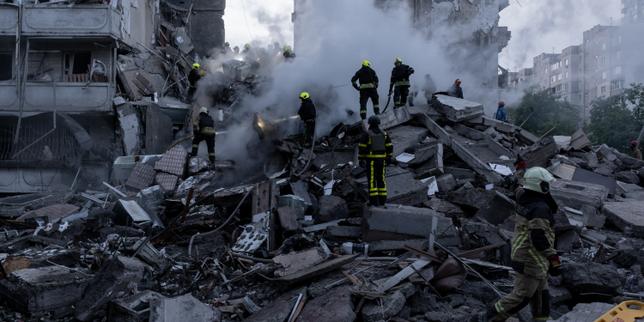
The Paradox of Strategic Calculus
Military aggression consistently fails to achieve its stated political objectives because revisionist powers miscalculate the structural transformation triggered by the act of war itself. The decision to initiate hostilities is typically driven by an optimization model that assumes a static environment: the aggressor projects their current capability against a target’s visible vulnerabilities, assuming all other geopolitical variables remain constant. This is a fatal analytical error. War is not a linear transaction; it is a complex adaptive system. The moment state violence crosses a sovereign threshold, it fundamentally alters the international system, accelerating threat perceptions, shifts in alliances, and economic re-alignments that systematically dismantle the aggressor's original cost-benefit analysis.
Historically, revisionist states—those seeking to alter the territorial or geopolitical status quo through force—routinely suffer from strategic blindness. They evaluate the opening phase of a campaign through the lens of absolute military capacity, while ignoring the systemic feedback loops that their actions inevitably trigger. Learn more on a related topic: this related article.
The core pathology of the aggressor can be deconstructed into three distinct structural failures:
- The misjudgment of defensive cohesion and asymmetric motivation.
- The underestimation of third-party intervention thresholds.
- The inability to quantify the long-term compounding friction of economic and technological isolation.
By examining these variables through a rigorous strategic framework, we can understand why the historical record is littered with conflicts that yielded the exact inverse of their architects' intended outcomes. More analysis by TIME delves into comparable views on the subject.
The Strategic Balance Sheet: Defining the Cost Function of Aggression
To understand why aggressors consistently miscalculate, we must model the conflict through a comprehensive strategic balance sheet. An aggressor operates on an assumed cost function where the price of conquest is fixed, front-loaded, and predictable. In reality, the true cost function of revisionist warfare is dynamic and escalates exponentially over time.
Total Strategic Cost = C_initial + C_friction(t) + C_systemic(t)
Where $C_{initial}$ represents the immediate kinetic expenditure, $C_{friction}$ represents the compounding cost of resistance over time ($t$), and $C_{systemic}$ represents the long-term geopolitical and economic penalties imposed by the international order.
Aggressors almost exclusively focus on $C_{initial}$. They design campaigns around rapid capitulation, assuming that a decisive initial blow will prevent $C_{friction}$ and $C_{systemic}$ from materializing. This assumption overlooks a fundamental tenet of conflict theory: the asymmetry of stakes.
The Asymmetry of Stakes and the Friction of Occupation
For an aggressor, a war of choice is a matter of relative utility—an attempt to marginalize a rival, secure a resource buffer, or boost domestic political capital. For the defending nation, the conflict is a war of survival. This fundamental asymmetry skews the motivational calculus.
- The Defending Force: Possesses a near-infinite willingness to absorb costs, run down capital reserves, and mobilize human capital. The defensive motivation operates on non-linear terms; resistance does not decrease symmetrically with territory lost.
- The Aggressor Force: Operates on finite political will and resource constraints. As the campaign transitions from a kinetic breakthrough to a prolonged occupation, the marginal cost of maintaining control increases, while the marginal utility of the captured asset diminishes.
This dynamic introduces the phenomenon of compounding friction. An invading force must dedicate an increasing percentage of its combat power to rear-area security, logistics protection, and civil administration. The offensive spearhead naturally decays, creating a strategic stalemate or a grinding war of attrition that the aggressor's economy is ill-equipped to sustain.
The Systemic Feedback Loop: Third-Party Mobilization
The most catastrophic error in the revisionist playbook is the failure to anticipate the systemic reaction of the international community. No conflict occurs in a vacuum. The international state system tends toward balancing behavior rather than bandwagoning; when a dominant or aggressive power attempts to alter the status quo by force, neighboring states and global powers unite to neutralize the threat.
The Threshold of Intervention
Aggressors frequently misinterpret the pre-war rhetoric or apparent polarization of external powers as a sign of weakness or apathy. They assume that if third parties do not intervene within the first 72 hours, they will acquiesce to a fait accompli.
This miscalculation ignores the structural delay inherent in democratic and coalition-based decision-making. Third-party mobilization follows a predictable multi-stage cascade:
- Diplomatic and Rhetorical Alignment: The immediate condemnation that establishes a legal and moral framework for intervention, neutralizing the aggressor’s attempts to control the narrative.
- Economic Sanctions and Asset Freezes: The weaponization of interdependence. This targets the aggressor's sovereign reserves, access to international clearing mechanisms (such as SWIFT), and dual-use supply chains.
- Asymmetric Material Support: The provision of intelligence, logistics, and advanced munitions to the defending state. This allows the defender to fight with the industrial capacity of a global coalition, completely offsetting the aggressor’s domestic production advantages.
- Structural Strategic Realignment: The long-term shifts in international architecture, including the expansion of defensive alliances, permanent forward deployments, and the decoupling of critical supply networks.
The net result of this feedback loop is that the aggressor inadvertently achieves the exact opposite of their strategic intent. If the objective was to prevent the expansion of a rival alliance, the aggression serves as the primary catalyst for that alliance’s renewal and expansion. If the objective was to assert economic dominance, the outcome is systemic isolation and structural decline.
The Illusion of Autarky: Economic and Technological Atrophy
Modern revisionist states often attempt to insulate themselves from systemic shock by building domestic economic alternatives—a strategy known as autarky or "sanction-proofing." This analytical framework is fundamentally flawed in an interconnected global economy driven by specialized technology.
The Choke Points of Modern Power
While a state can stockpile gold reserves, diversify foreign currency holdings, and secure alternative trade routes for raw commodities, it cannot replicate the complex, distributed global supply chains required to maintain a modern industrial economy or a technologically advanced military apparatus.
- Precision Components: Advanced military hardware relies on semiconductors, optoelectronics, and specialized materials produced by a highly concentrated node of global firms. When these nodes are severed, the aggressor’s defense industrial base degrades. They are forced to rely on legacy systems, cannibalize civilian infrastructure, or depend on substandard black-market alternatives.
- Capital Deprivation: Economic isolation chokes off foreign direct investment (FDI) and starves domestic industries of capital. The state is forced to reallocate capital from productive, high-growth sectors (technology, education, infrastructure) to subsidize inefficient domestic substitutes and fund the immediate needs of the war machine.
- Brain Drain: The onset of revisionist conflict and subsequent domestic tightening invariably triggers an emigration wave of highly skilled human capital—engineers, scientists, finance professionals, and tech workers. The loss of this demographic permanently blunts the state's long-term innovation curve and productivity growth.
The economic cost of aggression is therefore not a static penalty to be paid out of current reserves; it is a permanent tax on the state’s future economic growth trajectory. The gap between the aggressor’s capabilities and those of the balancing coalition widens every month the conflict continues.
Cognitive Pathologies of Revisionist Leadership
If the structural disadvantages of revisionist warfare are so pronounced, why do rational actors repeatedly choose the path of aggression? The answer lies in the institutional and cognitive pathologies that infect isolated, highly centralized decision-making structures.
The Autocratic Information Trap
In highly centralized regimes, the information pipeline is systematically corrupted by the incentives of survival. Subordinates are penalized for delivering objective, pessimistic assessments that contradict the ideological or strategic assumptions of the leadership. This creates an echo chamber where planners optimize for the best-case scenario rather than building resilience against the worst-case outcome.
Furthermore, autocratic leaders often fall victim to their own domestic propaganda. They confuse their controlled media narratives with objective geopolitical realities, genuinely believing that their adversaries are decadent, fragmented, and incapable of enduring hardship. This cognitive bias leads to a profound misunderstanding of democratic resilience, mistaking political debate and bureaucratic friction for a lack of strategic resolve.
Operational Reality vs. Strategic Intent: Historical Mapping
The structural failures outlined above are not theoretical anomalies; they are the defining characteristics of revisionist conflicts across modern history. When we map strategic intent against ultimate operational outcomes, the pattern of self-defeating aggression becomes undeniable.
| Aggressor State & Conflict | Stated Geopolitical Objective | Triggered Systemic Feedback Loop | Net Strategic Outcome |
|---|---|---|---|
| Imperial Japan (1941) | Secure Western Pacific hegemony; force US acquiescence via a decisive strike. | Total economic embargo; mobilization of US industrial hegemony; unconditional allied coalition. | Complete destruction of domestic industrial base; military occupation; total loss of overseas territories. |
| Iraq (1990) | Annex Kuwait to solve sovereign debt crisis and dominate regional oil markets. | Unprecedented UN Security Council consensus; deployment of a massive global military coalition. | Total destruction of conventional military capacity; crippling long-term sanctions regime; eventual regime collapse. |
| Argentina (1982) | Solidify domestic junta legitimacy by seizing the Falkland Islands. | Immediate British military mobilization; European economic sanctions; international diplomatic isolation. | Rapid military defeat; immediate collapse of the domestic military junta; restoration of democratic governance. |
In each instance, the aggressor treated the opening move as an isolated transaction. They failed to realize that the act of aggression would serve as a powerful unifying force for their adversaries, transforming a localized dispute into a systemic struggle that the revisionist power lacked the structural capacity to win.
The Terminal Phase: The Problem of Strategic Off-Ramps
Once an aggressive campaign breaks down and enters the compounding friction phase, the aggressor faces an existential political dilemma. In a rational business environment, an organization cuts its losses when the net present value of a project turns irrecoverably negative. In revisionist warfare, the logic of political survival prevents an early exit.
Sunk Cost Fallacy and Regime Survival
For an autocratic or highly ideological leadership cadre, admitting failure is synonymous with regime termination. The domestic political costs of withdrawing without tangible gains are perceived as greater than the costs of continuing a draining, sub-optimal war of attrition.
This creates a dangerous strategic lock-in:
- The leadership redefines the parameters of victory downward while escalating domestic repression to silence dissent.
- They double down on the conflict, burning through sovereign wealth funds, devaluing the domestic currency, and mortgaging the state's economic future to friendly revisionist powers in exchange for basic material support.
- The state transitions from a dynamic global player into a militarized autarky, structurally dependent on conflict to justify its continued existence.
The war ceases to be an instrument of policy; it becomes the policy itself. The original geopolitical objectives are abandoned, replaced by a desperate, resource-intensive effort to manage the internal and external blowback of the initial miscalculation.
Designing a Defensive Counter-Strategy
To exploit the inherent flaws in the revisionist playbook, status quo powers and defensive coalitions must shift from a reactive posture to a proactive strategy built around the principle of systematic cost escalation. The objective is not merely to defeat the aggressor on the battlefield, but to accelerate the structural feedback loops that make the conflict unsustainable for the invading state.
The Four Pillars of Accelerated Failure
To break the strategic calculus of a revisionist state, the defensive response must operate simultaneously across four distinct dimensions:
- Denial of Kinetic Velocity: Prioritize the deployment of asymmetric, distributed defensive technologies (precision-guided munitions, unmanned systems, advanced air defense) to deny the aggressor a rapid victory and force the campaign into the high-friction occupation phase.
- Asymmetric Economic Decoupling: Implement broad, structural sanctions that target the core revenue-generating engines of the aggressor's economy and freeze external sovereign assets. This must be accompanied by secondary sanctions that penalize third parties attempting to facilitate sanction evasion.
- Technological Containment: Enforce strict export controls on dual-use technologies, machinery, and software components. This ensures the rapid degradation of the aggressor’s defense industrial base, preventing them from replacing high-tech losses at scale.
- Cognitive Sabotage: Directly target the internal information ecosystem of the aggressor regime. By systematically exposing operational failures, corruption, and the true economic costs of the conflict, defensive coalitions can widen the fractures within the regime's elite and erode domestic political cohesion.
By executing these pillars in tandem, the defending coalition transforms the conflict into an unsustainable drain on the aggressor's sovereign capacity, ensuring that the adventure terminates not in a compromised peace, but in a profound structural setback for the revisionist state.