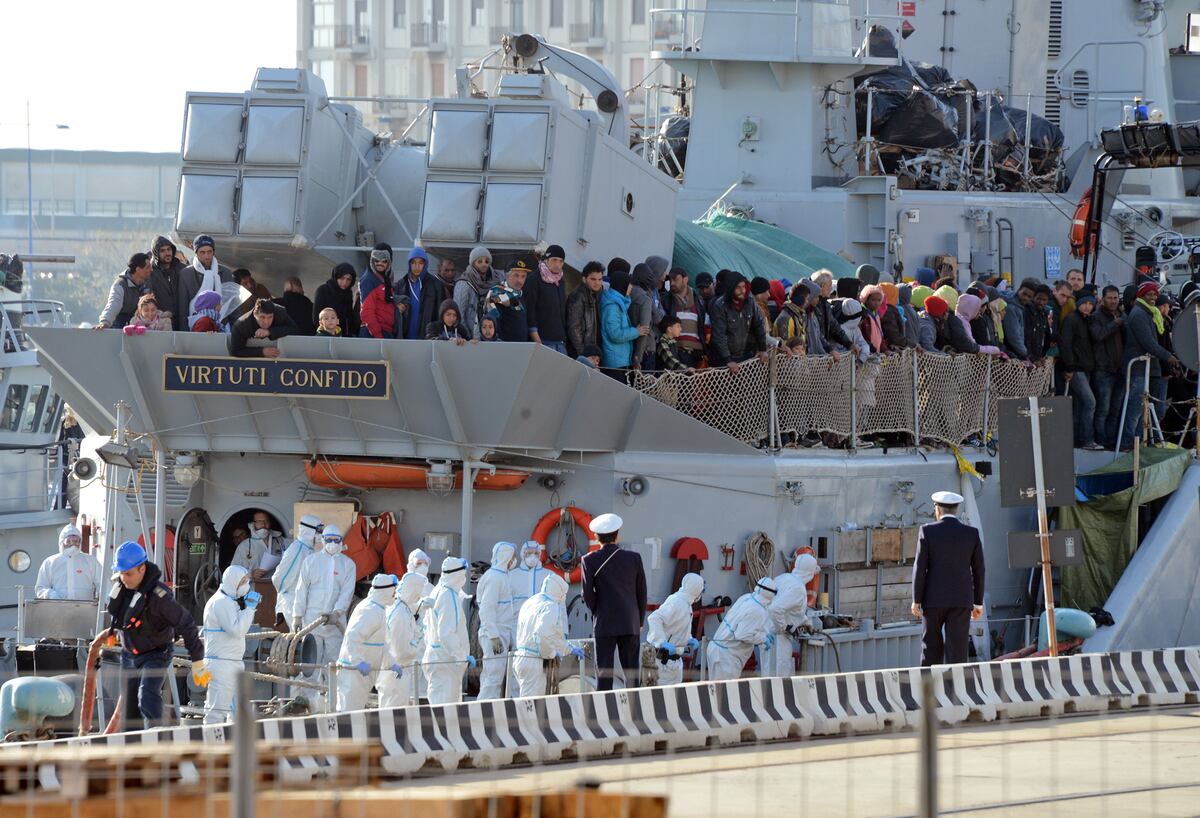
The Strait of Hormuz functions as the singular carotid artery of the global energy market, facilitating the transit of approximately 21 million barrels of oil per day. When a blockade—physical, legal, or kinetic—is initiated by a superpower like the United States, the immediate market reaction is not merely a price spike, but a fundamental breakdown in the maritime logistics chain. Tankers do not simply "stop"; they enter a state of calculated suspension where the cost of idling must be weighed against the risk of seizure or destruction. This analysis deconstructs the mechanics of the current naval blockade, the variables governing vessel behavior, and the cascading failures within the global supply chain.
The Triad of Maritime Risk Assessment
The decision for a tanker captain or ship owner to turn around or loiter outside a contested zone is governed by three primary variables. These factors dictate the operational ceiling of the Strait’s throughput during a period of high-intensity friction.
1. The Insurance Risk Premium (Hull and Machinery vs. War Risk)
Standard maritime insurance policies generally exclude active conflict zones. Once a blockade is declared or kinetic activity is observed, "War Risk" premiums apply. These are not static costs; they are dynamic assessments updated daily by underwriters at Lloyd’s of London. When the cost of insurance for a single transit exceeds the projected profit margin of the cargo, the vessel becomes economically paralyzed.
2. P&I Club Indemnity Limits
Protection and Indemnity (P&I) Clubs provide the third-party liability coverage essential for docking at international ports. A blockade involving US naval assets often triggers "Sanction Limitation and Exclusion" clauses. If a vessel is perceived to be in violation of a blockade or navigating against a US-issued Notice to Mariners (NOTAM), its P&I coverage may be unilaterally suspended. A tanker without P&I coverage is effectively a ghost ship; it cannot legally enter most major global terminals, forcing an immediate reversal of course.
3. Kinetic Deterrence and Rules of Engagement (ROE)
The physical presence of the US Fifth Fleet creates a "bubble" of denied access. The logic of the blockade relies on the credible threat of boarding and inspection. For a commercial vessel, the risk of a "Visit, Board, Search, and Seizure" (VBSS) operation creates a significant temporal bottleneck. Even if the vessel is eventually cleared, the delay disrupts downstream refinery schedules, leading to demurrage charges that can reach $100,000 per day.
Mechanical Breakdown of Tanker Loitering and Diversion
When the news of the blockade reached the fleet, the observed behavior of the tankers followed a bifurcated path based on their current "State of Transit."
The Point of No Return (PONR)
Vessels already within the Persian Gulf face a different set of incentives than those approaching from the Arabian Sea. For those inside, the blockade represents an exit barrier. The risk of being trapped "behind the wire" often leads to vessels anchoring near the coast of the UAE or Qatar, waiting for a naval escort or a diplomatic window. This creates a massive accumulation of stationary tonnage, which itself becomes a secondary navigation hazard.
The Strategic U-Turn
Vessels approaching from the Indian Ocean possess the luxury of "Strategic Divergence." The decision to turn around is rarely a 180-degree reversal. Instead, it involves a transition to a "Holding Pattern" (Loitering). Tankers will reduce speed to the minimum steerageway (approx. 5 knots) to conserve fuel while remaining outside the immediate jurisdiction of the blockading force.
The Cost Function of Blockade Resistance
The efficiency of a blockade is measured by the "Leakage Rate"—the volume of cargo that successfully bypasses the restriction via unconventional means.
$$C_t = I_w + D_o + (R_p \times P_s)$$
In this model, the Total Cost of Transit ($C_t$) is the sum of:
- $I_w$: War Risk Premium surcharge.
- $D_o$: Opportunity cost of delay/demurrage.
- $R_p$: Risk Probability of seizure.
- $P_s$: Value of the Seized Asset (Ship and Cargo).
As $C_t$ increases, the probability of a vessel attempting the transit decreases exponentially. However, when the price of oil ($P_o$) in the destination market rises high enough to offset $C_t$, we see the emergence of "Dark Fleet" activity. These are vessels that disable their Automatic Identification System (AIS), engage in ship-to-ship (STS) transfers in deep water, and utilize shell company ownership to obfuscate their origin.
Cascading Failures in the Global Supply Chain
The Strait of Hormuz is not just an oil conduit; it is a critical node for Liquefied Natural Gas (LNG), particularly from Qatar. Unlike crude oil, which can be stored in strategic reserves for months, LNG has a "Boil-Off Rate" (BOR).
The Cryogenic Timer
LNG tankers are essentially massive thermoses. As the liquid warms, a small percentage evaporates. While some vessels use this "boil-off gas" as fuel, a stationary LNG tanker is losing a portion of its cargo every day it loiters. A blockade-induced delay of 14 days can result in a 1-2% loss of total cargo volume, which, given the current spot prices for natural gas, represents a loss of millions of dollars before the ship even docks.
Refinery Desynchronization
Modern refineries are tuned to specific grades of crude (e.g., Saudi Light vs. Iranian Heavy). A blockade forces refineries in East Asia and Europe to source "replacement barrels" from the Atlantic Basin (US Permian or Brent). These grades often have different sulfur contents, requiring refineries to recalibrate their catalysts and processing temperatures. This transition period results in a temporary drop in fuel output (gasoline, diesel, and jet fuel), leading to localized shortages even if the global volume of oil remains stable.
The Geopolitical Game Theory of Loitering
The current "standoff" is a physical manifestation of game theory. The US aims to demonstrate total control over the maritime commons to force a diplomatic concession. Conversely, the states bordering the Persian Gulf rely on the "Threat of Disruption" to maintain their leverage.
- The US Objective: Enforce a "Clean Sea" policy where only compliant vessels pass, effectively stripping the target nation of its primary revenue stream.
- The Counter-Strategy: Utilizing asymmetric assets—fast attack craft, sea mines, or shore-based anti-ship missiles—to raise the $I_w$ (War Risk Premium) for all vessels, not just those targeted by the blockade.
By raising the cost for everyone, the regional power attempts to make the blockade politically and economically unsustainable for the US and its allies. The tankers turning around are the data points that prove the counter-strategy is working; they represent a successful "Risk Export" from the regional power to the global consumer.
Identifying the Break Point
The sustainability of this blockade depends on the "Storage Ceiling." Most major oil producers in the region have limited onshore storage capacity. Once their tanks are full, they must either stop production (which can damage the oil wells) or load the oil onto tankers to act as "Floating Storage."
Currently, the number of tankers being used for floating storage is increasing. This removes those vessels from the global "Available Tonnage" pool, which further drives up shipping rates globally. We are moving toward a "Tonnage Crunch" where even if the blockade were lifted tomorrow, the lack of available ships in the right locations would keep energy prices elevated for a fiscal quarter or longer.
The operational reality is that the Strait of Hormuz cannot be "closed" in a permanent, physical sense. Instead, it is being "economically throttled." The US blockade does not need to sink every ship; it only needs to make the uncertainty of arrival more expensive than the value of the cargo.
The current fleet behavior indicates that the market has reached a state of "Critical Risk Saturation." Owners are no longer looking at the profit of the next voyage, but the survival of the asset itself. The strategic play for stakeholders now shifts from "Just-in-Time" logistics to "Just-in-Case" stockpiling, which structurally resets the floor for global energy pricing regardless of the blockade's eventual duration.