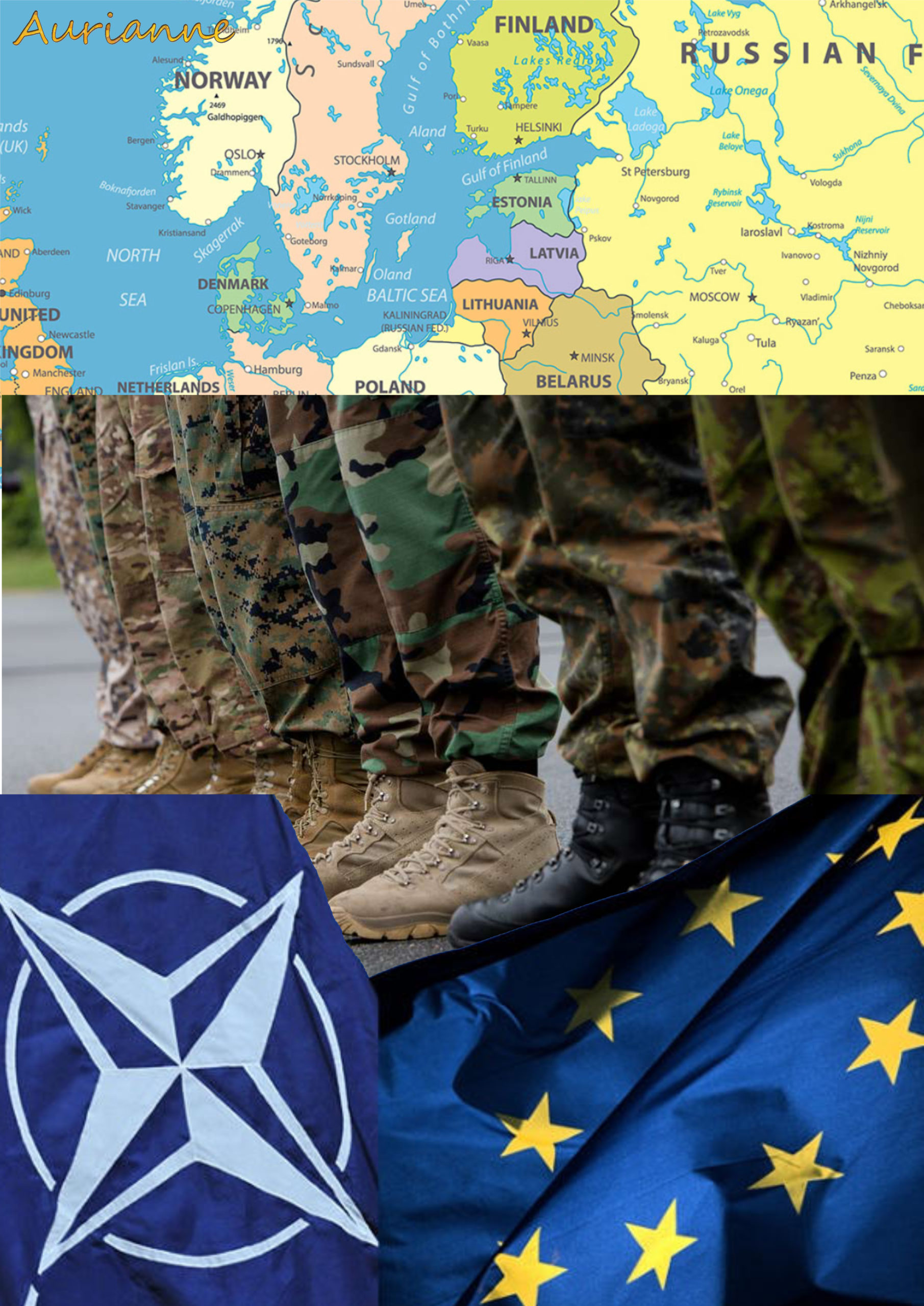
The redistribution of United States military personnel within the European theater is often framed as a localized administrative shift, yet it represents a fundamental recalibration of the Transatlantic Security Architecture. This movement of roughly 12,000 troops from German soil is not a singular event; it is a symptom of a shifting cost-benefit analysis regarding forward-deployed presence versus rapid-response capability. NATO’s current assessment of these details must reconcile the tension between legacy infrastructure and the emerging requirements of high-intensity, multi-domain conflict.
The Geopolitical Cost Function of Forward Presence
To understand the friction surrounding the withdrawal, one must quantify the value of a permanent presence. The U.S. presence in Germany serves three distinct operational functions: Power Projection, Logistical Interoperability, and Signaling. When these variables are modified, the equilibrium of regional stability shifts. In other updates, take a look at: The Empty Chair at the Table in Ramstein.
- Fixed Infrastructure Inertia: Germany hosts the Ramstein Air Base and the Landstuhl Regional Medical Center. These are not merely barracks; they are the central nervous system for U.S. operations across Africa and the Middle East. Shifting personnel without replicating this infrastructure creates a "Capability Gap" that cannot be closed by simply moving units to Italy or Belgium.
- The Signaling Discount: Deterrence relies on the "Tripwire Effect." A reduction in force size, regardless of the technological sophistication of the remaining units, is often perceived by adversaries as a lowered threshold for intervention. This perception creates a psychological vacuum that competitors may attempt to fill.
- Economic Friction: The withdrawal introduces immediate budgetary strain. The cost of relocating a Combat Stryker Brigade—including families, equipment, and support staff—often exceeds the annual savings gained from reduced footprint costs in the short to medium term.
The Three Pillars of NATO Integration
NATO’s assessment focuses on whether the withdrawal strengthens the "Suwalki Gap" defense or weakens the "SACEUR" (Supreme Allied Commander Europe) ability to mobilize. The logic of the withdrawal rests on a specific strategic hypothesis: that rotational forces are more lethal and less vulnerable than static ones.
1. Rotational Agility vs. Permanent Stability
The shift toward rotational deployments—units that cycle in and out of Eastern Europe rather than living permanently in Germany—aims to increase readiness. Static troops often succumb to "Institutional Calcification," where administrative overhead outweighs training hours. Rotational forces, conversely, remain in a high state of combat readiness. However, the trade-off is the loss of deep-seated local knowledge and long-term relationships with German host-nation counterparts. The Guardian has also covered this fascinating topic in great detail.
2. Operational Redundancy
A significant portion of the planned withdrawal involves moving the U.S. European Command (EUCOM) from Stuttgart. In military theory, centralization is a vulnerability. Distributing command structures across multiple NATO nations (such as Belgium or Italy) increases the "Survivability Quotient" of the command-and-control (C2) network. If a single hub in Germany is compromised, the alliance retains its ability to coordinate a response.
3. Burden Sharing and the 2 Percent Mandate
The withdrawal is inextricably linked to the political pressure on Berlin to meet the NATO-agreed goal of spending 2% of GDP on defense. This creates a "Transactional Security Model." From a data-driven perspective, if the U.S. reduces its subsidized security in Germany, the German government is forced to accelerate its own procurement cycles to maintain the same level of regional readiness.
Tactical Realignment and the Eastern Flank
The movement of the 2nd Cavalry Regiment back to the United States, with a focus on rotational missions in the Black Sea region, reveals a shift in the "Geography of Threat." During the Cold War, the Fulda Gap in Germany was the primary point of failure. Today, the focus has shifted 1,000 kilometers east.
The logistics of this shift are governed by the Speed of Recognition and the Speed of Assembly. By relocating forces closer to the actual points of friction—Poland, the Baltics, and the Black Sea—the U.S. reduces the "Transit Penalty" during the initial 48 hours of a crisis. However, the infrastructure in these eastern nations often lacks the hardened defenses and sophisticated maintenance facilities present in Germany, creating a trade-off between proximity and sustainability.
Structural Bottlenecks in the Relocation Strategy
The strategy faces significant headwinds in the form of Logistical Throughput. Moving 12,000 personnel is not merely a transport problem; it is a system-integration problem.
- Housing and Civil Integration: Transitioning thousands of troops to Mons, Belgium, or various locations in Italy requires significant capital expenditure (CAPEX) for housing, schools, and medical facilities. This diverts funds from "Lethality Upgrades"—the modernization of equipment and munitions.
- Aviation Capacity: The repositioning of F-16 squadrons from Germany to Italy changes the "Combat Radius" for operations in Northern Europe. While it increases coverage of the Mediterranean, it leaves a coverage hole in the Baltic theater that must be compensated for by increased air-policing missions from other allies.
- Political Fragmentation: The withdrawal was initially announced without comprehensive consultation with the German government. This "Coordination Failure" undermines the collective defense principle of NATO, providing a narrative victory for adversaries who seek to highlight divisions within the alliance.
Quantifying the Strategic Risk
The risk of this realignment can be modeled using a Volatility Index. If the withdrawal is executed during a period of high regional tension, the volatility increases because the transition phase is the moment of maximum vulnerability. Units are in transit, command structures are being re-established, and communication lines are being re-routed.
A successful realignment requires that the "Rate of Capability Transfer" (how fast allies pick up the slack) exceeds the "Rate of Force Reduction." If Germany does not immediately increase its readiness levels to offset the departing U.S. units, the net security of the European theater decreases, regardless of how "agile" the remaining U.S. forces are.
The focus must shift from the number of troops to the Output of the Force. Modern warfare is defined by precision, cyber capabilities, and electronic warfare—none of which are strictly dependent on the physical headcount of troops in a specific German town. NATO’s assessment will ultimately hinge on whether the U.S. maintains its "Deep-Strike" and "Intelligence-Intelligence-Surveillance-Reconnaissance" (ISR) assets in the region, as these are the high-value multipliers that European allies currently cannot replicate.
The strategic play for NATO and the U.S. Department of Defense is to decouple the "Stuttgart-centric" model of the 20th century from the "Distributed-Network" model required for the 21st. This necessitates a transition from permanent basing in high-cost, low-threat zones to flexible basing in lower-cost, high-readiness zones. The measure of success will not be the retention of 12,000 troops in Germany, but the reduction of the "Time-to-Combat" metric across the entire Eastern Flank. Any assessment that prioritizes troop numbers over this response velocity is utilizing an obsolete metric for a modern threat environment.