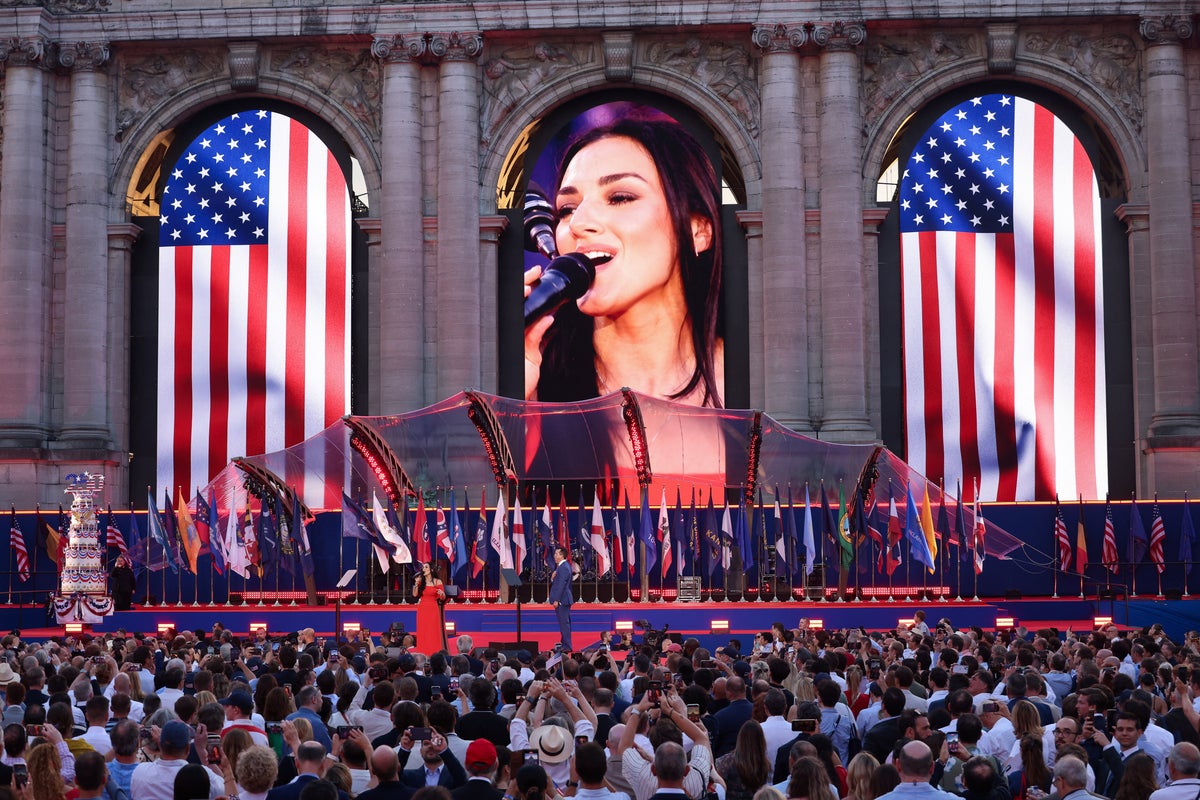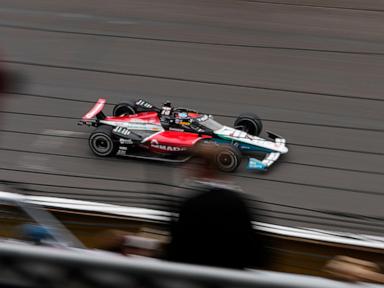
The selection of Ephraim Owens to perform "America the Beautiful" at the Indianapolis 500 represents more than a ceremonial formality; it is a calculated intersection of broadcast television reach, regional brand alignment, and the acoustic engineering required for a venue with a 250,000-person capacity. While standard reporting focuses on the sentimental value of the performance, a rigorous analysis reveals a sophisticated layering of cultural capital and logistical precision designed to maximize the "Pre-Race Window"—the 60-minute period where television viewership and trackside engagement converge.
The Performance Value Proposition
The utility of a pre-race performer is measured through three primary variables: Brand Recognition Delta, Vocal Reliability, and Narrative Synchronicity. Owens, a product of NBC’s The Voice, provides a closed-loop marketing advantage for the broadcaster. By utilizing talent nurtured within its own ecosystem, NBC Universal reduces talent acquisition friction while simultaneously cross-pollinating audiences between its flagship reality competition and its premier sporting event.
This creates a Feedback Loop of Visibility:
- Audience Retention: Viewers of The Voice are incentivized to tune into the Indianapolis 500 pre-race coverage to support a familiar protagonist.
- Platform Validation: The Indianapolis 500 serves as a high-pressure validation stage for Owens, reinforcing the perceived quality of The Voice contestants.
- Regional Anchoring: Owens’ status as an Indianapolis native provides "In-Market Authenticity," a critical metric for the Indianapolis Motor Speedway (IMS) to maintain its communal identity amidst a global broadcast.
Acoustic Dynamics and the Open-Air Bottleneck
Performing at the Indianapolis Motor Speedway presents unique challenges that differ fundamentally from a studio environment or a standard concert hall. The venue's scale introduces specific physical constraints that dictate the performance's success or failure.
The Decibel Conflict
The primary obstacle is the Signal-to-Noise Ratio. With 33 2.2-liter twin-turbocharged V6 engines idling or undergoing final checks, the ambient noise floor is exceptionally high. The audio engineering team must account for:
- Latency in Large-Scale PA Systems: Sound travels at approximately 343 meters per second. In a facility that spans 2.5 miles, the delay between the source and the furthest bleacher can exceed several seconds, requiring a sophisticated "Zone-Based" delay management system to ensure the audience hears a coherent signal.
- Atmospheric Interference: Open-air acoustics are susceptible to wind shear and humidity levels, which can attenuate high frequencies. Owens’ vocal profile—characterized by a high-tenor range with significant resonant power—is selected because it can "cut" through these atmospheric variables more effectively than a lower-register baritone.
The Psychological Anchor of 'America the Beautiful'
The choice of "America the Beautiful" over the National Anthem for this specific slot serves as a tonal bridge. In the Indianapolis 500 ceremonial hierarchy, "America the Beautiful" functions as the emotional buildup, whereas "The Star-Spangled Banner" serves as the final peak. By placing an emerging talent like Owens on the former, the organizers manage the emotional arc of the crowd, ensuring the energy ramp-up is linear rather than erratic.
The Economics of the 'Homegrown' Narrative
The decision to feature a local artist is a strategic hedge against the "Transient Event" critique. Large-scale sporting events often face criticism for being "parachuted" into a city without benefiting the local creative economy. Owens’ presence serves as a Local Content Multiplier.
The economic logic follows a three-step integration:
- Social Capital Extraction: Leveraging Owens’ local following to drive regional ticket sales and localized social media engagement.
- Cost-Efficiency in Logistics: Utilizing local talent minimizes the "Operational Load" (travel, housing, and multi-day rehearsals) typically associated with Tier-1 national celebrities.
- Long-Term Brand Loyalty: By identifying the race with local success stories, IMS reinforces its position as the cultural center of Indiana, which is vital for maintaining high attendance figures in non-anniversary years.
Risk Mitigation in Live Broadcasts
Live performances at the Indianapolis 500 are high-risk assets. A failure in pitch, a memory lapse in lyrics, or a technical audio glitch is magnified by a global audience of millions. The selection of a contestant from The Voice provides a vetted insurance policy.
Unlike studio-only artists, Owens has been "Pressure-Tested" in a competitive, live-to-tape environment. He has demonstrated the ability to function within the Three Pillars of Live Broadcast Compliance:
- Time-Certainty: The pre-race schedule is timed to the second to align with the Green Flag. An artist must hit their marks without variance.
- Positional Discipline: Knowing exactly where to stand for camera angles and pyrotechnic safety.
- Adaptive Performance: The ability to ignore technical malfunctions (in-ear monitor failure) and maintain vocal integrity.
This "Competition-Hardened" background significantly lowers the Execution Risk Profile compared to a traditional recording artist who may be accustomed to the controlled environment of a touring stage.
The Strategic Play: Capitalizing on the Momentum
To maximize the impact of this performance, stakeholders must move beyond the 120-second vocal window. The performance should be viewed as a Launch Sequence for integrated marketing.
- Immediate Post-Performance Digital Conversion: A QR-code-based bridge or a direct social media push during the commercial break following the performance to funnel the surge in "Search Interest" toward Owens’ upcoming projects or The Voice digital assets.
- Syndicated Content Loops: Utilizing the high-definition footage of the performance for mid-race "Hero Clips," ensuring that the brand association between Owens and the "Greatest Spectacle in Racing" is cemented for viewers who tuned in after the pre-race ceremonies.
- Data Capture: Analyzing the geographical spike in social media mentions to determine if the "Local Hero" narrative successfully resonated outside the Indiana borders, providing a data-driven blueprint for future talent selection.
The engagement of Ephraim Owens is a case study in operationalizing cultural relevance. It ignores the superficial "celebrity" metric in favor of a structurally sound alignment of logistics, regional pride, and broadcast synergy.
The final strategic move involves the immediate deployment of the "Performance Artifact"—the high-quality audio and video recording—across non-traditional racing platforms to capture a younger, music-centric demographic that currently exists outside the NTT INDYCAR SERIES' primary data silo. This transition from a racing event to a multi-platform cultural moment is the only way to ensure the long-term viability of the pre-race ceremony as a marketing engine.