Hong Kong’s unique monetary architecture, specifically the Linked Exchange Rate System (LERS), dictates that domestic price stability is an externalized function of United States Federal Reserve policy, rather than local economic autonomy. For the average resident, the transition from surplus liquidity to a high-interest-rate environment manifests as a "squeeze" on two fronts: the rising cost of imported essentials and the erosion of disposable income via debt service. When daily staples—from hygiene products to basic food imports—surge in price simultaneously with a rebound in global travel demand, the city enters a phase of "imported inflation" that bypasses traditional local interventions.
The Tripartite Compression of Household Solvency
To understand why inflation is hitting the local population now, one must dissect the three primary variables that govern the Hong Kong cost of living. Also making news lately: The Real Reason Kose is Betting on India and the Risks of the Japanese Pivot.
1. The Import Dependence Variable
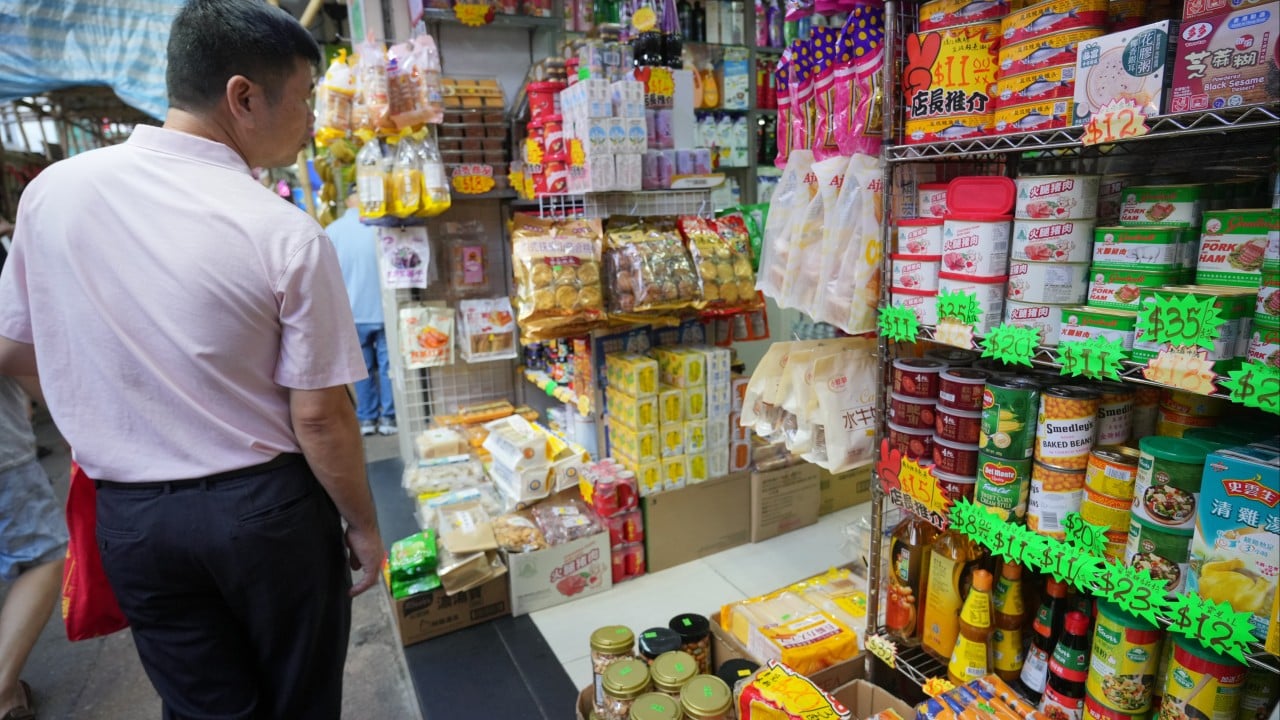
Hong Kong imports over 90% of its food supply and nearly all manufactured consumables. This creates a direct pass-through mechanism for global supply chain volatility. When energy costs rise in the Pearl River Delta or agricultural yields drop in Southeast Asia, the lag time for these costs to hit shelves in Central or Mong Kok is minimal. Unlike larger economies with domestic agricultural backstops, Hong Kong lacks a buffer. The price of a roll of toilet paper is not merely a reflection of local retail competition; it is a derivative of global pulp prices and shipping freight indices.
2. The Interest Rate Transmission Lag
Because the Hong Kong Dollar is pegged to the US Dollar, the Hong Kong Monetary Authority (HKMA) must track Fed rate hikes. This creates an immediate impact on the Hong Kong Interbank Offered Rate (HIBOR), which governs the majority of local mortgages. As HIBOR climbs, the portion of household income dedicated to debt service increases. This "shadow inflation" does not always show up in the Consumer Price Index (CPI) with the same visibility as food prices, but its impact on discretionary spending is more terminal. More details regarding the matter are explored by The Wall Street Journal.
3. The "Revenge Travel" Expenditure Shift
Following years of restricted movement, the prioritization of travel has shifted from a luxury to a non-negotiable line item in middle-class budgets. This creates a paradoxical inflationary environment: consumers are willing to absorb higher costs for airfare and overseas accommodation by cannibalizing their savings or reducing domestic luxury spending. This outward flow of capital reduces the velocity of money within the local economy while the costs of those overseas services continue to rise due to global aviation fuel surcharges and labor shortages in the hospitality sector.
The Mechanics of Pass-Through Costs in Retail
Retailers in Hong Kong operate on some of the thinnest margins globally due to the world's highest commercial rents. When input costs—such as electricity for refrigeration or wholesale prices for imported goods—increase by even 3-5%, the retail sector cannot absorb the hit.
The logic of price adjustments in Hong Kong follows a "Step-Function" rather than a linear curve. Retailers hold prices steady as long as possible to maintain market share, but once a critical threshold of overhead is breached, prices jump significantly across the board. We are currently observing this threshold breach in the fast-moving consumer goods (FMCG) sector.
Logistical Bottlenecks and Last-Mile Premiums
The cost of moving goods from the Kwai Tsing Container Terminals to a supermarket in Causeway Bay involves a complex layer of labor and fuel.
- Fuel Surcharges: Even if global oil prices stabilize, local transport companies maintain high surcharges to recoup previous losses.
- Labor Scarcity: A shrinking workforce in the logistics and retail sectors forces wage increases, which are immediately factored into the "unit price" of consumer goods.
The Divergence of CPI and Perceived Inflation
The official Census and Statistics Department data often seems at odds with the "street-level" experience of inflation. This discrepancy is explained by the weighting of the CPI basket.
The Housing Weighting Fallacy
Rental costs make up a massive portion of the official CPI calculation. Because residential rents in Hong Kong saw a period of stagnation or slight decline during the early 2020s, the "headline" inflation figure remained deceptively low. However, for a resident whose rent is fixed on a two-year lease but whose grocery bill has risen 15%, the official 2% inflation rate feels like a statistical fabrication.
The reality is a "bifurcated inflation" where:
- Essential Inflation (Non-Discretionary): Food, electricity, and transport are rising at 2-3x the headline rate.
- Asset Inflation (Discretionary): Luxury goods and property prices may be cooling, dragging down the average.
For the lower and middle-income brackets, the weighting of the CPI does not accurately reflect the erosion of purchasing power, as a higher percentage of their income is dedicated to the "Essential" category.
The Travel Elasticity Trap
Travel inflation is distinct because it is driven by a global capacity-demand imbalance. Airlines retired fleets and laid off staff during the pandemic; the current infrastructure cannot meet the surge in demand from the Asia-Pacific region.
- Capacity Constraints: Cathay Pacific and other regional carriers are still in the process of restoring flight frequencies. Fewer seats mean higher floor prices for economy tickets.
- The Currency Factor: While the HKD strength (via the USD peg) makes some destinations like Japan or Europe relatively cheaper, the high cost of the "origin" side (airport taxes, local transport to the airport, and the initial ticket purchase) offsets the favorable exchange rate on the "destination" side.
This creates a "Travel Premium" that acts as a voluntary tax on the resident. The psychological need for mobility after years of isolation makes this demand "inelastic"—people will pay it even if it hurts their overall financial health.
Structural Risks to the Hong Kong Middle Class
The combination of stagnant wage growth in the financial sector and rising costs in the essential sector creates a "pincer movement" on the middle class.
- The Debt Service Burden: Those who purchased property at the height of the market (2018-2021) are now facing significantly higher monthly repayments.
- The Savings Depletion: To maintain their standard of living and fulfill travel desires, households are dipping into their cash reserves. This reduces the long-term resilience of the local economy against future shocks.
Strategic Financial Realignment
The current inflationary period is not a transient spike but a structural adjustment to a higher-interest-rate world. The "cheap money" era that fueled Hong Kong's consumption patterns for a decade has ended.
To navigate this, the logical move for the individual and the firm is a pivot toward Defensive Asset Allocation. This involves reducing exposure to HIBOR-linked debt and shifting discretionary budgets away from high-premium "revenge" categories toward high-yield savings or fixed-income instruments that benefit from the very interest rates causing the inflation.
For the retail sector, the only viable path is Operational Consolidation. Small to medium enterprises (SMEs) that cannot achieve economies of scale in their supply chain will likely be forced out, leading to further market concentration among major conglomerates. This concentration, while efficient for the companies, usually results in "Price Stickiness," where prices remain high even if the underlying commodity costs eventually drop.
Expect the next 18 months to be defined by a "Consumption Re-prioritization." Residents will likely maintain their travel habits but significantly reduce spending in local high-end dining and luxury retail. This shift will force a restructuring of the local service economy, moving away from high-margin luxury and toward "Value-Optimization" models that can survive the persistent pressure of imported costs and high debt service.