Assessing the longevity of a bilateral security architecture requires evaluating its mechanical load-bearing capacity rather than relying on diplomatic rhetoric. As the Manila-Washington defense framework marks its seventy-fifth operational year, external observers frequently reduce its survival to questions of political will. This perspective fundamentally misdiagnoses how military alliances operate under structural stress. The durability of the 1951 Mutual Defense Treaty does not depend on transient political sentiments in either capital. Instead, it relies on institutionalized interoperability, the absolute geography of the South China Sea, and the economic cost function of regional hegemony.
Deconstructing the mechanics of this pact reveals three distinct operating phases over its lifespan: the foundational posture of Cold War containment, the post-Cold War drift characterized by base closures and institutional atrophy, and the contemporary era of distributed maritime denial. Analyzing why this framework persists requires examining the variables that constrain both partners, stripping away surface-level friction to reveal the hard economic and strategic calculus beneath.
The Cost Function of Bilateral Commitment
Evaluating the credibility of American security guarantees involves measuring resource allocation and operational integration. Critics often argue that domestic political shifts in the United States introduce unpredictable volatility into treaty execution. However, this argument ignores the structural embedding of defense logistics.
The defense relationship functions through a continuous input-output loop. The inputs consist of joint exercises, intelligence sharing agreements, and infrastructure development under the Enhanced Defense Cooperation Agreement. The outputs are measurable indicators of military readiness: expanded munition stockpiles, prepositioned maritime prepositioning ships, and integrated command-and-control nodes.
[ Strategic Inputs ]
       │
       ▼
( EDCA Sites & Joint Drills )
       │
       ▼
[ Operational Outputs ]
       │
       ▼
( Interoperability & Mass )
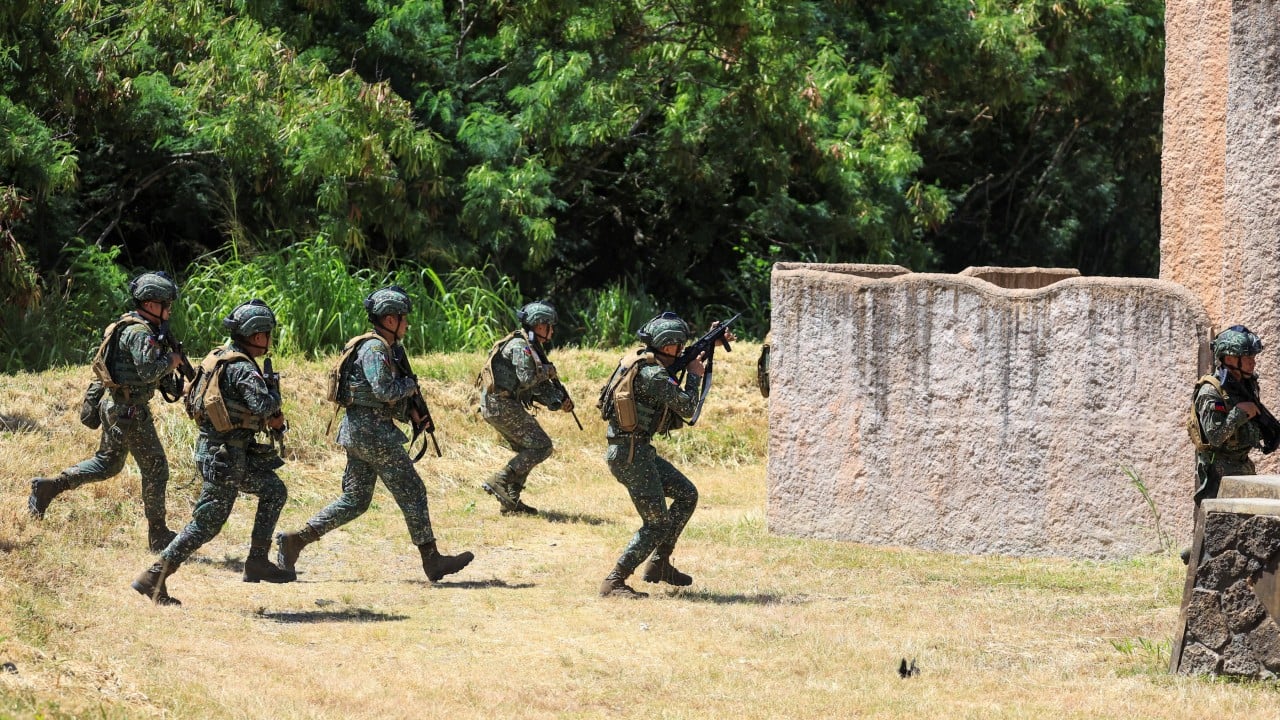
When multi-national exercises scale past seventeen thousand personnel, involving shared assets across land, air, sea, space, and cyber domains, the alliance shifts from a theoretical paper promise to an operational reality. Disengaging from this architecture would impose prohibitive strategic and financial costs on Washington. Rebuilding an equivalent forward-deployed network within the first island chain would take decades and tens of billions of dollars, creating a vacuum that directly undermines broader Indo-Pacific containment strategies.
The Asymmetry of Maritime Friction
The primary operational stress test for the defense pact is located within the exclusive economic zone of the Philippines. Unlike the static land borders of twentieth-century European containment, maritime flashpoints present a continuous gray-zone challenge. Coast guard vessels, maritime militia fleets, and economic coercion operate below the threshold of traditional armed attack, testing the literal boundaries of Article IV and Article V of the treaty.
This gray-zone environment creates a strategic dilemma. If the alliance framework responds too rigidly, it risks triggering an unwanted escalatory spiral. If it responds too passively, the deterrent value of the treaty degrades through cumulative erosion.
The modernization of the Armed Forces of the Philippines addresses this vulnerability by shifting doctrine from internal security toward territorial defense. By acquiring fast-response cutters, coastal radar systems, and anti-ship cruise missile batteries, Manila reduces its absolute dependency on immediate American kinetic intervention. Strategic durability emerges when the frontline state possesses organic denial capabilities, transforming the alliance from a patron-client dependency into a distributed network of mutual deterrence.
Institutional Anchors and Interoperability Bottlenecks
The longevity of the bilateral framework is preserved through bureaucratic institutionalization. Annual planning mechanisms, such as the Mutual Defense Board and Security Engagement Board, institutionalize cooperation independently of shifting presidential administrations. Furthermore, legal instruments like the Communications Interoperability and Security Memorandum of Agreement secure classified information pipelines across administrations.
Yet, persistent operational bottlenecks threaten this institutional machinery. Logistics distribution networks in archipelagic theaters remain complex. Moving heavy equipment, fuel, and ordnance from centralized ports to distributed forward operating sites requires complex maritime sustainment capabilities.
Primary Bottlenecks in Alliance Execution:
* Archipelagic Logistics: Moving heavy ordnance across dispersed island chains without vulnerable single points of failure.
* Industrial Base Capacity: Scaling American and allied munitions production to sustain high-intensity deterrence operations.
* Escalation Control: Calibrating gray-zone responses to prevent kinetic escalation while denying adversary territorial gains.
If these logistical constraints remain unaddressed, they create structural friction during a crisis. The solution requires heavy investment in distributed logistics nodes, commercial vessel utilization for military sustainment, and hardened infrastructure at northern and western airfields.
Strategic Trajectory and Resource Allocation
Evaluating whether the alliance can sustain its trajectory requires analyzing industrial capacity rather than diplomatic communiques. The limitation of modern deterrence is no longer political alignment; it is the sheer depth of the defense industrial base. Joint modernization efforts must prioritize the mass production of cost-effective asymmetric capabilities—such as coastal defense cruise missiles, uncrewed surface vessels, and integrated air defense architectures—over capital-intensive platforms that are vulnerable to long-range precision strikes.
Scale the operational integration of the Armed Forces of the Philippines with regional partners like Japan and Australia. Integrate intelligence, surveillance, and reconnaissance feeds into a common operating picture across all allied command centers to eliminate information latency during high-tempo maritime contingencies.
:max_bytes(150000):strip_icc()/ar-American-Cheese-taste-test-horizon-4x3-54cc339550cd44b9a818c17bdfd5428d.jpg)