Epidemiological containment relies on intercepting transmission chains faster than a pathogen's reproduction rate ($R_0$). When public health infrastructure degrades in active conflict zones, mathematical models governing viral spread cease to function via standard clinical interventions, yielding exponential trajectories that overwhelm institutional response capacity.
The ongoing public health crisis in the eastern provinces of the Democratic Republic of Congo demonstrates this structural collapse. Crossing the threshold of 6,000 confirmed cases with nearly 3,000 fatalities, the current epidemic—driven by the Bundibugyo strain—exposes critical vulnerabilities in operational surveillance, supply chain integrity, and community-level trust mechanics.
The Etiological Bottleneck and Strain Mechanics
Unlike previous outbreaks driven by the Zaire species—for which monoclonal antibody treatments and established vaccines offer high efficacy—the Bundibugyo variant presents unique diagnostic and therapeutic hurdles. The absence of an approved, universally deployed vaccine or specific therapeutic intervention targeting this distinct viral species alters the baseline cost function of containment.
Initial presentation parameters further compound the transmission velocity. The Bundibugyo variant frequently manifests with attenuated, non-specific symptoms during early infection stages. In clinical terms, this symptom profile maximizes patient mobility during peak viral shedding windows. Infected individuals continue daily economic and social activities unaware of their contagion status, bypassing voluntary reporting thresholds that typically trigger contact tracing protocols.
Operational Friction in Conflict Zones
Geographic concentration within northeastern provinces including Ituri and North Kivu maps directly onto areas characterized by active insurgencies, territorial fragmentation, and high population displacement. This environment introduces three distinct friction variables that paralyze conventional medical response logistics:
- Supply chain fracturing caused by intermittent airport closures, transit restrictions, and targeted infrastructure disruption.
- Surveillance blind spots resulting from insecurity that prevents epidemiological teams from conducting real-time field investigations.
- Institutional absenteeism where state presence is historically weak, creating a vacuum filled by misinformation and deep-seated skepticism toward central authorities.
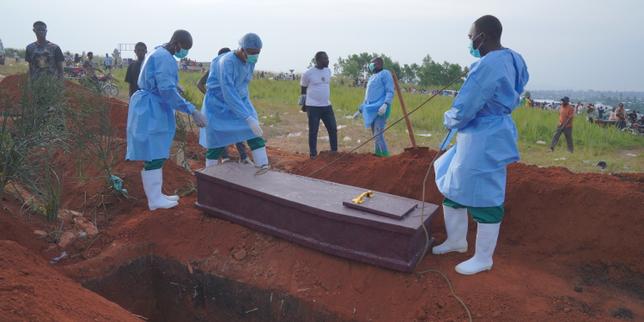
When localized health workers initiate strikes over unpaid hazard compensation and inadequate personal protective equipment, the institutional feedback loop breaks down entirely. Diagnostic samples languish without transport, suspected cases remain unisolated within densely populated displacement camps, and secondary transmission accelerates unchecked through communal burial and care practices.
The Contact Tracing Deficit
Epidemiological control requires a positive contact tracing coverage ratio exceeding ninety percent of identified transmission chains. In the current operational theater, a significant percentage of new infections emerge outside monitored tracking registries. When tracking systems fail to capture primary contacts, the intervention strategy shifts from proactive containment to reactive palliation.
Mathematical simulations indicate that every unmonitored case in an urban or semi-urban displacement setting generates an unpredictable multiplier of secondary exposures. Displacement camps near regional hubs host thousands of individuals within hyper-dense footprints. A single undetected case interacting with communal sanitation and water points converts transient settlement zones into distributed viral incubators.
Strategic Vector Realignment
Mitigating high-fatality hemorrhagic fever outbreaks within unstable administrative regions requires abandoning rigid, centralized command-and-control models in favor of decentralized, localized response frameworks. Deploying mobile diagnostic laboratories directly to secondary health zones reduces the sample-to-result turnaround time, bypassing regional transport bottlenecks. Concurrently, operational integration must prioritize direct financial mechanisms to secure frontline healthcare personnel, neutralizing strike triggers and restoring baseline operational continuity. Engagement strategies driven by trusted community leaders rather than state security apparatuses remain the single operational variable capable of dismantling local resistance and re-establishing active surveillance compliance.