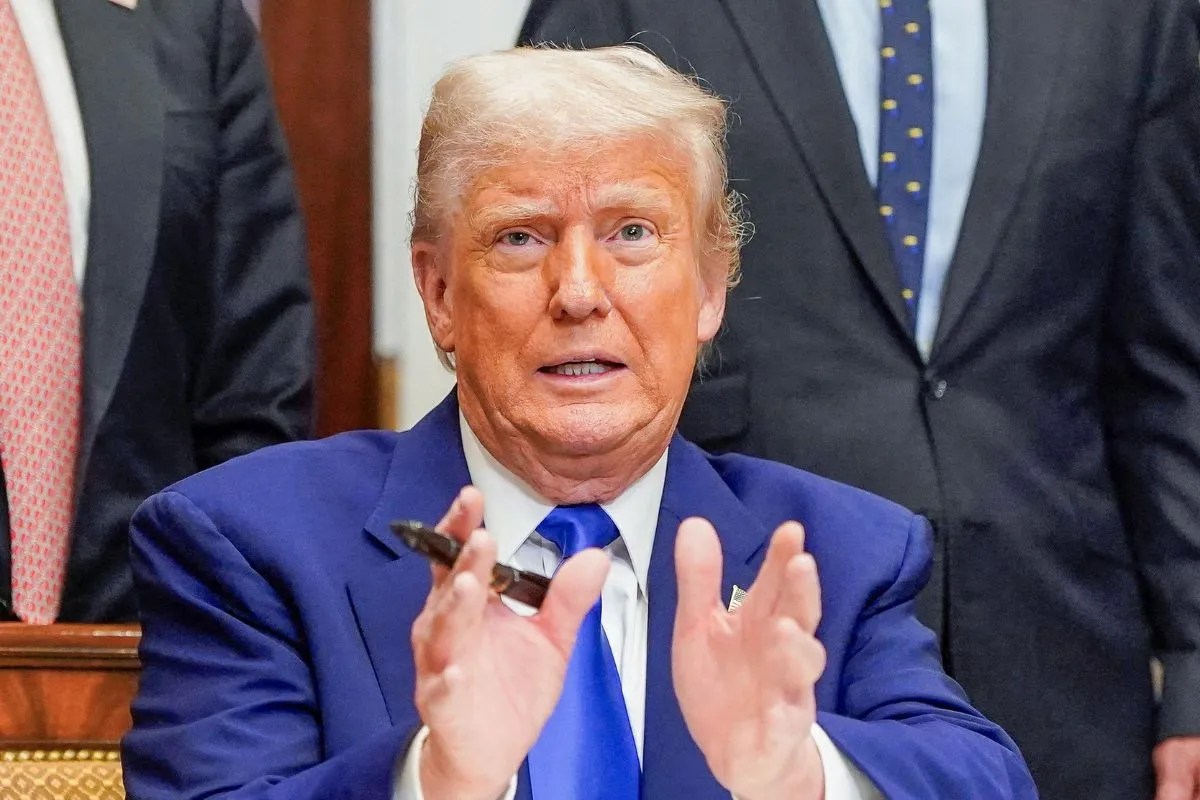
The recent allocation of capital toward critical mineral ventures, specifically the financial alignment between federal agencies and private entities associated with the first family, presents a case study in the intersection of industrial policy and governance risk. When the state shifts from a regulatory arbiter to an active equity participant in private ventures, the fundamental criteria for capital allocation—risk-adjusted return and competitive bidding—are often subordinated to political prioritization.
The Mechanism of State-Led Capital Allocation
In the current administration, the push to reduce dependency on foreign rare-earth supply chains has catalyzed the adoption of aggressive fiscal interventions. The Pentagon’s Office of Strategic Capital (OSC) has emerged as a primary vehicle for these disbursements. Structurally, this creates a distortion in market incentives. When a startup receives a $620 million conditional loan—the largest in the agency's history—coupled with a $50 million equity infusion within months of a private venture capital firm’s initial investment, the valuation delta reflects the impact of federal underwriting rather than organic market performance. If you enjoyed this article, you should look at: this related article.
The sequence of events in the Vulcan Elements transaction illustrates the velocity of this process:
- Private Placement: In August 2025, 1789 Capital, a firm where Donald Trump Jr. serves as a partner, secured an equity stake in Vulcan Elements. At the time, the startup was valued at approximately $200 million.
- Institutional Acceleration: Within 90 days of this investment, the federal government committed $670 million in funding. Documentation suggests this process moved from proposal to commitment in a fraction of the time typically required for Pentagon due diligence.
- Valuation Inflation: By January 2026, market reporting indicated an enterprise valuation of nearly $2 billion, representing a 10-fold increase in under 180 days.
This timeline establishes a clear mechanism: federal intervention acts as a direct multiplier for private equity returns. When the agency responsible for funding is directed by executive appointees to accelerate specific deals—often bypassing standard technical disclosure requirements—it creates a structural conflict of interest. For another look on this event, check out the latest update from The Motley Fool.
Governance and Oversight Deficits
The primary risk to the American taxpayer in these arrangements is the erosion of competitive oversight. Under the 1872 Mining Law, companies operating on public lands often operate with minimal royalty obligations. By expanding the federal role to include direct equity ownership, the administration creates a secondary tier of risk: the loss of capital if the startup fails, and the loss of environmental accountability if the startup prioritizes rapid extraction over long-term remediation.
Congressional efforts to audit these transactions have faced procedural blockades. The refusal of the House Natural Resources Committee to subpoena key figures involved in the Vulcan deal prevents the establishment of a formal record regarding the "why" and "how" of these funding decisions. Without transparent procurement standards, the distinction between national security objectives and private enrichment becomes mathematically indistinguishable.
The Cost Function of Industrial Policy
The economic argument for government-backed mining rests on the projection that global demand for rare-earth materials will increase by over 60 percent by 2040. However, the efficacy of this policy is contingent on the selection of viable, technically proficient partners. When selection is driven by personal networks—as suggested by reports of headhunters promising access to "royal families"—the probability of technical failure increases.
Taxpayers are effectively serving as the venture capital firm of last resort for projects that have not undergone rigorous market vetting. If a firm requires a White House-initiated mandate to secure funding from the Department of War, the market has implicitly signaled that the firm’s standalone risk profile is insufficient for private capital markets.
Strategic Implications for Institutional Stability
The institutionalization of these "sweetheart deals" signals a shift in the standard for administrative conduct. To mitigate further erosion of public trust, federal financial instruments must adhere to three non-negotiable standards:
- Universal Competitive Bidding: Any project receiving government backing above a $10 million threshold must undergo an open, blind-review bidding process managed by non-political technical personnel.
- Conflict of Interest Firewalling: Any startup seeking federal funds must disclose the full cap table. If a person with a familial or financial relationship to a senior government official holds an equity stake, that firm must be automatically disqualified from federal financing.
- Audit Requirement: All Pentagon or Department of Energy mineral loans must be subject to a biannual, independent performance audit, with the findings made available to the public within 30 days of completion.
Without these guardrails, the policy of "Trump Speed" will continue to function as a mechanism for transferring taxpayer assets to politically connected ventures, while simultaneously increasing the federal government's exposure to bad debt and the long-term cost of industrial cleanup.
US-backed Mining Project Scrutiny
This video provides an overview of the $1.6 billion U.S.-backed mining project in Kazakhstan, further illustrating the pattern of federal financing directed toward companies with ties to the Trump family.


