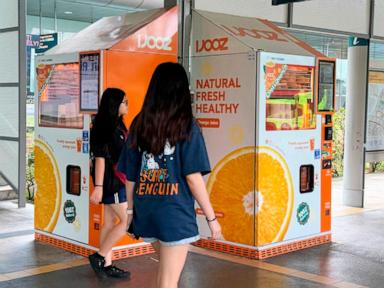
The arrest and subsequent charging of a 17-year-old French national in Singapore for the act of licking a vending machine straw dispenser is not a localized incident of juvenile delinquency, but a demonstration of Singapore’s Zero-Tolerance Deterrence Framework. This mechanism operates on the principle that small-scale public order disruptions, if left unaddressed, erode the social contract and increase the aggregate cost of maintaining public health and security. By quantifying the legal ramifications and the specific statutes invoked, we can map the intersection of public hygiene, digital evidence, and the strict liability nature of Singaporean law.
The Triad of Legal Liability
The prosecution of "public nuisance" or "mischief" in this context relies on three distinct pillars of the Singapore Penal Code and the Miscellaneous Offences (Public Order and Nuisance) Act. The state does not view the act through the lens of intent or "humor," but through the objective output of the action. If you found value in this post, you should check out: this related article.
- Public Nuisance (Section 268 of the Penal Code): This defines a person as guilty of a public nuisance if they do an act that causes any common injury, danger, or annoyance to the public or to the people in general who dwell or occupy property in the vicinity. The "annoyance" here is legally quantified by the potential for health contamination and the subsequent loss of utility of the vending machine.
- Mischief (Section 425 of the Penal Code): Mischief occurs when an individual causes the destruction of any property or any such change in any property as destroys or diminishes its value or utility. By licking the dispenser, the individual rendered the straws unhygienic, effectively "destroying" the utility of the inventory and requiring the operator to incur costs for sanitation or replacement.
- Extraterritorial Jurisdiction and Residency Status: While the individual is a foreign national, Singaporean law applies strictly to any act committed within its borders. The legal system provides no "tourist leniency" coefficient; rather, it utilizes foreign nationals as case studies for the universality of its enforcement.
The Digital Feedback Loop and Evidence Collection
The specific catalyst for this prosecution was the dissemination of the act via social media. In many jurisdictions, digital evidence of a minor crime might be deprioritized. In Singapore, the Digital Evidence-to-Prosecution Pipeline is optimized for high speed.
- Self-Incrimination via Metadata: The video, uploaded to platforms like Instagram or TikTok, provides a timestamp and a geo-tag. Even without explicit tags, the visual data of the vending machine’s location allows the Singapore Police Force (SPF) to correlate the video with physical CCTV footage from the surrounding area.
- The Social Contagion Factor: The prosecution’s intensity is directly proportional to the "virality" of the offense. A private act of mischief has a low social cost. A publicized act of mischief creates a "copycat" risk, which the state must mitigate through a disproportionately visible legal response. This is a classic application of the Broken Windows Theory, where the swiftness of the penalty serves as a deterrent for the digital audience, not just the physical actor.
Economic and Public Health Externalities
The cost of a single straw is negligible. However, the Systemic Cost Function of this act includes several non-obvious variables that the Singaporean judiciary considers: For another perspective on this event, see the latest coverage from The Washington Post.
- Sanitization Overhead: The vending machine operator must take the machine out of service, dispatch a technician, and perform a chemical deep clean. This incurs labor costs and opportunity costs (lost sales).
- Public Trust Erosion: In a high-density urban environment like Singapore, public infrastructure (vending machines, public transport, automated kiosks) relies on a high level of "low-friction trust." If citizens fear that automated systems are unhygienic due to tampering, the adoption and efficiency of these systems collapse.
- Health Security Surveillance: In the post-pandemic era, "saliva-based" tampering is categorized under a higher risk profile. The act is viewed through the lens of biological hazard, regardless of whether the individual was actually ill. The potential for pathogen transmission is the metric, not the actual transmission.
Quantifying the Penalties
Under Singaporean law, the penalties for these actions are structured to be punitive rather than purely rehabilitative for the first instance of public exposure.
- Public Nuisance: Can lead to a fine of up to $2,000. If the nuisance is deemed to have caused "common injury" or "danger," the severity of the sentencing increases.
- Mischief: Carries a potential imprisonment term of up to two years, a fine, or both. For a 17-year-old, the court may consider the Probationary Framework, but this involves rigorous reporting requirements, curfews, and community service, which effectively restricts the individual's liberty within the state.
Cultural and Diplomatic Friction Points
The friction in this case arises from the mismatch between Liberal Individualism (common in Western Europe) and Communitarian Legalism (the Singaporean model).
The French teen’s defense—likely centered on "youthful indiscretion" or "lack of malice"—fails because Singaporean statutes often utilize Strict Liability. In strict liability offenses, the prosecution does not need to prove the defendant intended to cause a public health scare; they only need to prove that the defendant performed the act.
The diplomatic implications are minimal because Singapore maintains a "Sovereignty of Law" stance. Whether the offender is a local student or a foreign expatriate, the judicial process remains automated and standardized. This consistency is a core component of Singapore’s "Ease of Business" index; investors and residents know exactly what behaviors are prohibited and the cost of those infractions.
The Strategic Enforcement Protocol
The SPF’s movement from video identification to charge is a deliberate three-step protocol:
- Rapid Identification: Cross-referencing social media handles with immigration records and CCTV facial recognition.
- Public Statement of Intent: Issuing a press release shortly after the arrest to signal to the public that the "digital space" is monitored.
- Formal Indictment: Moving the case to the State Courts to ensure the record of the crime is permanent, affecting the individual's future visa eligibility and background checks.
This case serves as a terminal reminder that in highly regulated urban ecosystems, the "prank" is an obsolete concept. The act is processed as a data point of systemic risk.
Anyone operating within the Singaporean jurisdiction—whether on a student pass, a work permit, or a tourist visa—must internalize that the legal system prioritizes the Collective Utility of public infrastructure over the Individual Expression of the user. To mitigate legal risk, one must treat all public-facing automated systems as critical infrastructure. Any physical interaction with these systems that falls outside of the "intended user journey" (e.g., licking, hitting, or marking) will trigger a criminal investigation. The state’s move to charge the teen is not an overreaction; it is the calibrated maintenance of a high-compliance social environment.